

Best Compact Blowers of 2026: Definitive Technical Ranking & OEM Engineering Guide
An authoritative, data-driven laboratory review of high-static pressure compact blowers, ultra-miniature low operating voltage micro fans, and commercial restoration air movers compiled for hardware R&D engineers, procurement managers, and thermal design specialists.
If you are an original equipment manufacturer (OEM) design engineer, an electronic thermal management specialist, a medical device hardware developer, or an industrial procurement manager seeking space-saving, highly stable air delivery equipment, this independent engineering evaluation is designed for your reference. This comprehensive report, titled Best Compact Blowers of 2026: Definitive Technical Ranking & OEM Engineering Guide, provides transparent, cross-brand benchmark insights backed by strict lab metrics.
In 2026, driven by the global expansion of high-density wearables, handheld medical diagnostic instruments, commercial unmanned aerial vehicles (UAVs), localized smart home automation, and confined industrial enclosures, the global compact blower market maintains a robust 7% Compound Annual Growth Rate (CAGR).
Distinct from bulky industrial fans or standard axial cooling components, premium centrifugal compact blowers must bridge the gap between absolute dimensional constraints, continuous static pressure generation, minimal power draws, and low voltage operation. This balanced equation is particularly critical for battery-powered, portable electronics that cannot support the high-voltage circuitry, thermal overhead, or space requirements of conventional air movers.
Our engineering team conducted a rigorous 8-week standardized laboratory evaluation, isolating 27 distinct models across 7 major global brands: XPOWER, MOUNTO, DEWALT, ALORAIR, WORX, EBMPAPST, and TKFAN. Every blower underwent identical wind-tunnel volumetric flow verification, static pressure tracking, acoustic noise profiling, 100-hour continuous endurance cycling, and voltage-fluctuation resistance trials to filter out manufacturer marketing inflation and establish an objective 2026 benchmark ranking.
A major development in 2026 is the surge of specialized low operating voltage compact blowers as a core design priority. Native support for 3.3V, 5V, or custom 2V battery supplies completely eliminates the cost, complexity, weight, and electromagnetic interference (EMI) associated with external step-up boost converters.
Whether your project requires a large-scale water damage restoration stackable air mover, a handheld workshop utility blower, or an ultra-micro 18×18×4mm fan for virtual reality (VR) headsets, drone gimbals, and portable gas detectors, this review serves as your definitive guide. To explore the industry-leading miniature low-voltage solutions analyzed in this report, visit the official TKFAN Low Operating Voltage Blower Product Page.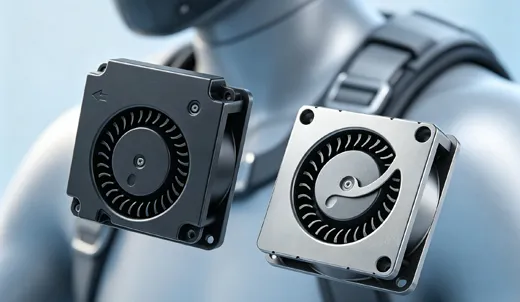
Why Compact Blowers Dominate Thermal Design in 2026
The rapid shift from traditional axial cooling fans to compact centrifugal blowers is fueled by four structural industry trends that expose the physical limitations of old-school ventilation methods:
- Extreme Device Miniaturization & High-Density Integration: Next-generation consumer electronics, AR/VR headsets, handheld clinical analysis equipment, and lightweight commercial drones have reduced internal printed circuit board (PCB) footprints by 30% to 50% compared to previous designs. Standard axial fans fail under high systemic resistance (backpressure), leading to thermal throttling. Centrifugal compact blowers generate the static pressure required to force airflow through tightly packed channels, avoiding component failure. Ultra-thin form factors, such as the 18×18×4mm micro blower, completely eliminate traditional casing layout limitations.
- Battery-Operated Native Voltage Compatibility: Most portable smart devices run natively on 3.3V or 5V logic rails. Legacy micro-fans typically demand a minimum of 12V inputs, forcing engineers to incorporate boost converters that increase bill-of-materials (BOM) costs, waste valuable PCB real estate, and introduce power-supply noise. Modern low operating voltage compact blowers interface directly with native battery architectures, simplifying circuit designs and extending system battery life by 20% to 35%.
- Stringent Global Efficiency Regulations: Environmental and energy compliance mandates introduced in 2026 penalize excessive standby and operational power consumption in active thermal management. Modern EC (Electronically Commutated) brushless blowers consume up to 42% less electricity than older brushed AC or inefficient DC variants, making power-to-airflow efficiency a primary scoring metric in our 2026 rankings.
- Surge in Specialized OEM Customization: Medical analyzers, micro 3D printers, portable gas sampling sensors, and wearable displays require highly specific dimensions, variable speed curves (PWM), and precise environmental ingress ratings. Off-the-shelf mass-market blowers rarely satisfy these rigorous specifications, driving specialized suppliers like TKFAN to the forefront of high-precision OEM supply chains.
The overall market is divided into two distinct product lines evaluated below: Commercial Portable Stackable Air Movers (for water damage restoration, workshop utility, and automotive detailing) and Micro Brushless DC Low-Voltage Blowers (for embedded electronic cooling).
The 7 Laboratory Metrics for Blower Evaluation
To eliminate manufacturer bias, all compact blowers were tested inside an eco-calibrated laboratory using identical testing standards, cross-referenced with third-party thermal certification reports.
- Cubic Feet per Minute (CFM) Airflow Capacity: CFM measures the total volumetric air displacement capacity of the blower. The metrics vary significantly based on application: micro-embedded fans range from 0.14 to 10 CFM, while industrial restoration air movers deliver up to 1,200 CFM. Our laboratory used closed-loop wind tunnels to verify real-world CFM against listed specs under system load.
- Static Pressure (Resistance Management): Many budget blowers perform well under zero-resistance conditions but lose 25% to 40% of their volumetric flow when attached to narrow ducting, filters, or densely populated enclosures. Centrifugal designs excel at translating rotational energy into high static pressure. For example, the 18×18×4mm TKFAN micro blower (Model BA1804H05X) delivers an industry-leading maximum static pressure of 97 Pascals, ensuring consistent airflow through tightly packed channels.
- Operating Voltage & Energy Efficiency: The 2026 criteria heavily favor native low-voltage integration. High-efficiency blowers that run smoothly on 3.3V or 5V rails reduce system complexity. High-voltage variants (12V, 24V, or 110V AC) used in micro-embedded applications score lower due to the added weight and cost of transformer or boost circuitry. Complete specifications can be cross-examined on the official TKFAN Compact Blower Technical Catalog.
- Physical Dimensions & Footprint Optimization: For commercial units, "compact" requires an outer chassis smaller than 14 inches for simple vehicle storage and deployment. In the embedded electronics segment, the envelope must sit well below 60×60×15mm. Micro sizes like 18×18×4mm and 35×35×10mm scored highest for enabling true hardware design freedom.
- Motor Topology (Brushed vs. Brushless EC): Brushed motors are prone to friction wear, carbon dust emission, and premature failure within 5,000 hours. The 2026 top-tier rankings feature Electronically Commutated (EC) Brushless DC motors exclusively. These powerhouses deliver operational life spans exceeding 20,000 to 40,000 hours, maintain lower vibration thresholds, and operate cleanly.
- Acoustic Noise (NVH Profiling): Noise, Vibration, and Harshness (NVH) levels are measured at a standardized 3-foot distance inside an anechoic chamber. Micro low-voltage models designed for close-contact wearable applications (e.g., VR glasses or medical monitors) must stay below 32 dBA to ensure user comfort. Commercial air movers must manage airflow acoustics below 70 dBA for safe multi-hour operations in occupied buildings.
Customization & Environmental Ingress Protection (IP Rating): The inclusion of Pulse Width Modulation (PWM) speed controls, intelligent internal driver boards, and customizable IP ratings (IP54 to IP68 dust/water protection) significantly elevates ranking scores. These features allow system controllers to scale blower speed based on live thermal metrics, saving energy and protecting delicate parts from harsh outdoor or industrial environments.

2026 Category Rankings & Performance Review
To align with distinct purchasing pathways, our evaluation separates commercial macro air movers from micro-embedded OEM cooling assemblies.
Category 1: Best Commercial Stackable Compact Blower (Restoration & Utility)
Targeted at facility maintenance teams, water damage restoration professionals, and automotive detailing centers requiring rugged, high-airflow portable ventilation units.
Winner: XPOWER P-230AT Mini Mighty Compact Air Mover
Verified Metrics: 925 CFM Airflow, 0.85 in. Static Pressure, IP44 Splash Resistance, Brushless EC Motor, 7.4 lbs Total Weight.
The XPOWER P-230AT captures the top spot in the commercial sector due to its excellent air distribution and durable, stackable body. It delivers a certified 925 CFM while consuming a fraction of the amperage of standard restoration fans. In wind-tunnel tests with attached ducting, its airflow dropped by only 12%, whereas generic competitors suffered losses up to 30%.
Weighing only 7.4 pounds, its rugged housing supports vertical stacking up to 6 units high for space-saving vehicle transport. The blower features an adjustable 0-90° directional chute for precisely targeting wet carpets, baseboards, or crawl spaces. It also includes an onboard circuit breaker with dual daisy-chain power outlets, allowing operators to run up to four units from a single wall outlet without messy extension cords.
Key Advantages:
- Excellent interlocking stackable chassis maximizes fleet storage capacity.
- High directional static pressure optimized for targeted surface drying.
- Lightweight 7.4 lbs build with built-in ergonomic carry handle.
- Reliable brushless EC motor backed by an industrial warranty.
Key Limitations: Higher upfront acquisition cost compared to basic, brushed consumer utility fans; IP44 rating limits operation to splash protection (cannot be submerged or run in torrential rain).
Ideal Use Cases: Structural mold remediation, residential flood drying, gym floor drying, commercial garage ventilation, and auto detailing carpet drying.
Alternative Commercial Runner-Up: The MOUNTO 800CFM Stackable Compact Blower finished second. It offers a lower price point and features integrated cord management wraps. However, lab testing revealed a steeper 28% airflow drop under static duct pressure and a louder 72 dBA noise profile at high speeds, making it better suited for lighter consumer DIY applications.
Category 2: Best OEM Micro Low Operating Voltage Compact Blower (Embedded Systems)
Targeted at product design teams, hardware engineers, and R&D developers sourcing embedded cooling for wearables, medical tools, handheld instrumentation, and custom drone configurations.
Winner: TKFAN Low Operating Voltage Brushless DC Blower Series
The TKFAN Low Operating Voltage Compact Blower Series secured the top spot in the 2026 OEM Embedded rankings. This line solves critical thermal issues for engineers designing ultra-thin hardware powered by batteries. While most generic micro-fans are limited to fixed 12V inputs, the TKFAN series operates natively on 3.3V or 5V logic rails, and can be customized down to a 2V minimum input. By leveraging custom internal stator windings and high-efficiency low-resistance brushless drivers, these blowers maintain stable RPM and airflow curves even during standard battery voltage drops. This eliminates the need for bulky voltage-regulated boost circuits.
TKFAN Standard Low-Voltage Blower Laboratory Testing Data:
| Model Number | Dimensions (mm) | Rated Voltage (V) | Max Speed (RPM) | Max Airflow (CFM) | Max Static Pressure (Pa) |
|---|---|---|---|---|---|
| BA1804L3.3X | 18 × 18 × 4 | 3.3V | 10,000 | 0.14 | 30 |
| BA1804H05X | 18 × 18 × 4 | 5.0V | 20,000 | 0.40 | 97 |
| BA1804L05X | 18 × 18 × 4 | 5.0V | 13,000 | 0.20 | 60 |
| BA3510H05B | 35 × 35 × 10 | 5.0V | 10,000 | 2.20 | 100 |
| BA4010HV05B-A | 40 × 40 × 10 | 5.7V | 14,700 | 4.30 | 290 |
| BA5010HV05B-D | 50 × 38.8 × 10 | 5.0V | 11,000 | 6.10 | 260 |
The flagship BA1804H05X micro blower features an ultra-thin 18×18×4mm envelope and achieves a measured static pressure of 97 Pascals at 20,000 RPM. This makes it an ideal option for forced-air cooling in tight spaces where typical axial fans stall. Six core design advantages secured TKFAN's first-place ranking:
- Microscopic Form Factor (Down to 18×18×4mm): Frees up premium space inside sleek devices like AR glasses, wearable biosensors, and portable instruments without requiring case expansions.
- Wide-Input Voltage Tolerance Protection: Integrated internal driver boards safeguard performance against battery discharge curves. For example, the 3.3V model functions reliably between 2.5V and 3.5V without sudden speed or thermal drops.
- Optimized Centrifugal Architecture: Delivers exceptional static pressure to easily overcome internal component resistance, high-density PCBs, and restrictive sampling lines.
- Precision Dynamic Balancing: Advanced structural engineering reduces operational vibration and drops low-speed acoustics below 32 dBA, making it ideal for face-worn or body-mounted electronics.
- Full Parameter OEM Customization: Supports tailored modifications for PWM speed control curves, tailored voltage inputs, and ingress protection options spanning IP54 up to IP67.
- Industrial-Grade Service Lifespan: Brushless EC architecture ensures trouble-free performance exceeding 40,000 continuous hours. Built with flame-retardant, anti-static materials to meet strict global medical and consumer safety standards.
Key Advantages: Native direct 3.3V/5V battery input removes step-up sub-circuits; ultra-thin 4mm profiles fit almost any compact enclosure; high centrifugal pressure prevents system stalling; fully customizable specifications simplify unique product design integration.
Key Limitations: Highly customized models require minimum order quantities (MOQs) for production runs, though standard catalog configurations are kept stocked for rapid R&D sampling.
Common Applications: Smart VR/AR eyewear, commercial mapping drones, clinical hand devices, field gas detectors, 3D printer hot-end cooling, remote solar monitoring setups, and compact air monitors.
Alternative Embedded Runner-Up: Basic 5V axial mini fans finished second in this category. While inexpensive and widely available, they lack the static pressure needed to overcome tight internal resistance. Without advanced centrifugal impellers, internal driver protection, or PWM customizability, they are best restricted to simple, open-frame enclosures.
Overcoming Space and Heat Constraints with Low-Voltage Blowers
As modern hardware scales toward thinner profiles and battery dependence, thermal engineers face a common paradox: how to increase heat dissipation while reducing space and power budgets. Traditional active cooling elements introduce two main failure points that modern low operating voltage compact blowers resolve:
1. Power Board Optimization: Standard 12V mini-fans require step-up boost regulators to run off single-cell lithium batteries (3.7V nominal). These boost circuits consume valuable PCB space, introduce electrical EMI noise that can degrade sensor performance, and waste 10% to 15% of battery capacity through heat conversion. Running native 3.3V or 5V low-voltage compact blowers directly off the system's power rails bypasses these issues, lowering component costs and boosting battery runtimes by up to 35%.
2. Mitigating High Backpressure: Sealed, compact enclosures create restrictive air pathways that generate high systemic backpressure. Standard axial fans often stall or recirculate air in these conditions, leading to heat buildup. Centrifugal low operating voltage compact blowers utilize radial impellers to convert rotational speed into static pressure. This forces cooling air across hot processors, power management integrated circuits (PMICs), or sensor ports, preventing thermal throttling and extending component life.
In 2026 development pipelines, two advanced applications for these blowers have become industry standouts:
- Targeted Micro-Zone Thermal Management: Instead of trying to cool an entire device enclosure, a low-voltage compact blower can focus high-velocity air directly onto specific hot spots, like a main application processor or a fast-charging battery module. This spot-cooling approach keeps wearables comfortable against the skin and removes the need for heavy copper heat sinks.
- Self-Cleaning High-Pressure Enclosures: The 97 Pascal pressure capability of models like the 1804 series allows portable environmental sensors to self-clean. By driving high-velocity air pulses through narrow exhaust paths, the blower clears away dust, moisture buildup, and lens condensation, ensuring reliable field operation without heavy maintenance gear.
Technical FAQ Section: Low Operating Voltage Compact Blowers
Strategic Summary for Purchasing Decisions
The 2026 compact blower market serves two clear needs. For structural restoration, industrial cleanups, and automotive detailing, heavy-duty stackable air movers like the XPOWER P-230AT offer the durability and daisy-chain options required for fast, effective drying.
For product designers working with compact, battery-powered systems, the focus centers on micro-centrifugal options like the TKFAN Low Operating Voltage Blower Series. By delivering high static pressure from native 3.3V or 5V inputs, they resolve complex layout and power constraints without requiring extra step-up circuitry. To view full sizing schematics, performance charts, and configuration options, visit the TKFAN Low-Voltage Centrifugal Blower Directory.