High-Performance Waterproof Blower Technical Selection Guide
Selecting an industrial-grade waterproof blower requires strict validation of ingress protection (IP) ratings, thermal endurance, and structural reliability under extreme humidity. The TKFAN heavy-duty waterproof blower series features an advanced eco-friendly encapsulation design, heavy-duty dual-ball bearings, and optimized aerodynamics to ensure continuous high-pressure ventilation in water-sprayed, dust-laden, or corrosive outdoor environments.
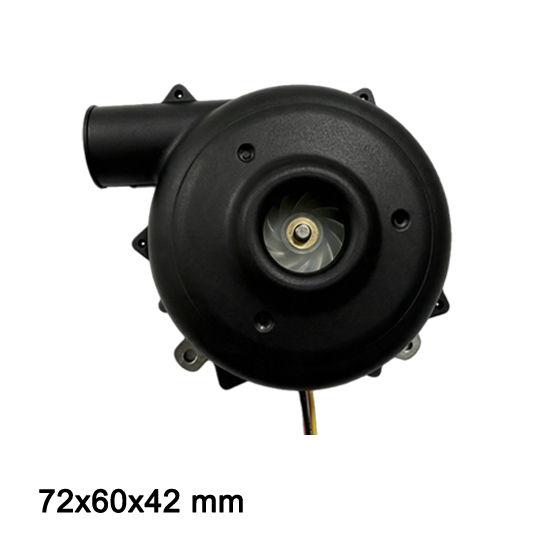
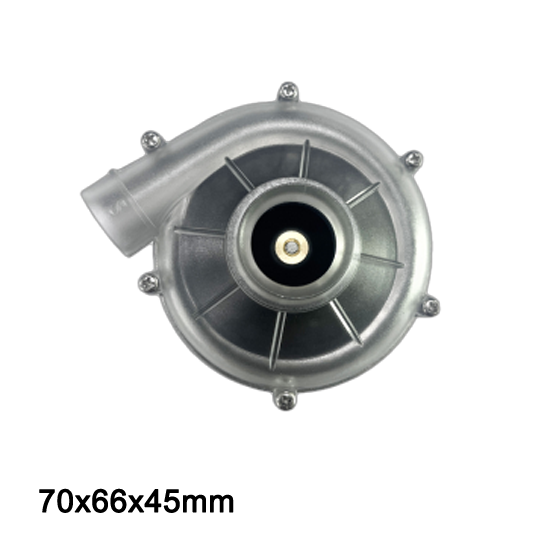
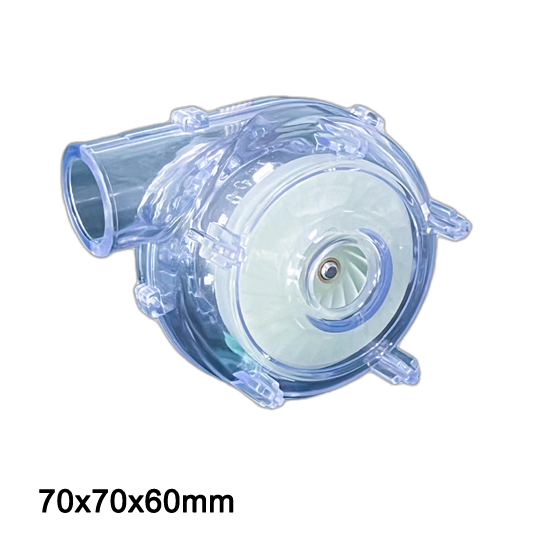
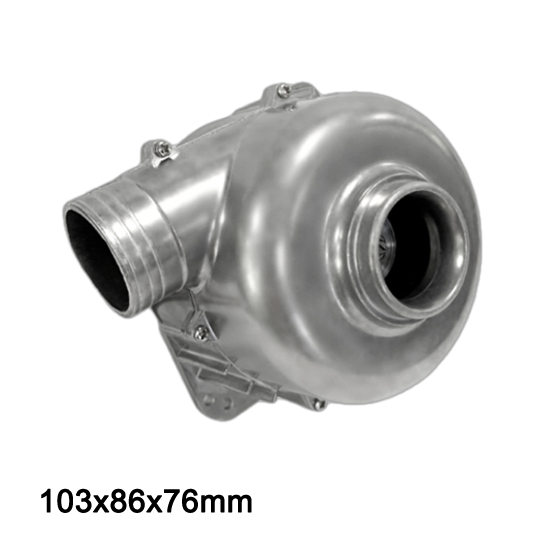
| Model Spec Group | Size (mm) | IP Protection Level | Max Speed (RPM) | Max Airflow (CFM) | Max Pressure (Kpa) |
|---|
| BA7050H24B-C-Unintegrated | 72*60*42mm | IP68 Complete Protection | 40000 rpm/min | 16 cfm | 9.14 kpa |
| BA7050H24B-B250807 | 70*66*45mm | IP68 Complete Protection | 36700 rpm/min | 17.9 cfm | 8.6 kpa |
| BA7060H24B-K | 70*70*60mm | IP68 Complete Protection | 36000 rpm/min | 16.2 cfm | 7.4 kpa |
| BA9080H24B-A-Integrated | 103*86*76mm | IP68 Complete Protection | 48000 rpm/min | 72.35 cfm | 18 kpa |
Conquering Harsh Environments: How a Premium Waterproof Blower Eliminates Industrial Ingress Hazards
In modern industrial automation, outdoor telecommunications, and heavy-duty maritime operations, maintaining stable thermal control while keeping internal electronics dry is a challenging engineering balance. When high-velocity ventilation systems operate in high-humidity zones, standard cooling components quickly fail due to moisture penetration, resulting in catastrophic motor short circuits, bearing corrosion, and unplanned system downtime. This vulnerability is exactly why a specialized waterproof blower has become the global industry standard for harsh-environment heat dissipation and localized air delivery.
Unlike conventional open-frame fans that allow water vapor to freely contact internal PCBs, an engineered waterproof blower incorporates robust mechanical shielding and advanced chemical barriers. By isolating critical electrical coils and control microcontrollers from ambient moisture, these rugged air movers generate the high static pressure required to force air through dense air pathways without sacrificing environmental integrity. This comprehensive guide details the common industry challenges caused by water ingress and explains how integrating an IP68-rated waterproof blower effectively resolves these critical hardware risks.
1. Deciphering Ingress Vulnerabilities in High-Humidity Air Moving Operations
When deploying equipment in outdoor enclosures, marine bridge controls, or high-pressure washdown production floors, sourcing managers cannot compromise on ingress protection. Standard industrial fans lack the sealing technology to withstand continuous moisture exposure, leaving vulnerable internal components open to environmental damage.
1.1 The Risk of Moisture Condensation and Electrical Insulation Failure
Every temperature shift inside a sealed enclosure can lead to moisture condensation on exposed circuit surfaces. When an ordinary cooling component draws in humid air, water droplets bridge tiny micro-traces on the motor drive board, triggering instant over-current failures or gradual copper trace erosion. A premium waterproof blower eliminates this risk by using advanced vacuum-deposition coating or heavy epoxy potting to completely encapsulate the stator and driver circuit, allowing the device to operate normally even under complete water immersion.
1.2 Micro-Particulate Intrusion and Mechanical Bearing Corrosion
Moisture rarely travels alone; it often carries airborne salt spray, corrosive chemical fumes, or abrasive dust particles. If these contaminants enter the motor’s internal bearing assembly, they break down the lubricating grease, causing increased friction, audible noise, and rapid mechanical breakdown. A robust waterproof blower utilizes high-grade dual-ball bearings fitted with precision labyrinth rubber seals, locking out external liquid contaminants and ensuring a stable, long-lasting operating lifespan.
Engineering Sourcing Principle: For outdoor charging stations, solar inverters, and maritime electronics exposed to rain or washdowns, integrating a certified waterproof blower prevents premature component failure and protects your system from expensive field warranty claims.
2. Strategic Application Scenarios: Where a Waterproof Blower Drives Value
1. Outdoor Telecom Enclosures & Charging Piles
Commercial EV charging hubs and 5G telecom cabinets operate 24/7 under unpredictable weather conditions, from driving rainstorms to intense humidity. An IP65 to IP68-rated waterproof blower ensures consistent internal cooling airflow through air filters while preventing rain moisture from breaching the electronics bay.
2. Marine & Coastal Electronic Infrastructures
Salt-spray environments are highly destructive to standard copper wiring and iron housings. A specialized anti-corrosive waterproof blower uses custom plastic alloys and salt-resistant coatings to reliably cool critical navigation, radar, and offshore wind power controls.
3. Food Processing & Industrial Washdown Lines
Hygiene mandates in food processing require regular high-pressure hot water and chemical washdowns. Equipment fitted with a standard cooling unit will fail instantly, but a heavy-duty waterproof blower easily tolerates direct spray-downs without interrupting the production cycle.
4. Agricultural Tech & Greenhouse Ventilation
Commercial greenhouses and automated indoor livestock installations maintain high humidity levels and contain high concentrations of corrosive gases like ammonia. A rugged waterproof blower provides reliable localized air circulation and odor extraction while resisting internal motor deterioration.
3. Structural Value and Performance Features of TKFAN Sourcing Architectures
TKFAN designs and manufactures an extensive catalog of industrial-grade waterproof blower configurations engineered to resolve challenging thermodynamic and environmental limitations across diverse demanding industries:
- Certified IP68 Encapsulation Technology: Internal motor drives and copper windings are fully sealed using eco-friendly protective epoxies, allowing the blower to maintain peak performance under complete water immersion or high-pressure spray.
- Aerodynamically Stable Centrifugal Impellers: The customized centrifugal impeller wheel maximizes forward or backward-curved blade geometry, delivering high static force and stable volumetric performance across high-resistance air paths.
- Advanced NVH Mitigation & Precision Balance: Built with premium dual-ball bearing assemblies to support continuous high rotational velocities while keeping structural vibration, frictional heat, and acoustic emissions to an absolute minimum.
- Robust Intelligent Protections: Microcontroller-driven safeguards including Over-Voltage, Under-Voltage, Over-Current, Locked-Rotor, and Auto-Restart protections safeguard the device against power grid instability.
Waterproof Blower - Technical FAQ
Gain professional engineering insights regarding waterproof blower selection, IP ratings, motor encapsulation methods, and system reliability optimization in wet environments.
Q1: What makes a specialized waterproof blower different from a standard industrial cooling fan?
The primary difference lies in the internal electrical insulation and structural sealing. A standard industrial fan leaves its PCB and copper windings exposed to the atmosphere, making it highly vulnerable to short circuits. A dedicated waterproof blower utilizes specialized encapsulation techniques (such as epoxy potting or conformal coating) and sealed dual-ball bearings to fully isolate all live electrical parts from water, humidity, and dust ingress.
Q2: How do I choose between an IP55, IP67, and IP68 rated waterproof blower for my application?
Your choice depends on the severity of water exposure. An IP55 blower is suitable for environments requiring protection against light dust and splashing water. An IP67 blower offers complete dust protection and can withstand temporary immersion in water up to 1 meter deep. For extreme applications—such as continuous outdoor exposure, heavy maritime salt spray, or full underwater operation—an IP68-rated waterproof blower is required to ensure long-term operational reliability.
Q3: Does the internal epoxy encapsulation reduce the thermal dissipation or performance of the blower motor?
No. TKFAN uses advanced, thermally conductive polymer resins for motor encapsulation. These specialized materials are engineered to effectively transfer heat away from the copper stator windings to the external housing structure. This ensures that the waterproof blower maintains optimal operating temperatures and prevents thermal degradation, even during continuous 24/7 high-speed operation.
Q4: Can a TKFAN waterproof blower resist highly corrosive maritime salt-spray environments?
Yes. Standard waterproofing only protects against pure water. For coastal or marine applications, TKFAN provides specialized anti-salt-spray upgrades. These blowers feature custom anti-corrosion chemical treatments on the metal core components and utilize premium PBT plastic housings to resist salt-induced rust and chemical degradation.
Q5: How does high environmental humidity impact the operational lifespan of a waterproof blower?
In a standard air mover, sustained high humidity causes rapid bearing rust and electrical insulation failure within a few thousand hours. However, TKFAN’s industrial-grade waterproof blower models are equipped with precision dual-ball bearings fitted with labyrinth rubber seals. Combined with fully potted electronics, our blowers maintain a reliable L10 operational life expectancy of up to 70,000 hours under rated humid conditions.
Q6: Are these waterproof blowers safe for food processing lines that undergo regular high-pressure washdowns?
Yes, absolutely. Our IP68 and IP69K-capable waterproof blower units are specifically designed to withstand aggressive sanitation routines, including direct spray-downs with high-pressure hot water and chemical cleaning agents. The sealed housing prevents moisture ingress, ensuring the blower continues running without interrupting production cycles.
Q7: What electrical protection features are integrated into the microcontroller of a TKFAN waterproof blower?
Every high-performance waterproof blower features built-in electrical protection mechanisms managed by an internal smart MCU. These safeguards include Over-Voltage Protection (OVP), Under-Voltage Protection (UVP), Over-Current Protection (OCP), Locked-Rotor Protection (which automatically cuts power if debris jams the impeller), and Reverse-Polarity Protection to prevent installation errors.
Q8: Can the rotational speed of the waterproof blower be dynamically adjusted via automated system controllers?
Yes. Our high-efficiency Brushless DC (BLDC) waterproof models natively support dynamic variable speed modulation. They accept standard Pulse-Width Modulation (PWM) signals or 0-10V analog voltage inputs from an external PLC, MCU, or climate controller. They also feature a Frequency Generator (FG) tachometer output wire to provide real-time RPM feedback for closed-loop control systems.
Q9: Does the centrifugal configuration of the blower provide better resistance against wet system backpressure than axial fans?
Yes. When moisture or dense air filtration blocks an airflow path, axial fans experience aerodynamic stall, causing their airflow to drop drastically. A centrifugal waterproof blower draws air into the center impeller and expels it at a perpendicular angle. This micro-centrifugal compression generates high static pressure, forcing air through wet filters or restrictive duct networks without stalling.
Q10: Does TKFAN provide custom wire harness lengths and specialized connectors for waterproof deployment?
Yes, TKFAN is a professional OEM/ODM manufacturer. We can customize wire harness lengths, install specialized waterproof automotive-grade connectors (such as Deutsch or Amphenol series), adapt custom housing dimensions, or optimize impeller blade configurations to meet your specific system packaging and performance requirements.
4. Technical Conclusion and Sourcing Roadmap
Whether you are managing critical heat dissipation inside an outdoor EV charging station, routing air through high-humidity agricultural greenhouses, or maintaining ventilation on maritime vessels, a premium waterproof blower delivers the static pressure and environmental protection needed to keep your hardware safe. Properly matching your environmental IP requirements with stable aerodynamic performance is key to ensuring long-term system efficiency.
Using uncertified cooling fans in wet or dusty applications can lead to premature field failures and expensive maintenance overhead. If your system requires a reliable, high-efficiency waterproof blower tailored to your specific application parameters, contact TKFAN’s engineering team today for a professional technical evaluation and custom sourcing solution.