


High Pressure Blower and High Static Pressure DC Blowers
Introducing TKFAN’s industrial-grade high pressure blower series, engineered to overcome intense systemic resistance, deep liquid heads, and heavy-duty gas compression demands. Built with robust aerodynamic structures and high-strength dynamic impellers, these heavy-duty blowers deliver supreme static pressure and exceptionally stable volumetric airflow curves under continuous peak-load operations.
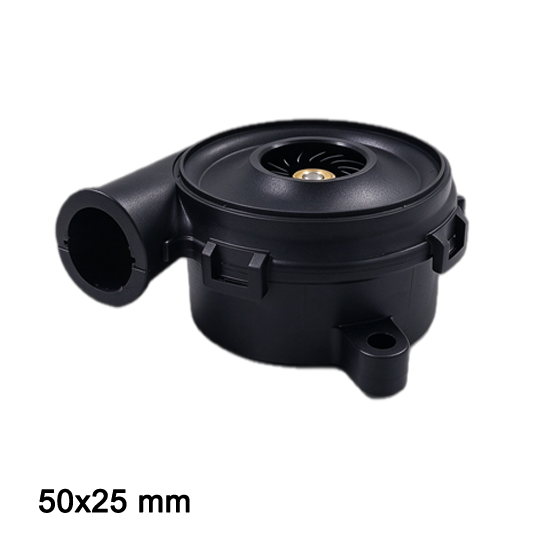
High pressure blower BA5025H24B-A-Integrated
Voltage 24V
38000rpm/min
Max 11.1 cfm,4.81 kpa
View Details
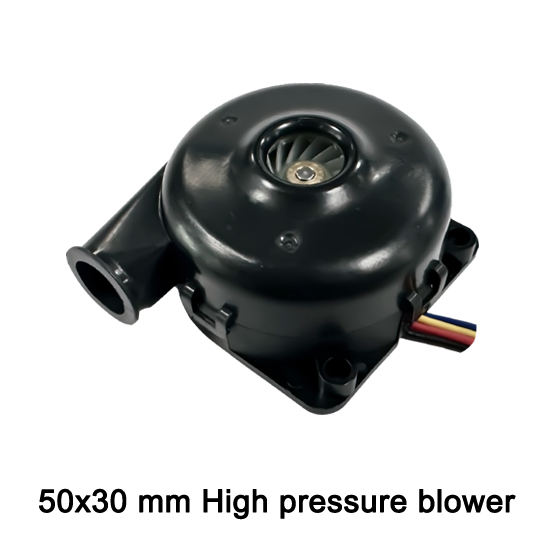
High pressure blower BA5030H24B-A -Integrated
Integrated driver 24V
28000rpm/min
Max 6 cfm,2.9 kpa
View Details
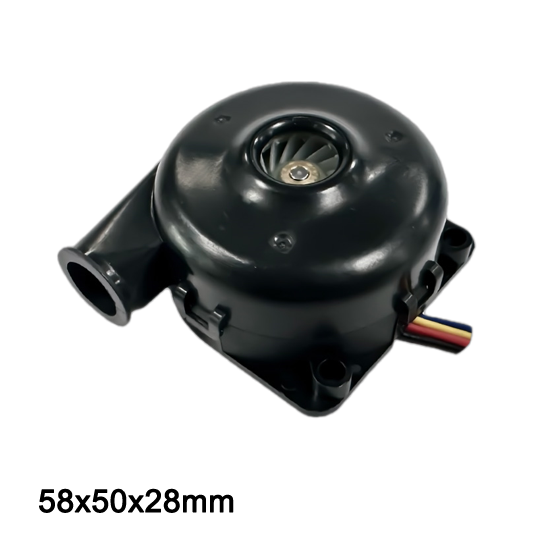
High pressure blower BA5030H12B-A
12v,8.6cfm,6.15kpa
58*50*28 mm
39100rpm/min
Auto cleaning air blower
View Details
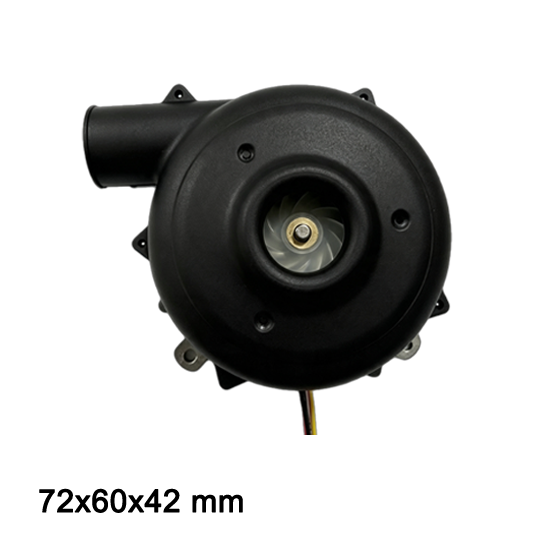
High pressure blower BA7050H24B-C-Unintegrated
Voltage 24V
40000rpm/min
Max 16 cfm,9.14 kpa
View Details
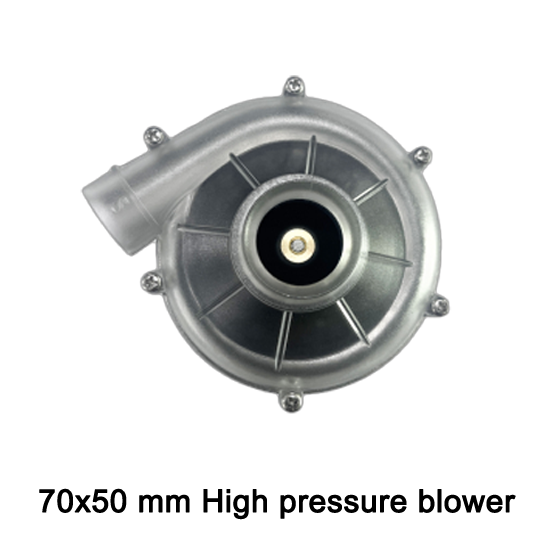
High pressure blower BA7050H24B
Voltage 24V
37000rpm/min
Max 17.8 cfm,7.89 kpa
View Details
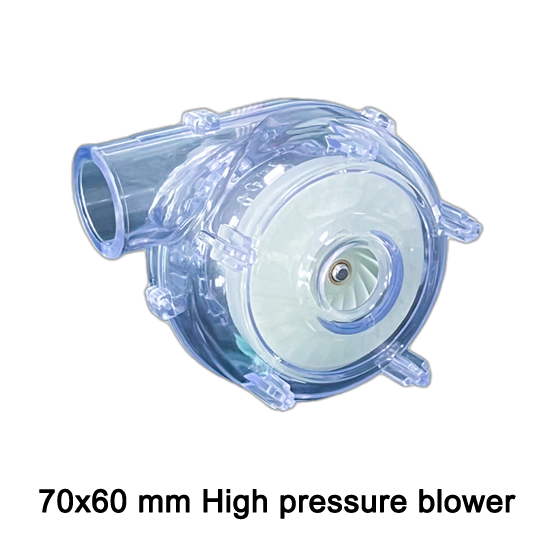
High pressure blower BA7060H24B
Integrated driver 24v
36000rpm/min
Max 16cfm,7.4kpa
View Details
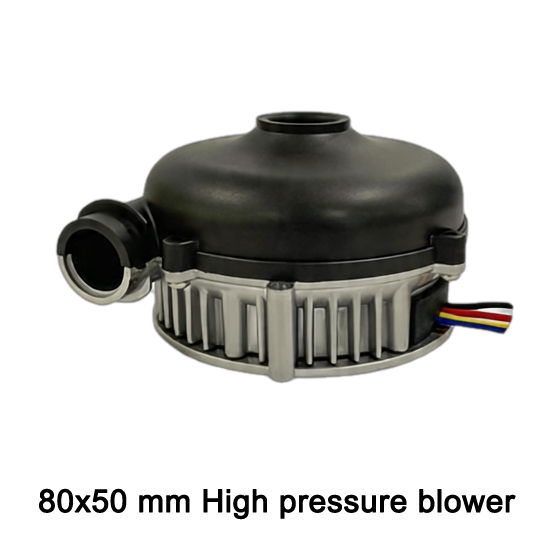
High pressure blower BA8050H24B-A
Integrated driver 24v
45000rpm/min
Max 26 cfm,13.3kpa
View Details
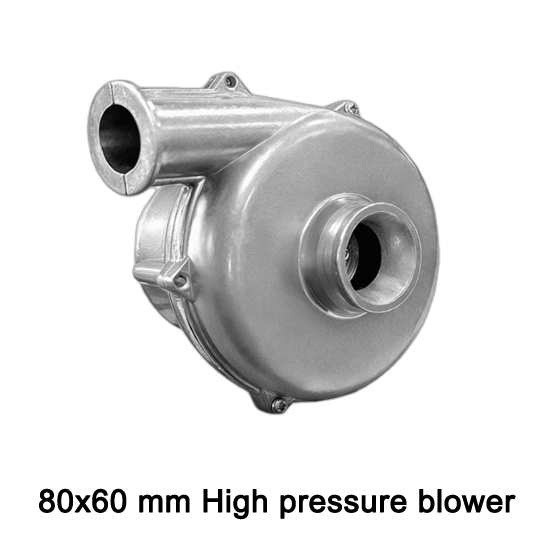
High pressure blower BA8060H24B-E-Unintegrated
Non-integrated driver 24v
48000rpm/min
Max 25cfm,18kpa
View Details
High Pressure Blower Specification & Selection Guide
Explore our comprehensive range of high pressure blowers engineered for high static pressure, intense air displacement, and maximum thermal reliability across medical, industrial, and automotive applications.
| Model / Series | Size (mm) | Voltage (V) | Speed (RPM) | Airflow (CFM) | Max Pressure (Kpa) |
|---|---|---|---|---|---|
| BA5025H24B-A | 50*50*25 | 24 | 38,000 | 11.1 | 4.81 |
| BA5030H24B-A | 50*50*30 | 24 | 28,000 | 6.0 | 2.90 |
| BA5030H12B-A | 58*50*28 | 12 | 39,100 | 8.6 | 6.15 |
| BA7050H24B-C | 72*60*42 | 24 | 40,000 | 16.0 | 9.14 |
| BA7050H24B | 70*70*50 | 24 | 37,000 | 17.8 | 8.50 |
| BA7060H24B | 70*70*60 | 24 | 36,000 | 16.0 | 7.40 |
| BA8050H24B-A | 80*80*50 | 24 | 45,000 | 26.0 | 13.30 |
| BA8060H24B-E | 80*80*60 | 24 | 48,000 | 25.0 | 18.00 |
| BA8060H24B-E-25kpa | 80*80*60 | 24 | 55,000 | 28.0 | 24.00 |
| BA8060H24B-B | 80*80*60 | 24 | 52,000 | 33.0 | 18.00 |
| BA9080H24B-A | 90*90*80 | 24 | 48,000 | 72.0 | 18.00 |
| BA9733HV12X | 97*97*33 | 12 | 8,200 | 65.3 | 1.98 |
| BA12060HH24B-A | 126.7*126.5*74 | 24 | 11,000 | 26.3 | 3.20 |
| BA12060HV24B-B | 143*134*71 | 24 | 15,000 | 70.5 | 6.7 |
| BA18089H02B-A | 209*191*145 | 220 | 14,000 | 240.5 | 11.20 |
How High Pressure Blower Solutions Overcome Thermal Bottlenecks and High Backpressure in Modern Hardware
In modern electronics, industrial machinery, and medical devices, thermal management engineers face a critical bottleneck: tight internal spatial constraints combined with severe system impedance. Standard axial cooling fans struggle when blowing through dense PCB stacks, dust filters, curved ventilation ducts, or narrow air paths, causing flow stalls and overheating. Integrating a specialized high pressure blower is the ultimate solution to deliver targeted airflow against extreme backpressure while maintaining system stability and thermal efficiency.
Engineered with micro-centrifugal impellers and precision brushless DC motors, a high-efficiency high pressure blower converts kinetic motor speed into concentrated static pressure up to 24 Kpa. This unique aerodynamic property allows air to be drawn in axially and discharged at a perpendicular 90-degree angle with tremendous velocity. Consequently, a premium high pressure blower easily drives refreshing airflow into highly restricted enclosures, rapidly purging waste heat without requiring bulky cooling footprints or causing severe acoustic disturbance.
Critical Applications of Industrial High Pressure Blowers
Thanks to their specialized high static pressure, high RPM capabilities, and rugged compact housings, high pressure blowers act as essential air supply and thermal management components across demanding sectors:
Medical Respiratory & CPAP Therapy Systems
In sleep apnea respirators (CPAP/APAP), High-Flow Nasal Cannula (HFNC) equipment, and portable ventilators, precision pressure delivery is a lifesaver. High pressure blowers maintain instant pressure response and ultra-smooth airflow transitions under strict dynamic resistance while operating silently inside hospital and home healthcare environments.
Fuel Cell Ventilation & Energy Systems
Hydrogen fuel cell stacks require accurate, continuous air feed through dense gas diffusion layers against strong backpressure. Industrial-grade high pressure blowers deliver precise stoichiometric air supply, preventing thermal degradation and ensuring optimal fuel cell power output under variable loads.
Advanced 3D Printing & Laser Processing
Industrial 3D printers rely on high pressure blowers to drive localized, high-velocity air jets through cooling ducts directly onto extruded filaments for rapid part solidification. Similarly, high-power laser engravers utilize them to instantly sweep away heavy fumes, particulate debris, and smoke from optical lenses.
Industrial Automation & Vacuum Sampling Equipment
From automated air sampling and gas detection sensors to vacuum pickup nozzles and air knife drying systems, high pressure blowers provide the continuous vacuum suction or positive pressure required to process materials reliably in modern automated manufacturing plants.
Advanced Technical Features of Our High Pressure Blower Series
1. Ultra-High Speed Motor & Impeller Design
Equipped with custom three-phase BLDC motors reaching speeds up to 55,000 RPM, our high pressure blowers deliver unmatched pressure head and volumetric air performance within extremely small physical envelopes.
2. Dynamic Backpressure Resistance
Engineered with static pressure ratings up to 24 Kpa, these blowers overcome heavy system impedance caused by HEPA filters, micro-channel heatsinks, and long ventilation hoses without stalling or surging.
3. Low NVH & Precision Dynamic Balancing
Utilizing high-precision dual-ball bearings and rigorous automated dynamic balancing, our blowers minimize vibration and acoustic noise, extending mechanical life expectancy up to 50,000+ continuous operating hours.
4. Intelligent PWM Speed Control
Supports standard PWM speed regulation and Tachometer signal feedback (FG), enabling real-time closed-loop control to match exact thermal loads, lower power consumption, and optimize system efficiency.
Key Product Requirements & Engineering Specifications
TKFAN manufactures a wide catalog of high-performance high pressure blower models engineered to solve demanding thermodynamic challenges in complex hardware:
- Wide Range of Input Voltages: Available in standard 12V, 24V, and high-voltage 220V configurations to integrate directly into various industrial and automotive power buses.
- Compact & Lightweight Housings: Form factors ranging from ultra-compact 50mm micro blowers to powerful 209mm industrial units, allowing flexible installation in tight spatial enclosures.
- Extensive Environmental Protection: Optional IP55 to IP68 waterproof and dustproof potting treatments ensure robust operation in harsh industrial or outdoor environments.
- Flame-Retardant Safety Materials: Constructed with UL 94 V-0 compliant materials, guaranteeing high thermal safety, structural integrity, and chemical resistance.
High Pressure Blower - Frequently Asked Questions (FAQ)
Find expert answers regarding high pressure blower technology, performance selection, custom voltage options, backpressure handling, and OEM customization services.
Q1: What is the key difference between a high pressure blower and a standard cooling fan?
A standard cooling fan (axial fan) delivers high air volume at very low static pressure, making it suitable for open airflow environments. A high pressure blower uses a centrifugal impeller to compress air and discharge it perpendicularly at high speed, generating high static pressure (up to 24 Kpa) to force air through dense filters, long ducts, or tight heatsinks.
Q2: How do I select the right high pressure blower model for high system backpressure?
Calculate your system's total impedance (pressure drop) across filters, vents, and internal ductwork at the required airflow rate (CFM). Choose a high pressure blower model whose P-Q curve (Pressure vs. Flow) operates comfortably above your system's resistance line to ensure stable airflow without motor overload.
Q3: Are these high pressure blowers suitable for sensitive medical CPAP and respiratory devices?
Yes. Models like our 5025 and 7050 series are specially optimized for medical CPAP and ventilator systems. They provide rapid dynamic acceleration/deceleration, strict pressure stability, and low-noise operation essential for patient comfort.
Q4: Can your high pressure blowers operate under extreme ambient temperatures?
Yes. Our industrial-grade high pressure blowers feature premium dual-ball bearings and wide-temperature motor insulation, allowing stable operation across temperatures ranging from -20°C to +70°C (-4°F to 158°F).
Q5: What voltage options are available for the high pressure blower line?
We offer standard 12V DC, 24V DC, and 220V AC input versions. For specific custom applications, we can also customize driver electronics to support wide operating voltage ranges (e.g., 9V–16V or 18V–30V).
Q6: Does the high pressure blower support speed regulation via PWM?
Yes, our brushless DC high pressure blowers can be configured with a 4-wire interface providing PWM input for precise speed control and an FG tachometer signal wire for real-time RPM monitoring by the host controller.
Q7: How does dynamic balancing affect the performance and lifespan of high RPM blowers?
At high speeds (up to 55,000 RPM), minor imbalances cause severe vibration, acoustic noise, and bearing wear. TKFAN performs 100% two-plane dynamic balancing on all high pressure blower impellers to ensure whisper-quiet operation and an extended operational life up to 50,000 hours.
Q8: Can I order high pressure blowers with waterproof or dustproof ratings for harsh environments?
Yes. We offer customizable IP55, IP67, and IP68 conformal coating or full vacuum epoxy potting options to protect internal stator windings and motor driver PCBs against water ingress, dust, high humidity, and corrosive gases.
Q9: Are the materials used in your blowers RoHS and REACH compliant?
All TKFAN high pressure blower products are manufactured using environmentally friendly raw materials that fully comply with international RoHS, REACH, and CE regulations, and feature UL 94 V-0 flame-retardant plastics.
Q10: What is the lead time and MOQ for OEM/ODM customized high pressure blowers?
Standard sample units for testing are usually dispatched within 3–5 business days with flexible order quantities. For OEM custom requests (custom wiring, special flanges, custom PWM response curves), production lead time is typically 3 to 4 weeks.
GET A QUOTE
High Pressure Blower Working Principle & Performance Demonstration
Watch this video demonstration to explore the advanced dynamic performance, micro-centrifugal impeller design, and continuous high static pressure airflow capabilities of our industrial DC high pressure blower series under severe backpressure environments.

Can't Find the Perfect Fan?
We offer customization services from wire length to full mold design. Get a prototype in 48 hours.
Request Custom Solution