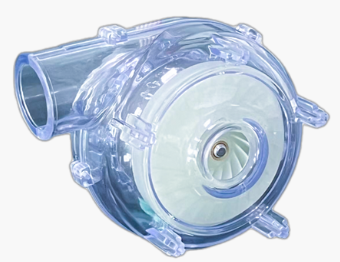
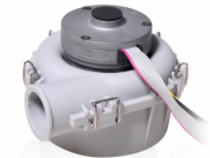
TKFAN possesses long-term technical accumulation in the high-end respiratory care industry. By deeply integrating into the global medical device supply chain, we bridge the gap between pioneering fluid aerodynamics and critical clinical compliance for sleep therapy equipment.
1.1 Classification of Home Respiratory Care Devices
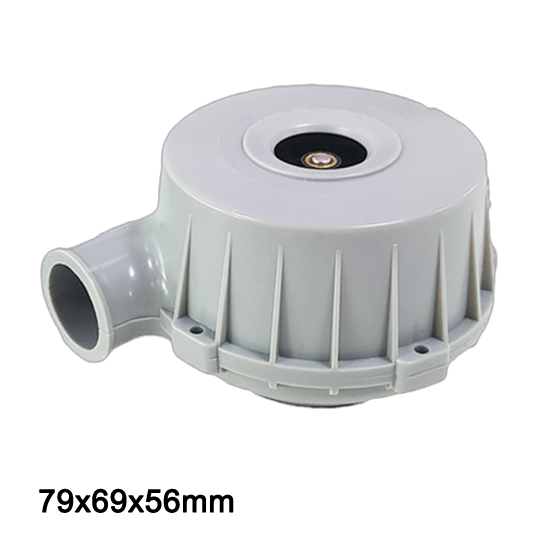
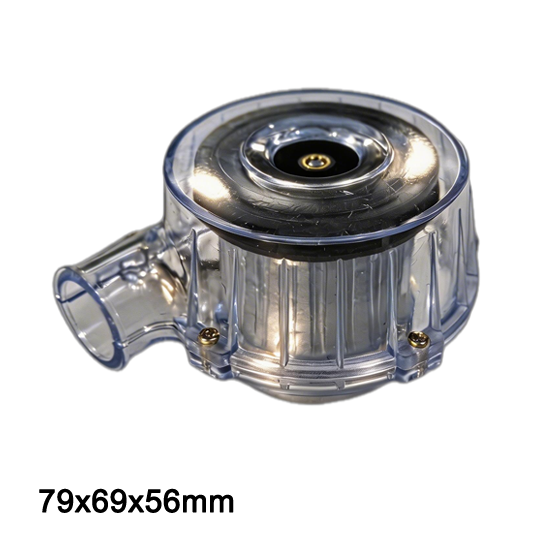
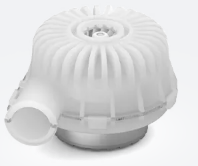
Personal sleep apnea hardware is primarily classified into portable travel devices and standard home-use systems. Portable devices are engineered for ultra-compact footprints and maximum portability; however, these strict physical limitations preclude the integration of built-in humidification chambers. Furthermore, the confined spatial envelope restricts the volume available for advanced shock absorption and acoustic dampening, which generally results in higher operational noise levels compared to home-use units.
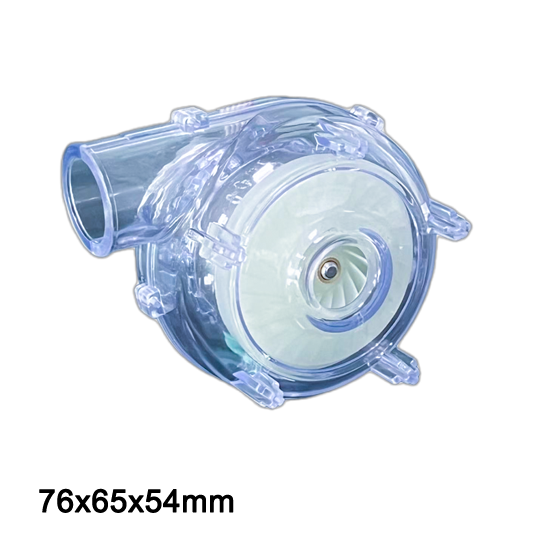
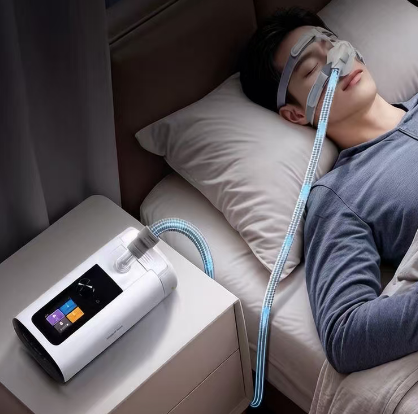
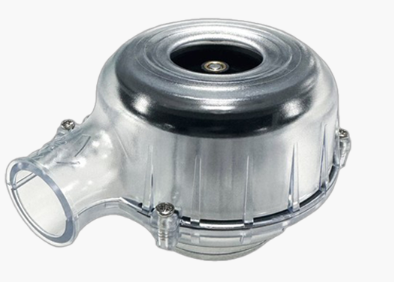
Conversely, home-use sleep therapy devices are not bound by rigid size constraints. This architectural freedom allows engineers to select slightly larger, highly efficient blowers while leaving ample room to implement sophisticated multi-stage vibration isolation and soundproofing structures. Additionally, these systems universally incorporate integrated humidification functionalities, delivering a significantly quieter, more comfortable, and biologically compliant therapy experience than travel-sized counterparts.
Portable Travel CPAP
Standard Home-Use CPAP
1.2 Core Performance Engineering of CPAP & Sleep Therapy Blowers
To satisfy the strict hardware validation protocols of global medical hardware OEMs, our CPAP blowers undergo exhaustive electrical consumption and pneumatic performance indexing across calibrated pressure baselines and airflow resistances:
Testing Item / Parameter Location (Rated DC 24V)
Performance Value Of TKFAN Blower (Newest Type)
Maximum Static Pressure (kPa)
5.5 kPa
Maximum Airflow Volumetric Rate (L/min)
440 L/min
Current at 4 cmH2O Pressure (with 4mm Restrictor)
0.105A
Current at 10 cmH2O Pressure (with 4mm Restrictor)
0.175A
Current at 20 cmH2O Pressure (with 4mm Restrictor)
0.3A
Current at 25 cmH2O Pressure (with 4mm Restrictor)
0.36A
Current at 30 cmH2O Pressure (with 4mm Restrictor)
0.42A
Current at 40 cmH2O Pressure (with 4mm Restrictor)
The matrix below provides a straightforward cross-brand horizontal analysis, highlighting the strategic market positioning, specific models, and identification of TKFAN medical-grade blowers alongside alternative regional and global market alternatives:
1.4 Global Client Footprint & Targeted Partnerships
TKFAN is a trusted strategic partner for leading global medical hardware OEMs and respiratory device factories. Our blowers are thoroughly engineered to seamlessly integrate into versatile premium ventilator architectures, delivering customized pneumatic performance while strictly complying with international healthcare manufacturing standards.
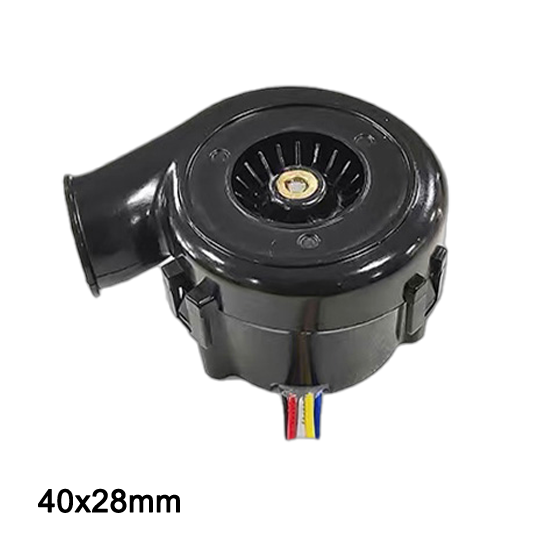
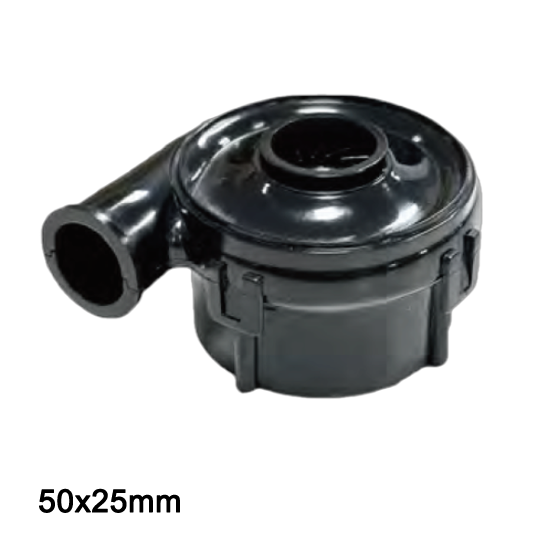
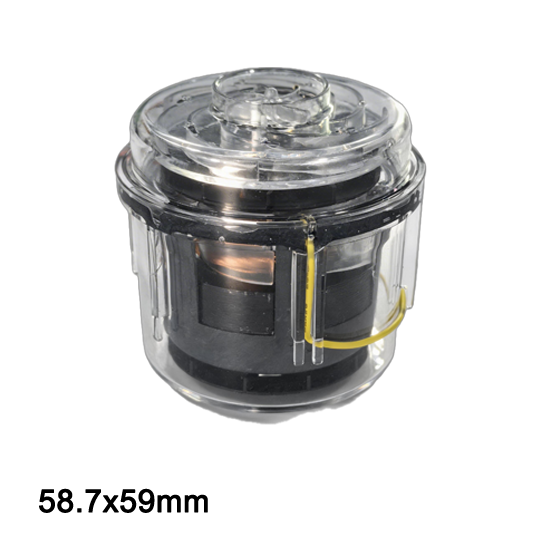
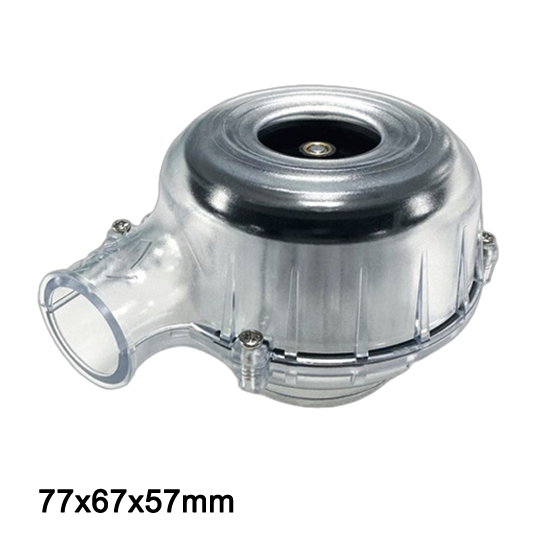
To perfectly match various internal spatial constraints and thermodynamic designs of modern home respiratory devices, TKFAN supplies an extensive, highly structured selection range. From our ultra-compact 40mm micro blowers to high-capacity 70mm series, we ensure precise pneumatic configurations for every global OEM/ODM requirement:
Acoustic comfort and long-term mechanical endurance are critical benchmarks for high-performance sleep therapy ventilators. Conventional miniature blowers generally feature a standard internal-rotor brushless motor combined with a single impeller mounted inside a volute housing. Because this conventional layout occupies only one single end of the motor shaft, alternative market solutions are physically restricted to Single-Plane Dynamic Balancing, calibrated solely on the impeller surface after product assembly. This structural limitation often leaves residual eccentric unbalance uncorrected along the inner motor core, triggering high-frequency micro-vibrations, escalating clinical noise levels, and leading to premature bearing failure under prolonged high-speed treatment cycles.
To address this medical hardware bottleneck, TKFAN has successfully introduced a highly optimized engineering methodology by pioneering the implementation of double-sided balancing concepts within the medical CPAP blower segment. By deliberately extending both ends of the high-speed BLDC motor shaft, our design positions the main aerodynamic impeller on the front end while integrating a custom-engineered brass counterweight component on the opposing rear end.
Crucially, the addition of this secondary mass node is not meant to act as a fixed balancing weight; instead, it establishes an indispensable dual-plane correction framework. This allows the entire integrated rotor assembly to be mounted onto specialized, high-precision dynamic balancing machinery, performing meticulous double-sided material removal (fine cutting/milling reduction) simultaneously. This full-spectrum coaxial calibration effectively eliminates rotational asymmetry across two distinct planes, enabling incredibly low structural vibration, mitigating NVH thresholds below clinical requirements, and substantially extending the L10 lifecycle of premium bearings.
Standard Single-Plane Correction
1 Cutting Plane
Impeller
Conventional blowers mount an impeller on only one side of the shaft. Dynamic balance tuning is confined to this single surface, leaving uncorrected mechanical unbalance inside the motor core.
TKFAN Coaxial Dual-Plane Material Removal
Plane A (Milling)Plane B (Milling)
Brass Weight
Impeller
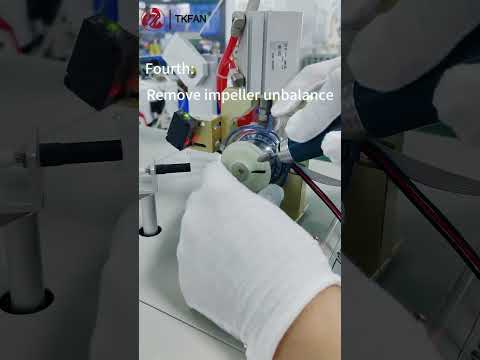
TKFAN extends both ends of the shaft to accommodate a dedicated brass element. This configuration allows automatic balancers to perform micro-milling material removal on two planes simultaneously, achieving near-zero vibration.
Click to Watch: Real-world testing of TKFAN CPAP blower utilizing coaxial dual-plane dynamic balancing technology.
GET A QUOTE
04
Scalable Mass Production & Ultimate Cost-Effectiveness
Maintaining a resilient, cost-effective supply chain without compromising stringent medical-grade quality standards is a core capability of TKFAN. Our specialized manufacturing facility operates advanced, highly automated assembly lines specifically configured for high-speed brushless DC blowers. By utilizing robotic automated winding, smart component insertion, and in-line visual inspection systems, we significantly minimize manual intervention, optimize production yield rates, and guarantee exceptional unit-to-unit consistency for high-volume monthly orders.
Furthermore, our intelligent production floor is fully integrated with a robust Manufacturing Execution System (MES) and a comprehensive quality traceability matrix. Every single CPAP blower undergoing our signature double-sided dynamic cutting correction generates digitized balancing data and vibration indexes linked directly to its serialized laser barcode. This large-scale, automated infrastructure allows TKFAN to drive down marginal manufacturing costs and maximize operational efficiency. As a result, we provide global medical device OEMs with premium, high-end pneumatic hardware that delivers a definitive cost advantage, unmatched delivery speeds, and robust product supply security.
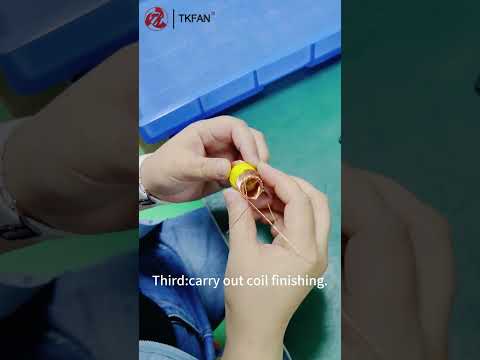
Motor Manufacturing Process: Motor manufacturing process for the BA5060H24B CPAP blower.
05
Advanced Driver Boards & Tailored OEM Control Solutions
To ensure seamless integration and optimal dynamic response for medical-grade CPAP blowers, TKFAN provides comprehensive driver board solutions alongside custom OEM control software development. Whether you require standard plug-and-play driver modules supporting PWM/0-5V analog speed control, or custom PCB layouts designed to match unique mechanical and electrical constraints, our engineering team delivers precise hardware compatibility and stable BLDC motor drive algorithms.
Our driver solutions feature rapid acceleration profiles, over-current protection, and ultra-quiet motor commutation designed specifically to complement our high-speed centrifugal blower series. From initial PCB layout prototyping to high-volume manufacturing, we tailor every aspect of the driver system to meet your exact medical device specifications.
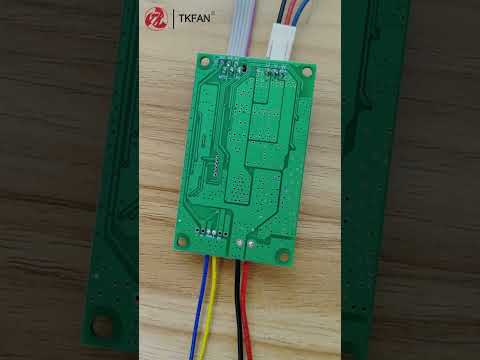
Driver Operation Guide: Demonstration and operational walkthrough for TKFAN medical blower driver boards.
Medical CPAP Blower - FAQ
Explore frequently asked questions about high-speed CPAP blowers, covering essential engineering insights on acoustics, dynamic control, biocompatibility, and customized manufacturing options.
Q1: What distinguishes a medical CPAP blower from a standard industrial centrifugal blower?
A medical CPAP blower prioritizes absolute biocompatibility, rapid dynamic response, and low acoustic noise. Unlike industrial models, the entire internal air passage must comply with ISO 10993 standards to guarantee no toxic outgassing.
Q2: How does a 24V CPAP blower achieve noise levels under 25 dB(A) while running at high speeds?
Achieving ultra-quiet operation involves strict acoustic engineering. TKFAN utilizes high-grade dual-ball bearings, automated double-sided dynamic balancing of the impeller, and advanced computational fluid dynamics (CFD) casing structures.
Q3: Can your CPAP blower series handle both CPAP (fixed) and BiPAP (variable) pressure protocols?
Yes. Thanks to our low-inertia micro impeller designs and rapid BLDC sensorless motor acceleration, our CPAP blower series is excellent for bi-level (BiPAP) and auto-adjusting (APAP) therapies.
Q4: What are the material safety guarantees for the air pathways in your blowers?
Patient safety is our top priority. The impellers and scroll housings of our medical blowers are molded from specialized biocompatible engineering plastics. No volatile organic compounds (VOCs) or toxic chemical coatings are utilized during assembly.
Q5: How is the speed controlled in a TKFAN brushless CPAP blower?
Our blowers incorporate an integrated or external driver board supporting precise Pulse-Width Modulation (PWM) or 0-5V analog voltage control. This allows the host therapeutic system's microcontroller to accurately govern the blower's RPM.
Q6: What is the expected operational lifespan of these high-speed miniature blowers?
By integrating premium, original Japanese NMB dual-ball bearings and optimizing the motor's thermal layout, our medical-grade CPAP blower units achieve an L10 life expectancy of up to 50,000 to 70,000 hours.
Q7: Do you provide custom modifications for specific dimensions, voltages, or connectors?
Absolutely. TKFAN provides extensive OEM/ODM customization services. We can alter input voltages (e.g., specialized 12V or 24V setups), modify structural housing mountings, adjust impeller aerodynamic pitches, or supply customized wire harnesses.
Q8: How do these blowers overcome high backpressure within humified CPAP circuits?
Our centrifugal impeller design is specifically engineered for high static pressure output. While standard fans stall when pushed against dense bacterial filters, humidification chambers, and long narrow hoses, our CPAP blower compresses the air effectively.
Q9: Can TKFAN CPAP blowers be utilized for high-performance 3D printer cooling systems?
Yes, absolutely. Beyond medical ventilation, our CPAP blowers are widely sourced by industrial automation and open-source hardware developers (such as the Voron project) for premium 3D printer part cooling. Due to their ultra-high static pressure, exceptionally low acoustic levels (<26.5dB), and dual-sided dynamic balancing, these blowers prevent overheating in high-speed printing environments without introducing structural micro-vibrations that cause ghosting. If your engineering project requires specific custom wiring, 12V/24V voltage adjustments, or specialized mounting brackets, please reach out to our team.
Q10: How do I select the right CPAP blower for our medical device development?
Selecting the ideal CPAP blower requires balancing multiple engineering benchmarks: 1) Pneumatic Performance: Ensure the blower meets your maximum pressure (e.g., up to 5kPa or 6kPa) and volumetric airflow requirements at specified calibrated restrictors. 2) Acoustic NVH Levels: For patient comfort, choose blowers utilizing advanced coaxial dual-plane dynamic balancing to keep operational noise below 26.5 dB. 3) Dynamic Response Time: The blower motor and low-inertia impeller must accelerate rapidly to support dynamic bi-level (BiPAP) pressure adjustments. 4) Biocompatibility: Ensure all materials in the air pathway strictly comply with medical standards like ISO 10993 to avoid toxic outgassing. Our team at TKFAN provides comprehensive OEM/ODM customization to help you match these exact technical specifications.
GET A QUOTE
Can't Find the Perfect Fan?
We offer customization services from wire length to full mold design. Get a prototype in 48 hours.