


Low operating voltage Blower (3.3V/5V) for Compact Devices
Introducing TKFAN’s low operating voltage DC brushless blower series, precision-engineered for battery-powered systems, compact portable devices, and low-power energy-saving electronics. Designed with highly efficient stator windings and low internal resistance, this micro blower delivers reliable volumetric airflow and stable static pressure even under restricted power supplies or minor voltage fluctuations.
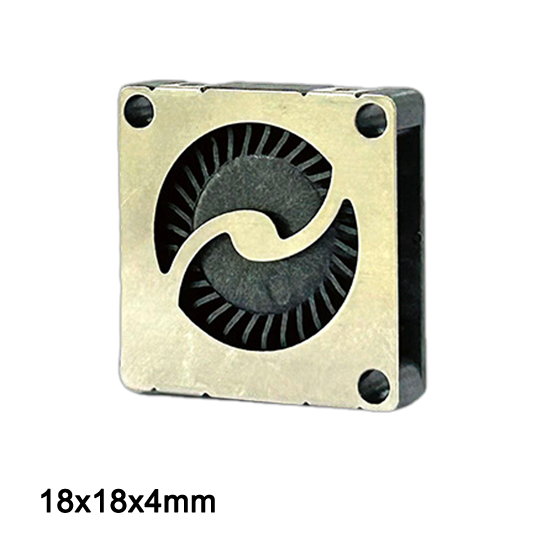
5V High speed low operating voltage blower BA1804H05B-A
Voltage 5V
20000rpm/min
Max 0.40 cfm,0.097 kpa
View Details
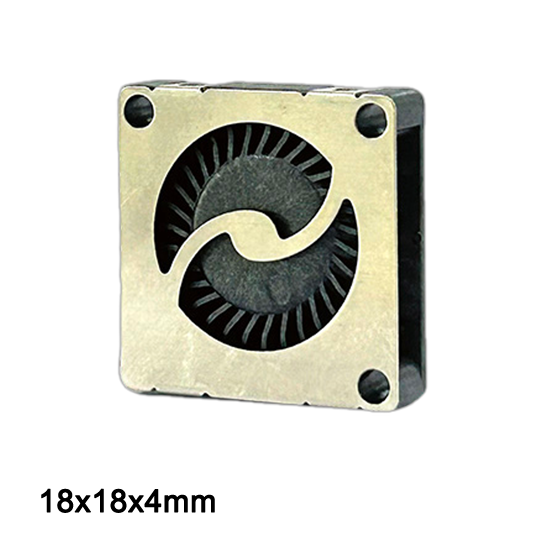
5V Low operating voltage Blower BA1804L05B-A
Voltage 5V
13000rpm/min
Max 0.20 cfm,0.06 kpa
View Details
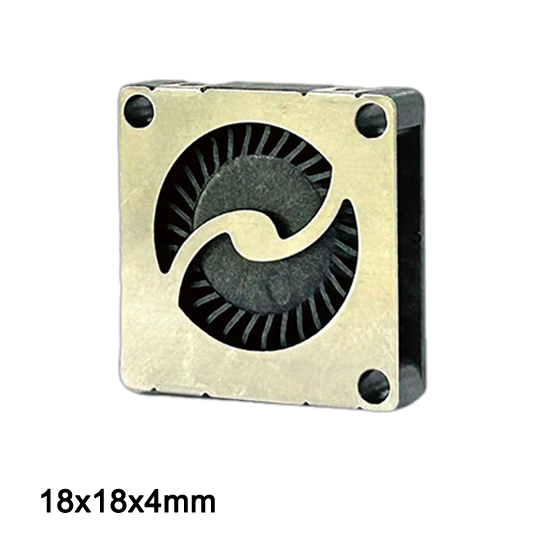
3.3V Low operating voltage Blower BA1804L3.3B-A
Voltage 3.3V
10000rpm/min
Max 0.14 cfm,0.03 kpa
View Details
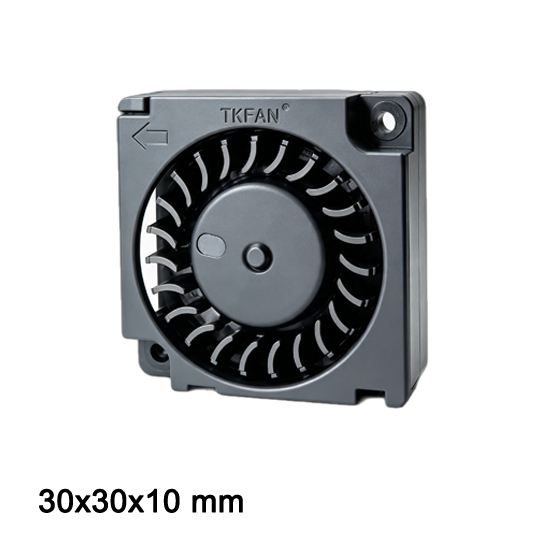
Low operating voltage Blower BA3010H05B-A
Voltage 5V
8500rpm/min
Max 1.39 cfm,0.05 kpa
View Details
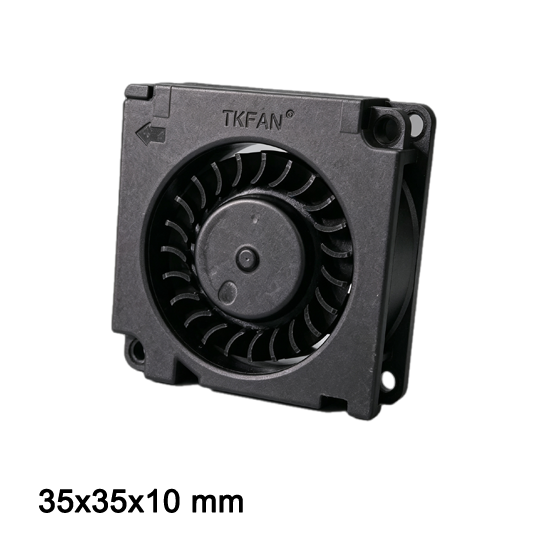
Low operating voltage Blower BA3510H05B-A
Voltage 5V
10000rpm/min
Max 2.2 cfm,0.1 kpa
View Details
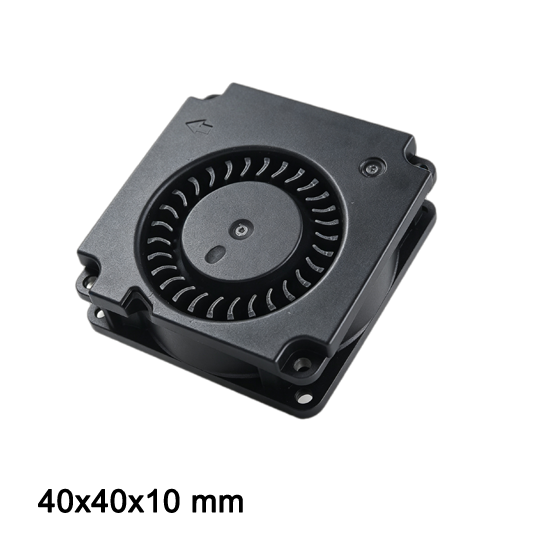
Low operating voltage Blower BA4010HV05B-A
Voltage 5.7V
14700rpm/min
Max 4.3 cfm,0.29 kpa
View Details
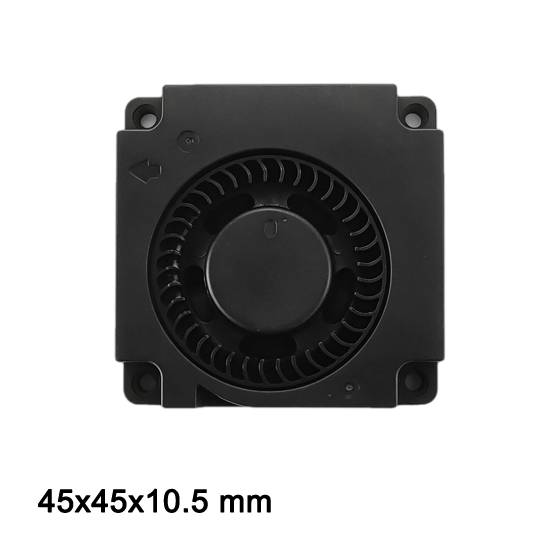
Low operating voltage Blower BA4510H05B-A
Voltage 5V
8500rpm/min
Max3.7 cfm,0.23 kpa
View Details
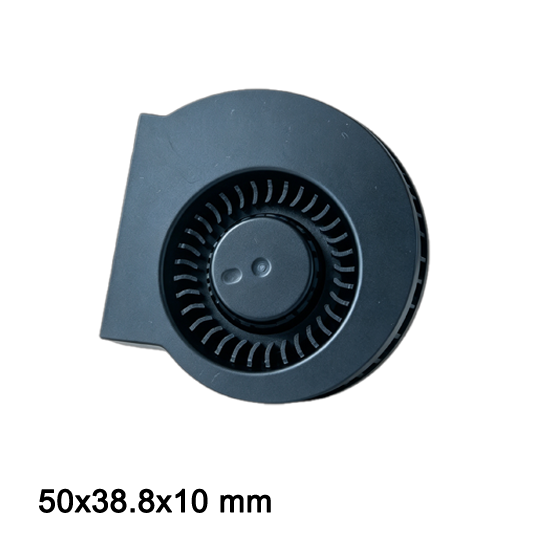
Low operating voltage Blower BA5010HV05B-D
Voltage 5V
11000rpm/min
Max6.1 cfm,0.26 kpa
View Details
Low Voltage Blower Selection Guide
Compare voltage, size, speed, airflow and static pressure to choose the right micro blower for your device design.
| Model / Series | Size (mm) | Voltage (V) | Speed (RPM) | Airflow (cfm) | Max Pressure (pa) |
|---|---|---|---|---|---|
| BA1804L3.3X | 18*18*4 | 3.3 | 10,000 | 0.14 | 30 |
| BA1804H05X | 18*18*4 | 5 | 20,000 | 0.40 | 97 |
| BA1804L05X | 18*18*4 | 5 | 13,000 | 0.20 | 60 |
| BA3010H05X-A | 30*30*10 | 5 | 8,500 | 1.39 | 50 |
| BA3510H05B | 35*35*10 | 5 | 10,000 | 2.20 | 100 |
| BA4010HV05B-A | 40*40*10 | 5.7 | 14700 | 4.3 | 290 |
| BA4510H05B-A | 45*45*10.5 | 5 | 8500 | 3.7 | 230 |
| BA5010HV05B-D | 50*38.8*10 | 5 | 11000 | 6.1 | 260 |
| U97LM-005KK | 98*101*57 | 5 | 8500 | 15.9 | 500 |
How Low Operating Voltage Blower Solves Thermal & Space Bottlenecks in Compact Devices
As modern engineering pushes toward ultra-compact, portable, and wearable smart devices, thermal design engineers face critical challenges. Handheld medical instruments, VR/AR headsets, micro-sensors, and drones all demand efficient heat dissipation within extremely confined spaces. Traditional cooling fans often fail because they require higher voltages or lack the static pressure to force air through tightly packed internal architectures. This is where a high-performance low operating voltage blower becomes an indispensable component.
Operating within a 3.3V to 5V range, a premium low operating voltage blower balances minimal energy consumption with high aerodynamic efficiency. In battery-powered applications, minimizing power draw while sustaining targeted airflow is vital to extending product battery life. Furthermore, standard cooling fans struggle against high backpressure in narrow air ducts, leading to stall conditions and thermal runaway. A micro centrifugal low operating voltage blower overcomes this restriction by generating exceptional static pressure, ensuring consistent thermal relief and system reliability.
Advanced Thermal Solutions Using Micro Blowers
1. Targeted Micro-Space Forced Air Cooling
By incorporating a 3.3V or 5V low operating voltage blower, engineers can direct a concentrated jet of air precisely onto hot spots (such as microprocessors or sensor modules). This localized approach prevents overall case temperature from rising, keeping handheld devices comfortable to hold and touch.
2. High-Backpressure Dust & Moisture Purging
Leveraging high static pressure (up to 97 pa), these mini blowers act as active cleaning and ventilation mechanisms. They forcefully drive air through tiny, restricted air nozzles, clearing away fine dust, debris, and condensation without requiring heavy or bulky pneumatic equipment.
Key Product Requirements & Performance Features
TKFAN designs and manufactures specialized low operating voltage blower series tailored for high-density electronic environments. Our products deliver the durability and reliability required by industrial and consumer industries alike:
- Ultra-Compact Footprint (18x18x4 mm): Engineered for extreme space constraints, fitting seamlessly into the slimmest hardware housings without disrupting internal PCB layouts.
- Low Power & Stable Wide-Voltage Drive: Optimized for 3.3V and 5V battery rails, maintaining stable performance even as voltage drops during battery discharge cycles.
- Superior Static Pressure (Up to 97 pa): The centrifugal impeller design delivers exceptional static pressure, easily overcoming fluid resistance in miniature cooling ducts.
- High Speed with Low NVH: Reaching up to 20,000 RPM, our blowers leverage precise dynamic balance engineering to keep noise and vibration levels at an absolute minimum.
- Industrial-Grade Protection & Reliability: Available with customized IP protection ratings to safeguard components against dust and moisture ingress, extending equipment service life.
Low Operating Voltage Blower - FAQ
Find answers to common questions about 3.3V and 5V micro blowers, including voltage range, airflow, pressure, applications and customization.
Q1: What are the primary advantages of a low operating voltage blower in portable electronics?
A low operating voltage blower (operating at 3.3V or 5V) allows direct integration with standard logic-level power rails or battery cells. This eliminates the need for boost converters, reducing circuit complexity, saving PCB space, minimizing electromagnetic interference (EMI), and maximizing overall system efficiency.
Q2: How does an 18x18x4 mm micro blower achieve up to 97 pa of static pressure?
Despite its miniature size, the centrifugal design accelerates air radially using high-efficiency blades spinning up to 20,000 RPM. This kinetic energy transforms effectively into static pressure, enabling the low operating voltage blower to push air through tight air channels where an axial fan would stall.
Q3: Can these 3.3V and 5V micro blowers operate safely under fluctuating battery voltages?
Yes. TKFAN's low operating voltage blower series features an integrated micro-driver circuit that supports a broad voltage threshold. For example, a 3.3V model functions reliably across a 2.5V–3.5V range, ensuring consistent thermal cooling even as battery capacity decreases.
Q4: What applications benefit most from an 1804-size micro blower?
They are ideally suited for wearable devices (VR headsets, smart glasses), portable gas detectors, handheld medical diagnostics, miniature drones, and compact 3D printer printheads where every millimeter and gram counts.
Q5: Is it possible to customize the speed control (PWM) for these low voltage models?
Yes, custom configurations are available. We can integrate pulse-width modulation (PWM) or frequency/voltage speed regulation features, allowing your system MCU to dynamically adjust the blower's RPM and minimize power consumption during low-load operations.
Low Operating Voltage Blower Performance Demo
Watch our 1804 series micro low voltage DC blower demonstrate exceptional airflow and static pressure in real-time testing.
GET A QUOTE

Can't Find the Perfect Fan?
We offer customization services from wire length to full mold design. Get a prototype in 48 hours.
Request Custom Solution