
×
Blogs – PC Banner Image
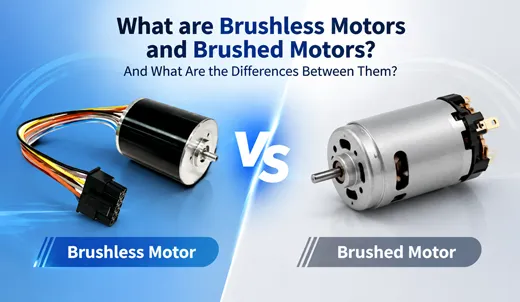
What are brushless motors and brushed motors, and what are the differences between them?
15 September, 2026

What are brushless motors and brushed motors, and what are the differences between them?

On the surface, brushed motors and BLDC motors accomplish the same task: converting direct current (DC) into mechanical rotation. However, the fundamental difference between mechanical commutation (brushed motors) and electronic commutation (BLDC motors) results in significant disparities in actual performance—specifically regarding energy efficiency, service life, noise levels, maximum rotational speed, and maintenance costs.

Check more
What are external-rotor motors and internal-rotor motors,  and what are the differences between them?
14 September, 2026

What are external-rotor motors and internal-rotor motors, and what are the differences between them?

Inner and outer rotor configurations are fundamental structural designs for BLDC motors that determine the performance of fans and blowers. Inner-rotor motors feature low moment of inertia and rapid dynamic response, supporting ultra-high speeds; they are well-suited for applications such as high-pressure medical blowers, automotive sensor cleaning blowers, and air sampling equipment for analytical instruments. Outer-rotor motors offer high moment of inertia, excellent stability during constant-speed operation, and a compact axial profile, making them ideal for cabinet cooling, fresh air ventilation, and thermal management in home appliances.

Check more
The Critical Role of Blower Sealing Performance in PAPR, Particle Counter, and CPAP Medical Systems
14 August, 2026

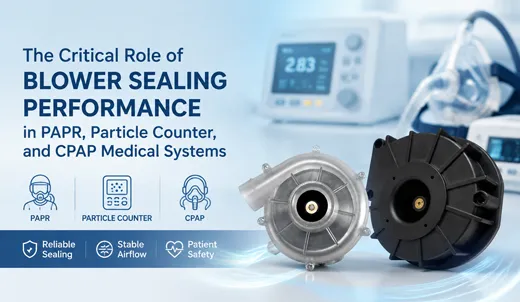
The Critical Role of Blower Sealing Performance in PAPR, Particle Counter, and CPAP Medical Systems

In applications involving PAPR, particle counter, and CPAP blowers, sealing performance is by no means a trivial mechanical detail. The integrity of the seal directly determines operator safety, the reliability of instrument measurements, and the efficacy of clinical therapy. Seal failure rarely causes an immediate, total shutdown of the blower; instead, it often manifests as insidious performance drift across the entire system—such as insufficient positive pressure, inaccurate sampling flow rates, unstable therapeutic pressure, reduced battery life, increased noise levels, and the gradual degradation of components.

Check more
Air Particle Counter Solutions: Working Principles, Brands & Architecture
25 July, 2026

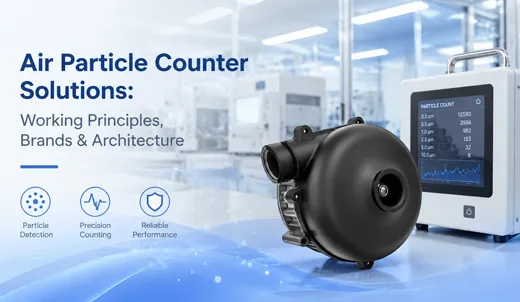
Air Particle Counter Solutions: Working Principles, Brands & Architecture

Airborne particle counters serve as the "eyes" of cleanroom monitoring. Their two primary technical principles—light scattering and condensation nuclei—meet the requirements for detecting particles at both the micron and nanometer scales. Five major brands—Lighthouse, Beckman Coulter, TSI, PMS, and Climet—each offer distinct advantages: Lighthouse provides a comprehensive product line and user-friendly interfaces; Beckman Coulter’s Met One series is the industry benchmark for pharmaceuticals; TSI leads the field in condensation particle counting and nanoparticle detection; PMS excels in monitoring ultra-pure environments and ultra-high-sensitivity detection; and Climet—with over 60 years of industry experience, dozens of pioneering technologies, exceptionally low calibration failure rates, and the lowest total cost of ownership—is the preferred choice for users prioritizing long-term reliability and regulatory compliance.

Check more
Why Parylene Coating is the Game-Changer for Waterproof DC Fans & Motors
15 July, 2026

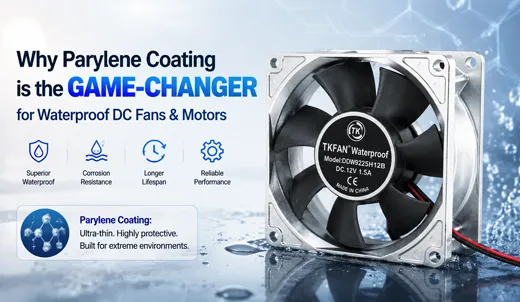
Why Parylene Coating is the Game-Changer for Waterproof DC Fans & Motors

For outdoor telecommunications cabinets, electric vehicle charging stations, and marine electronic equipment, standard cooling fans are frequently exposed to high humidity, condensation, and salt spray. Without adequate protection, these environmental hazards can cause copper coil corrosion and short circuits, ultimately leading to motor seizure. To address this issue, engineers have traditionally relied on liquid conformal coatings. However, as electronic components shrink in size and performance demands rise, an aerospace-grade technology—parylene conformal coating—has come into the spotlight.

Check more
Bubble CPAP system with compatible blower for neonatal and respiratory therapy applications
23 June, 2026

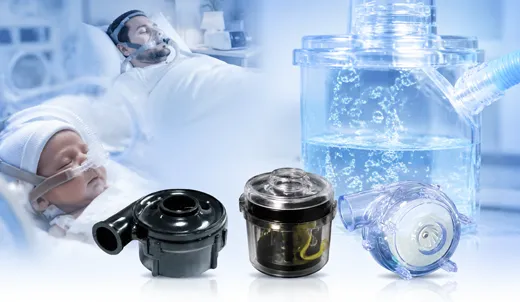
What type of blower can be used with a bubble CPAP system?

Bubble CPAP systems cannot achieve safe and stable ventilation using standard cooling fans, brushed air pumps, or non-medical air compressors; only a fully medically certified 24V brushless DC centrifugal turbine CPAP blower—capable of delivering stable airflow, rapid dynamic pressure regulation, and ultra-low operating noise, while resisting corrosion from humidified moisture—can meet the requirements for bCPAP ventilation therapy across neonatal, pediatric, and adult applications.

Check more