


220V AC Blower Fans & Industrial Centrifugal Blowers
Introducing TKFAN’s industrial-grade 220V air blower series, engineered for heavy-duty thermal management, high-volume localized exhaust, and continuous high-power cooling systems. Purpose-built to plug directly into standard commercial AC power grids, these robust centrifugal blowers deliver massive volumetric airflow and stable static pressure to handle dense systemic thermal resistance without requiring external power adapters.
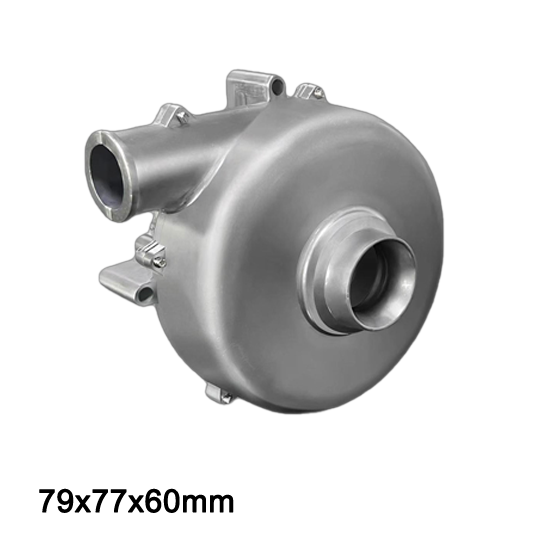
220V AC Air Blower BA8060H02B Industrial Centrifugal Fan
Non-integrated driver 220V
52000rpm/min
Max 33cfm18kpa
View Details
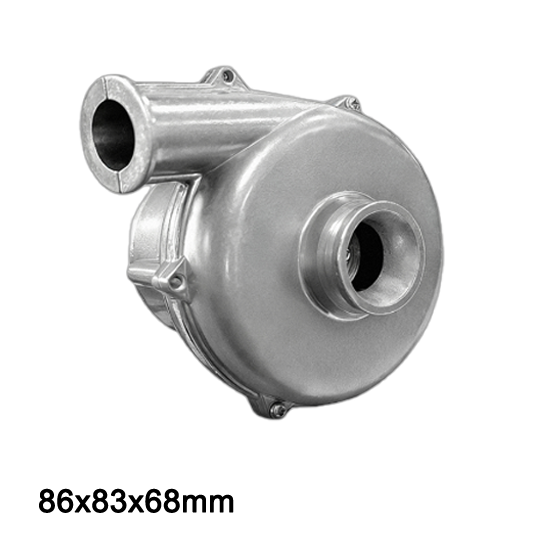
220V AC Air Blower BA8060H02B-E Industrial Centrifugal Fan
Non-integrated driver 220v
45000rpm/min
Max 23cfm,15kpa
View Details
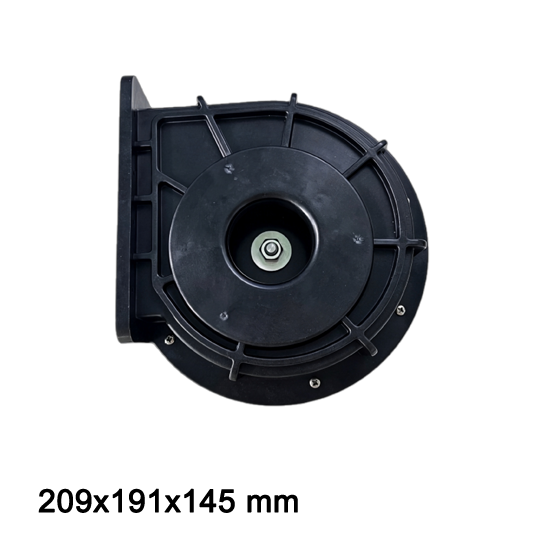
220V AC Air Blower BA18089H02B Industrial Centrifugal Fan
220V
14000rpm/min
Max 240.5cfm11.2kpa
View Details
1
Industrial 220V AC & Brushless Blower Selection Guide
Selecting an industrial-grade 220V Air Blower requires careful assessment of fluid flow curves and electrical reliability parameters. The TKFAN 220V brushless blower series delivers optimized thermal balance, continuous high static pressure, and versatile dimension options for compact system integration.
| Model Spec Group | Size (mm) | Driver Type | Max Speed (RPM) | Max Airflow (CFM) | Max Pressure (Kpa) |
|---|---|---|---|---|---|
| BA8060H02B-B-Unintegrated | 79 × 77 × 60 mm | 220V AC Input (External Driver) | 52000 rpm/min | 33 cfm | 18 kpa |
| BA8060H02B-E-Unintegrated | 86 × 83 × 68 mm | 220V AC Input (External Driver) | 45000 rpm/min | 23 cfm | 15 kpa |
| BA18089H02B-A | 209 × 191 × 145 mm | 220V AC Input (External Driver) | 14000 rpm/min | 240.5 cfm | 11.2 kpa |
Overcoming Industrial Thermal Resistance: The Strategic Value of a High-Efficiency 220V Brushless Blower
In modern industrial systems, commercial equipment infrastructures, and heavy-duty ventilation networks, thermal management is no longer just about moving air—it is about overcoming immense pneumatic impedance. Engineers and sourcing managers frequently specify air-moving configurations based strictly on free-air delivery metrics, only to witness operational stagnation when the system meets real-world constraints. When air pathways are restricted by dense particulate filters, convoluted duct routing, or tightly packed electronic enclosures, standard axial cooling components fail to deliver. This performance bottleneck is precisely why a high-pressure 220V AC blower has become the global standard for heavy-duty system cooling, localized exhausting, and pneumatic media delivery.
Operating on the universally accessible 220V AC or rectified high-voltage DC grid architecture, a premium 220V brushless blower seamlessly bridges the operational gap between high-pressure low-volume air compressors and high-volume low-pressure industrial fans. By translating kinetic energy into concentrated, high-velocity perpendicular streams of air, these specialized mechanical air movers generate the static pressure required to maintain adequate fluid dynamics. This comprehensive analysis evaluates the underlying engineering challenges of high-voltage thermal systems and explains why integrating a rugged high-voltage air mover effectively resolves critical industry pain points.
1. Deciphering the Core Challenges in 220V Fluid Dynamic Operations
When developing large-scale industrial machinery, commercial appliances, or server arrays, engineers face a critical layout decision: how to effectively manage high heat dissipation within a restricted space. Standard mains power architectures dictate the use of 220V electrical supply to maintain low current draws and minimize localized transmission resistance within internal control wiring. However, raw supply voltage is only part of the thermal equation.
1.1 The Reality of System Static Pressure and Impedance
Every structural constraint inside an equipment enclosure—from intricate copper cooling fins and structural circuit layouts to external exhaust louvers and air-purification filters—acts as an aerodynamic impediment. This cumulative resistance is mathematically categorized as system backpressure. When an ordinary cooling fan encounters high backpressure, its blades experience aerodynamic stall, causing volumetric airflow to plummet toward zero. A high-performance 220V brushless blower uses specialized micro-centrifugal geometry to prevent this failure mode. Air drawn into the central impeller is accelerated centrifugally into a restrictive spiral volute, compressing molecules and expelling them with high static pressure to consistently overcome severe system impedance.
1.2 The Power Grid Bottleneck: AC Mains vs. High-Voltage Brushless DC
A historic pain point within the 220V equipment tier involves motor topology selection. Traditional 220V AC asynchronous motors are heavy, run hot due to high internal induction losses, and lack accurate speed modulation capabilities. To counter these limitations, modern thermal design has shifted toward high-voltage 220v brushless blowers. These systems feature integrated digital rectification circuitry that converts incoming 220V mains power into optimized DC pulses. This engineering milestone yields up to a 60% reduction in power consumption, decreases motor operating temperatures, and enables precise digital variable speed control via intelligent automation parameters.
Engineering Sourcing Principle: For sealed multi-stage enclosures or long-distance duct ventilation pipelines, choosing a 220V AC centrifugal blower over an axial fan prevents unexpected system shutdowns caused by static impedance stalls.
1.3 220V Blower Selection: Traditional AC Induction vs. High-Efficiency 220V AC-Input BLDC Technology
When sourcing an industrial 220V AC blower, engineering teams often evaluate the trade-offs between legacy AC induction blowers and modern high-voltage AC-input Brushless DC (BLDC) solutions. While standard AC induction blowers connect directly to grid power, they frequently suffer from thermal dissipation loss, fixed operational speed, and heavy structural weight. TKFAN’s high-voltage 220V brushless blower series combines direct AC mains power accessibility with advanced digital brushless motor technology—delivering superior energy savings, precise variable speed control, and lower heat emission.
| Performance Parameter | Traditional 220V AC Induction Blower | TKFAN 220V AC-Input BLDC Blower |
|---|---|---|
| Power Efficiency | Standard (30%–45% Efficiency) | Ultra-High (up to 85% Efficiency, saving 60% energy) |
| Speed Control & Intelligence | Single speed or complex voltage regulation | PWM & 0-10V Speed Modulation + FG Speed Feedback |
| Thermal Generation & Lifespan | High motor heat, shorter bearing life | Low thermal rise, Dual-Ball Bearing (Up to 70,000 Hours) |
| Grid Compatibility | Direct 220V AC Mains Plug-in | Direct 220V AC Mains Plug-in (Internal/External Driver) |
2. Advanced Applications: Where High-Pressure 220V Blowers Drive Value
1. Industrial Extraction and Heavy Dust Filtration
Industrial processing environments—such as CNC machining centers, automated laser cutting bays, electronic soldering lines, and woodworking complexes—generate continuous volumes of fine dust, volatile chemical fumes, and airborne particulate matter. A standard cooling fan cannot force these dense gases through high-efficiency particulate air (HEPA) filters or heavy baghouse configurations. Industrial 220V AC blower units maintain a steady negative pressure across extraction hoods, capturing hazardous particulates at the source and forcing them through filtration mediums without stalling the motor drive.
2. Specialized Commercial HVAC & Cabinet Exhaust
Modern building automation, commercial kitchen ventilation, subterranean telecommunication hubs, and large-scale power distribution cabinets require consistent air circulation. Because these configurations utilize long duct paths with multiple 90-degree bends, airflow experiences severe directional drag. A rugged 220v brushless blower generates the static force required to push air through long duct lengths, keeping critical sub-components running within specified operating temperatures.
3. High-Capacity Server and Telecom Grid Cooling
As server architectures scale to support intensive AI workloads, processing matrices yield massive thermal outputs. Standard fans can fail to penetrate dense multi-layered PCB racks or compact copper heatsinks. High-speed 220V air blower units generate a targeted, high-velocity jet stream of cooling air that penetrates dense equipment arrays to eliminate hot spots and prevent thermal throttling under peak processing loads.
4. Automated Production Drying & Cleaning Lines
Automated manufacturing systems use high-pressure blowers for surface treatment and water removal. Food packaging lines, industrial glass processors, and electronics assembly installations use blowers to dry components after washing. A high-efficiency 220V AC blower supplies consistent pressurized air to automated air knives, creating an intense, uniform air curtain that strips surface moisture instantly without scratching sensitive components.
3. Structural Value and Performance Features of TKFAN Sourcing Architectures
TKFAN designs and manufactures an extensive catalog of industrial-grade 220v brushless blowers engineered to solve challenging thermodynamic limitations across diverse demanding fields:
Seamless High-Voltage Driver Technology: Engineered specifically for standard commercial power infrastructures, easily tolerating grid fluctuations while maximizing internal motor conversion efficiency.
Aerodynamically Optimized Impellers: Customized centrifugal impeller wheels maximize forward or backward-curved blade geometry, delivering high static force and stable volumetric performance across high-resistance air paths.
Advanced NVH Mitigation & Balance: Built with premium dual-ball bearing assemblies to support continuous high rotational velocities while keeping structural vibration, frictional heat, and acoustic emissions to an absolute minimum.
Industrial-Grade Environmental Protection: Available with customizable IP55 through IP68 ingress protection ratings, alongside specialized anti-corrosive and moisture-resistant coatings to ensure a long operating lifespan in harsh industrial environments.
4. Summary and Selection Consultation
Whether you are upgrading dust extraction machinery, routing airflow through complex commercial HVAC networks, or designing automated drying lines, a premium 220V brushless blower delivers the high static pressure required to maintain adequate volumetric flow. Balancing airflow capacity against calculated system resistance is critical to ensuring long-term reliability and system efficiency.
Specifying incorrect thermal management components can cause systemic bottlenecks or equipment downtime. If you require a customized, high-efficiency 220V AC blower configuration tailored to your specific application parameters, reach out to TKFAN’s engineering team for professional technical evaluation and custom sourcing solutions.
Frequently Asked Questions (FAQ)
Q1: Can TKFAN 220V brushless blowers be directly connected to standard 220V AC power supplies?
A: Yes. TKFAN’s 220V AC-input blowers feature built-in or external high-voltage drivers that connect directly to standard 220V AC mains power grids without needing an extra power adapter. They offer a simple, plug-and-play upgrade for legacy AC blower systems.
Q2: What is the main difference between a traditional 220V AC induction blower and a TKFAN 220V BLDC AC blower?
A: While traditional 220V AC induction blowers suffer from fixed speeds, high electrical heat loss, and heavy weight, TKFAN’s 220v brushless blowers use high-voltage brushless DC motor technology. This yields up to 60% energy savings, lower thermal generation, precise digital PWM/0-10V speed control, and significantly higher static pressure for dense air-resistance applications.
Q3: What applications are 220V AC blowers best suited for?
A: Our 220V AC blowers are specially designed for heavy-duty industrial and commercial equipment that faces high static pressure resistance. Primary applications include industrial fume and dust extraction, HEPA air filtration systems, commercial HVAC duct ventilation, server rack hot-spot cooling, and automated production drying lines.
Q4: How do I select the right 220V air blower model for my system?
A: When selecting a 220V AC blower fan, you should calculate both required volumetric airflow (CFM/m³/h) and total system static pressure (Kpa/Pa) caused by ducting, filters, and internal resistance. You can refer to our product selection table above or contact TKFAN’s engineering support for custom flow-curve analysis and OEM solutions.
Q5: Do TKFAN 220V AC blowers support variable speed control and speed monitoring?
A: Yes. Unlike conventional single-speed 220V AC induction blowers, TKFAN’s 220V BLDC series supports intelligent speed control via PWM (Pulse Width Modulation) or 0-10V signals, along with FG (Frequency Generator) speed output feedback for real-time system monitoring.
Product Demonstration & Operation Video
Video Overview: Demonstration of basic operations, plug-and-play setup, and airflow performance for TKFAN high-efficiency 220V AC Blower (Model BA18089H02B) in industrial ventilation applications.
GET A QUOTE

Can't Find the Perfect Fan?
We offer customization services from wire length to full mold design. Get a prototype in 48 hours.
Request Custom Solution