

Automotive Sensor Cleaning Air Blower for Smart Vehicles: Solving Perception Attenuation in ADAS & Autonomous Driving
Modern intelligent vehicles equipped with Level 2 to Level 5 Advanced Driver Assistance Systems (ADAS) and fully autonomous driving capabilities rely heavily on an intricate suite of external sensors. These include LiDAR (Light Detection and Ranging) modules, high-definition multi-channel surround-view optical cameras, short-range ultrasonic transducers, and millimeter-wave radar units. While these sensors offer unprecedented environmental perception in controlled laboratory environments, real-world deployment presents a persistent physical challenge: surface contamination.
A single smudge on an optical lens, road dust accumulation, rainwater drops, crushed insects, or winter road-salt crust can drastically degrade sensor accuracy. Contamination causes distorted point-cloud mapping in LiDAR and severe blurring in camera optics, ultimately triggering ADAS system disengagement or critical perceptual failures. To mitigate these safety risks, Tier-1 system integrators and Original Equipment Manufacturers (OEMs) are investing heavily in robust automotive-grade active cleaning hardware. Among these solutions, the Automotive Sensor Cleaning air blower has emerged as an indispensable, water-free active cleaning mechanism engineered to ensure uncompromised sensing fidelity under all driving conditions.
The Critical Safety Risk: Sensor Contamination in Real-World ADAS Deployment
Key safety features such as Autonomous Emergency Braking (AEB), Adaptive Cruise Control (ACC), Lane Keeping Assist (LKA), Traffic Sign Recognition (TSR), and Highway Pilot systems are fundamentally dependent on continuous, unobstructed fields of view. During real-world operation, sensors are constantly exposed to environmental debris:
- High-Speed Road Dust & Particulates: Create an opaque film over optical elements, reducing light transmission and scattering laser signals.
- Water Droplets & Mud Splashes: Cause refraction errors, rendering camera images unusable and creating significant noise in LiDAR point clouds.
- Organic Insects & Bitumen: Leave sticky residues that bond tightly to glass cover plates and optical windows.
- Sub-Zero Ice & Road Salt: Form reflective, abrasive crusts during winter driving conditions.
Perception Attenuation Reality: Studies show that even a light layer of dust or water droplets can reduce camera detection range by over 80% and introduce critical noise into LiDAR point clouds. In response, global automotive safety assessment programs (such as Euro NCAP and NHTSA) are enacting stricter protocols requiring active sensor maintenance hardware for top safety ratings.
Historical passive countermeasures—such as hydrophobic coatings, physical micro-wipers, and resistive heating elements—fall short when deployed independently. Hydrophobic coatings degrade under ultraviolet radiation and gravel impact; micro-wipers add mechanical complexity, weight, and risk scratching sensitive anti-reflective optical glass; and heating elements only resolve thermal fogging or icing, proving ineffective against solid dust, mud, or insect debris. These limitations have accelerated the transition toward active cleaning architectures.
How the TKFAN Automotive Sensor Cleaning Air Blower Operates
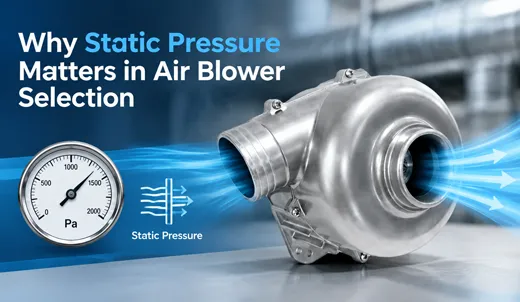
The TKFAN Automotive Sensor Cleaning air blower is a specialized, highly compact brushless centrifugal blower engineered explicitly for localized, high-static-pressure pneumatic jet generation. Unlike conventional automotive cabin cooling fans that prioritize volumetric airflow (CFM) at low static pressures, a dedicated ADAS sensor cleaning blower focuses on building high static pressure to launch targeted high-velocity air pulses through fine delivery tubes and micro-nozzles.
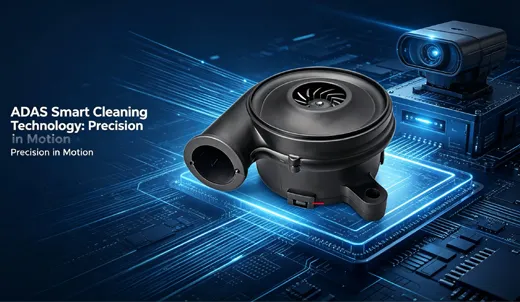
At the core of every TKFAN ADAS sensor cleaning blower is a high-efficiency brushless DC (BLDC) impeller rotating at speeds ranging from 35,000 RPM to 41,000 RPM. This motor architecture converts electrical power into concentrated static pressures between 4.9 kPa and 12.0 kPa. When the vehicle's central ADAS domain controller detects surface attenuation, it triggers a brief, high-energy pulse from the TKFAN Automotive Sensor Cleaning air blower. Compressed air rushes through custom air channels and exits micro-nozzles positioned millimeters from the target sensor lens, forming a high-speed "air blade." This physical force strips away water droplets, dust particulates, and loose debris without physical contact.
Core Advantages of Air-Based Blower Cleaning Architecture:
- Non-Contact Maintenance: Eliminates physical contact with optical glass, preventing microscopic scratches on anti-reflective or specialized hydrophobic coatings.
- Zero Consumable Dependency: Operates completely dry, reducing washer fluid consumption, enabling smaller fluid reservoirs, and lowering overall vehicle curb weight.
- Rapid Surface Drying: Complements wet-wash systems by instantly blowing away residual liquid droplets post-wash, preventing mineral water-spotting.
- Ultra-Low Latency: Delivers cleaning cycles within milliseconds, crucial for high-speed highway driving where perceptual delays cannot be tolerated.
- Flexible Integration: Supports both localized, distributed architectures (individual micro-blowers at each sensor site) and centralized manifold systems.
Architectural Comparison: High-Pressure Air vs. Liquid Pump Systems
Automotive system engineers must weigh trade-offs regarding power consumption, packaging volume, bill-of-materials (BOM) cost, and cleaning efficacy across varying contamination types. Below is an architectural comparison based on technical evaluation data for an Automotive Sensor Cleaning air blower vs. traditional high-pressure liquid pumps:
| Evaluation Parameter | High-Pressure Air Blower System | High-Pressure Liquid Pump System |
|---|---|---|
| Primary Contaminants Handled | Dry dust, sand, water droplets, post-wash liquid film, light snow. | Dried mud crusts, squashed insect organic residue, heavy dirt loads. |
| Consumable Requirements | None (Dry air cycle). Completely maintenance-free operation. | Requires windshield/sensor washer fluid and dedicated reservoirs. |
| System Weight & Packaging | Lightweight micro-blowers; lightweight flexible air tubing. | Heavy fluid reservoir tanks, fluid pumps, and liquid distribution hoses. |
| Low-Temperature Resilience | Frictionless dry air operation down to -40°C without freeze risk. | Requires anti-freeze fluid mixtures, heated lines, or tank heaters. |
| Optical Surface Impact | Zero physical wear or chemical degradation on optical glass. | Risk of chemical staining or fluid drying marks if unblown. |
Due to these complementary characteristics, leading autonomous vehicle architectures employ a hybrid strategy: high-pressure fluid sprays loosen heavy, caked-on organic grime, while an ADAS sensor cleaning blower delivers immediate drying pulses and handles routine dry dust clearance without consuming washer fluid.
TKFAN Product Specifications & Automotive-Grade Compliance
Unlike commercial or IT cooling fans, an automotive-grade TKFAN ADAS sensor cleaning blower must satisfy stringent automotive quality and reliability frameworks. Every unit in the TKFAN Automotive Sensor Cleaning air blower portfolio is built to meet five fundamental engineering standards:
- IP68 Ingress Protection: Fully sealed against dust penetration and continuous immersion in water under pressure. Encapsulated electronics withstand road spray, high-pressure car washes, and winter road-salt solutions.
- Wide Automotive Voltage Compatibility: Operates natively across a 9–16 V DC range, handling 12V system fluctuations, cranking voltage drops, and alternator load dumps without reset or failure.
- Extreme Thermal Operational Range: Full performance across ambient temperatures from -40°C to +85°C without material deformation or electrical drift.
- Integrated BLDC Drive Electronics: Features onboard driver circuits directly controllable via standard PWM (Pulse-Width Modulation) logic signals, eliminating the need for external driver boards.
- AEC-Q100 Semiconductor Compliance: Built with automotive-qualified active and passive electronics to guarantee long service life over 10+ year vehicle life cycles.
| Model Name | Dimensions (mm) | Rated Voltage | Max Speed (RPM) | Airflow (CFM) | Max Static Pressure (kPa) |
|---|---|---|---|---|---|
| BA5025H12B-A | 54.5 × 51 × 25 | 12V DC | 37,000 | 10.5 | 4.9 |
| BA7050H12B-C-Unintegrated | 52 × 52 × 42 | 12V DC | 40,000 | 15.49 | 7.9 |
| BA5030H12B-C | 66 × 49 × 37 | 12V DC | 41,000 | 8.2 | 5.1 |
| BA5030H12B-A | 58 × 50 × 28 | 12V DC | 39,100 | 8.6 | 6.15 |
| BA7050H12B-B | 70 × 66 × 45 | 12V DC | 35,000 | 17.5 | 8.3 |
| BA8050H12B-A | 80 × 50 | 12V DC | 37,000 | 25.9 | 9.0 |
| BA8060H12B-E | 86 × 82 × 60 | 12V DC | 38,000 | 19.3 | 12.0 |
Application Scenarios Across Autonomous & Smart Mobility Platforms
The versatile design profile of the TKFAN Automotive Sensor Cleaning air blower enables integration across diverse autonomous and semi-autonomous platforms:
- Roof-Mounted & Bumper LiDAR Units: High-pressure air jets sweep optical glass covers clean of road dust, preserving 3D point-cloud spatial resolution.
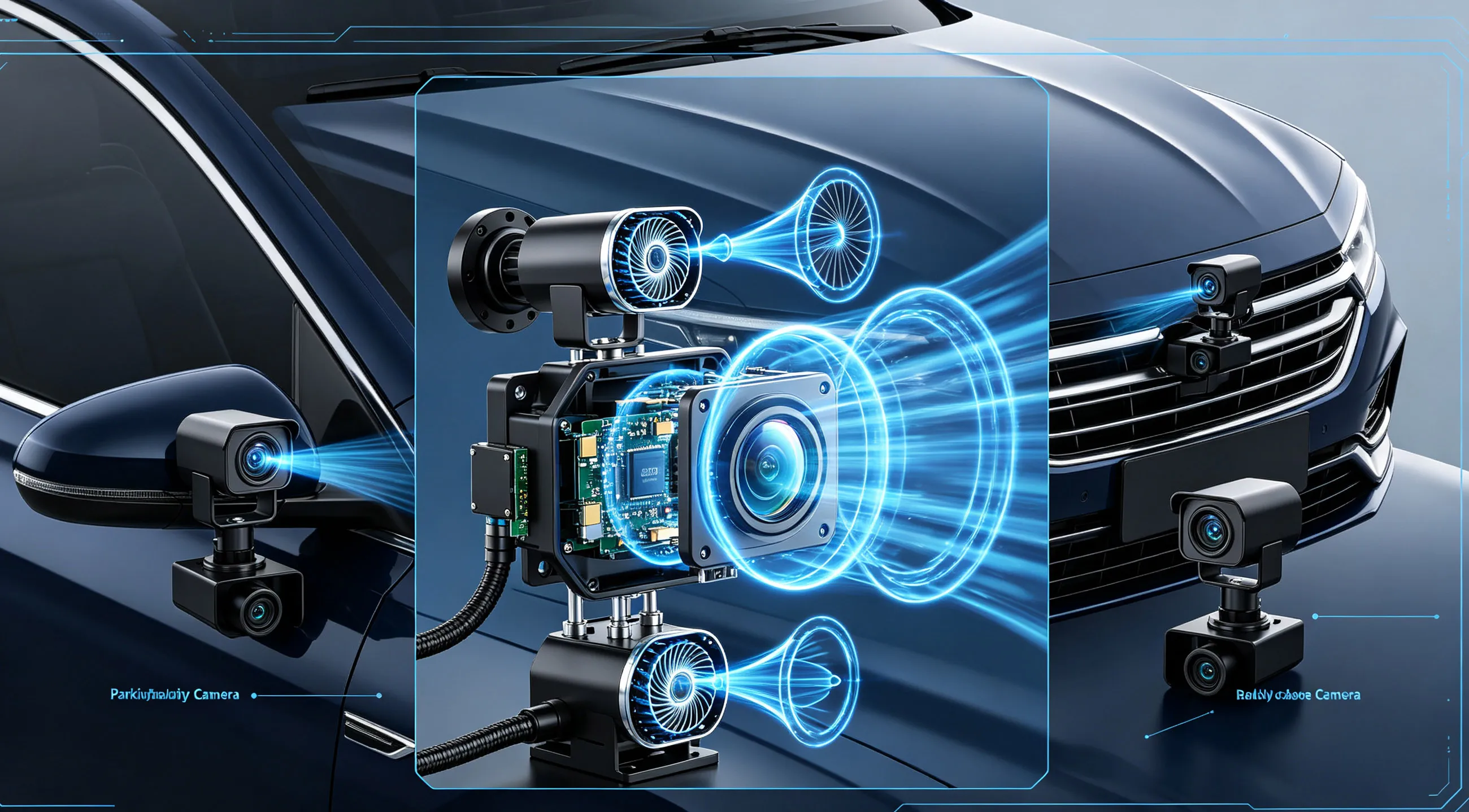
- 360-Degree Surround-View Cameras: Compact micro-blowers integrated into side mirrors, front grilles, and trunk lids protect parking and perception cameras.
- Robotaxis & Autonomous Shuttles: Enables continuous, fleet-wide operations without requiring manual driver or service-personnel intervention to wipe down dirty optical windows.
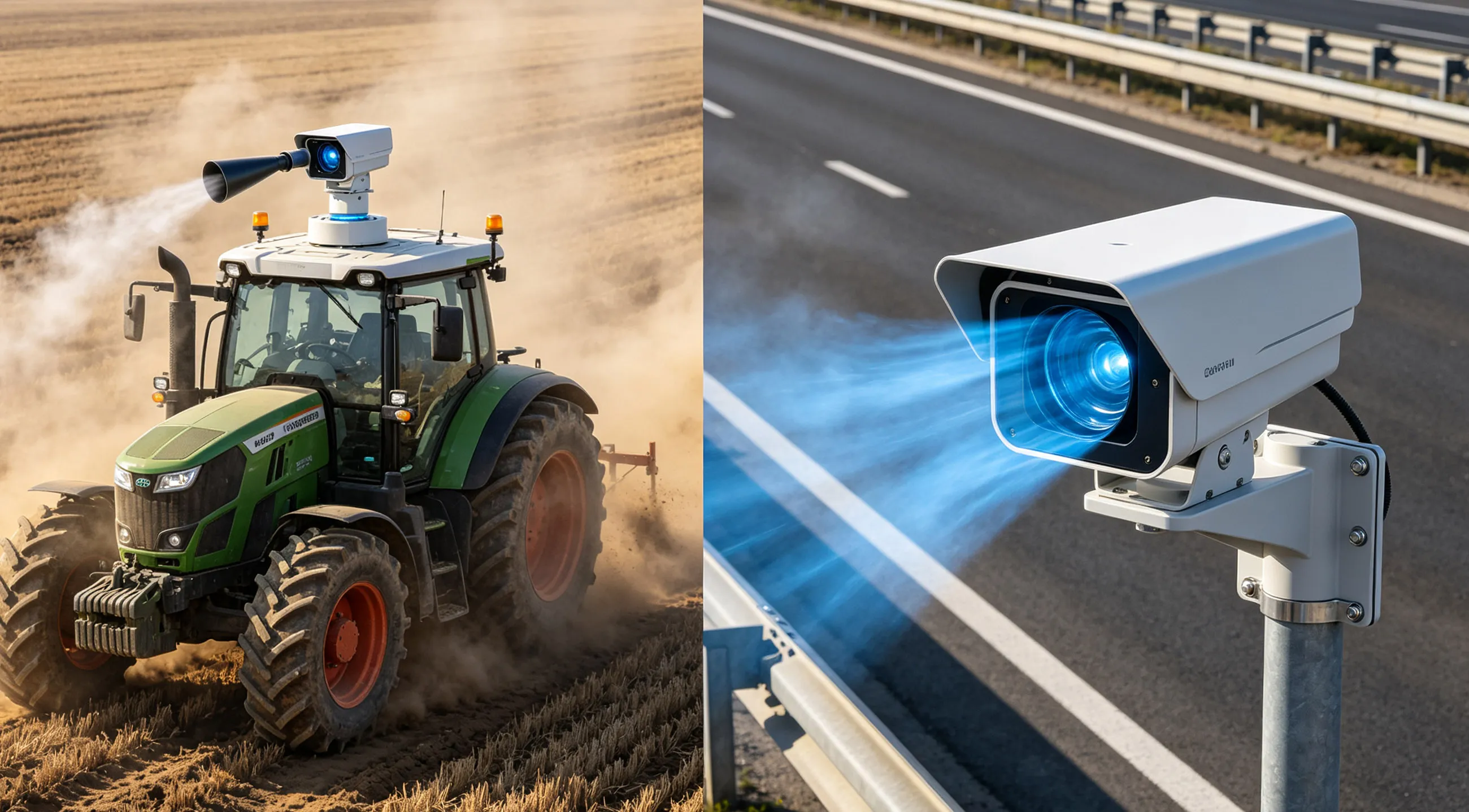
- Off-Highway Smart Agricultural & Mining Machinery: Protects computer vision hardware operating in dusty, high-particulate off-road environments.
- Highway Infrastructure Vision Nodes: Provides automated self-cleaning capabilities for roadside Intelligent Transportation System (ITS) optical sensors.
Application Scenarios for Autonomous Driving and Smart Mobility Platforms
Explore application scenarios for autonomous driving and smart mobility platforms (click image to enlarge)


Critical Engineering System Integration Considerations
Selecting the optimal ADAS sensor cleaning blower requires careful system-level design to maximize cleaning efficiency while respecting power and space constraints:
1. Pneumatic Line Pressure Losses
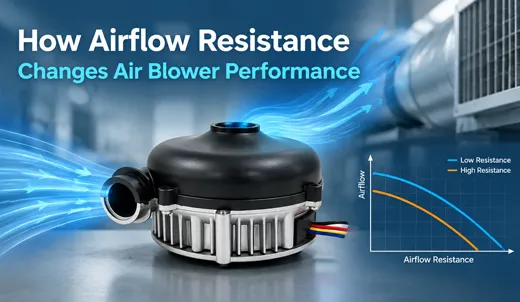
High static pressure drops rapidly over long tube lengths or through tight-radius elbows. For centralized configurations using a single large blower (such as the BA8060H12B-E), fluid dynamics modeling must account for line friction to ensure terminal nozzle velocity remains above the threshold needed for effective cleaning.
2. Electrical Peak Current Management
High-RPM BLDC motors draw transient peak currents during initial spin-up. System designers must ensure the power distribution network (PDN) can handle these bursts without inducing voltage drops in adjacent safety-critical ECU electronics.
3. Nozzle Geometry Optimization
Air velocity at the target surface depends heavily on nozzle profile, stand-off distance, and spray angle. Poorly oriented nozzles can cause air recirculation that pushes dust into sensor housing seams rather than removing it.