


What Type of Blower Can Be Used with a Bubble CPAP System? Comprehensive Medical Engineering Guide
The Bubble Continuous Positive Airway Pressure (bCPAP) system stands as one of the most vital, non-invasive respiratory support systems in modern neonatal intensive care units (NICU). Specifically engineered for premature infants and neonates suffering from Neonatal Respiratory Distress Syndrome (NRDS), transient tachypnea of the newborn (TTN), and early-stage respiratory insufficiency, bCPAP provides a reliable mechanism to maintain lung volume during expiration. Unlike conventional mechanical ventilators or valve-based CPAP setups that use complex digital regulators to maintain circuit baseline pressures, a bubble CPAP system relies on a remarkably elegant and reliable hydrodynamic law: submerging an expiratory limb tubing into a sterile fluid column reservoir creates natural, physiological backpressure.
However, the fluid dynamics required to drive this elegant mechanism are extraordinarily stringent. The absolute heart of any medical-grade bubble CPAP workstation is its gas source engine: the CPAP air blower. Selecting an inadequate blower or attempting to use commercial, off-the-shelf industrial centrifugal fans can result in catastrophic clinical failures, such as irregular bubble oscillation, uncompensated circuit leaks, elevated acoustic distress for fragile neonates, and premature failure due to continuous humidity backflow. For medical equipment manufacturers (OEMs), clinical engineers, and ventilator R&D teams, understanding the specific architectural demands of a high-pressure brushless DC blower is crucial to developing high-performance, FDA-compliant, and highly reliable bubble CPAP medical equipment.
1. Understanding Bubble CPAP Fluid Dynamics & The Crucial Need for Specialized Blowers
To accurately evaluate what type of blower is compatible with a bubble CPAP system, one must first break down the fluid mechanics of the entire respiratory loop. The process initiates when the core driving gas source—the medical-grade blower—draws in atmospheric air through a HEPA filtration grid. This micro-filtered air is pushed into a medical oxygen-air blender, where it merges with pressurized clinical oxygen to achieve the precise Fraction of Inspired Oxygen (FiO2) requested by the neonatologist (ranging anywhere from 21% to 100%).
The Hydrodynamic Backpressure Principle
Once blended, the warm, humidified gas mixture is driven through the inspiratory limb towards the neonate’s nasal prongs or mask interface. As the infant breathes within this continuous gas column, the excess gas exits through the expiratory tubing limb. The final terminal tip of this expiratory tubing is completely submerged underwater within a calibrated pressure-generation reservoir container. The depth to which this tube is submerged beneath the water line directly mandates the positive end-expiratory pressure (PEEP) level, usually measured from 4 cmH2O to 10 cmH2O for neonatal care, and up to 20 cmH2O for specialized adult non-invasive setups.
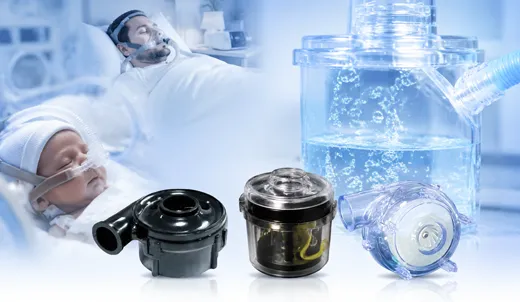 Figure 1: High-Performance Brushless DC Blower Optimized for Medical Bubble CPAP Systems.
As the air escapes the submerged tube, it generates a continuous stream of bubbles. These bubbles are not merely cosmetic indicators; they create high-frequency micro-oscillations within the gas column. These mechanical vibrations travel backward through the circuit line into the neonate’s lungs, mimicking high-frequency oscillatory ventilation (HFOV). This action facilitates optimal alveolar recruitment, improves functional residual capacity (FRC), and significantly lowers the infant’s work of breathing (WOB). For this precise oscillation cascade to occur safely and efficiently, the gas source blower must satisfy five key mechanical conditions:
- Uncompromising Aerodynamic Stability: Even the slightest micro-fluctuations in blower motor speed or torque will disrupt the underwater bubble pattern, causing pressure drops or spikes that put stress on the neonate's sensitive lungs.
- Ultra-Fast Dynamic Pressure Response: The blower must adapt its internal RPM within milliseconds to match the continuous shifting phases of spontaneous infant breathing (inspiration and expiration) without losing the target PEEP value.
- Acoustic Isolation & Silent Operation: The NICU environment requires strict noise control. A noisy blower exceeding safe decibel levels can induce neurological and physiological stress in premature infants.
- Humid Air & Backpressure Tolerance: Because the expiratory limb is placed under water and the circuit uses an active heated humidifier, the blower must withstand high moisture environments and constant pneumatological counter-resistance.
- Sophisticated Closed-Loop Control Interface: The blower must feature robust Pulse Width Modulation (PWM) speed controls along with Frequency Generator (PG) tachometer speed feedback signals so the device motherboard can dynamically make micro-adjustments.
Why Standard Components Fail: Brushed motor air pumps, diaphragm pumps, and consumer-grade axial fans are entirely unsuited for bubble CPAP systems. Brushed motors generate toxic carbon dust particles that contaminate the patient gas path. Diaphragm pumps produce a pulsing flow that ruins the steady bubbling effect. Meanwhile, typical axial fans lack the required static pressure to push past the resistance of long medical tubes and water columns.
2. Mandatory Technical Benchmarks for Bubble CPAP System Blowers
When engineering a modern medical bubble CPAP machine, procurement managers and engineering specialists must evaluate blowers using strict medical criteria. TKFAN's premium medical blower series is specifically engineered to meet these precise regulatory, electrical, and mechanical requirements:
Electrical, Driver Architecture, and Safety Systems
The standard operating voltage must be a regulated 24V DC. This voltage level is widely accepted across global medical electronics due to its balance of high torque efficiency and low electromagnetic interference (EMI). The motor driver must be integrated internally or support external intelligent sensor controllers capable of monitoring speed via precise closed-loop systems. Safety features like over-current protection, over-voltage suppression, locked-rotor protection, and thermal auto-shutdown are mandatory to prevent system failures during critical operations.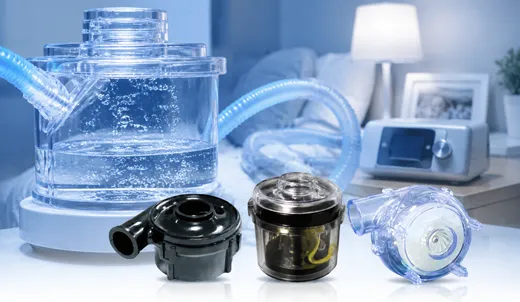
Pressure and Flow Performance Thresholds
A capable bubble CPAP blower must provide an uncompromising pressure-to-flow performance envelope. For neonatal applications, while the actual delivery flow to the infant typically ranges between 4 to 15 Liters per Minute (LPM), the blower itself must be capable of overcoming system resistance (filters, heated wire humidifiers, long tubing runs, and water submersion depths). Therefore, the blower must deliver a maximum static pressure rating of 4.0 kPa to 8.5 kPa (approximately 40 to 85 cmH2O) and a peak air volume flow rate ranging between 9.5 to 19 Cubic Feet per Minute (CFM).
| Blower Model | Dimensions (mm) | Voltage (V) | Max Speed (RPM) | Air Flow (CFM) | Static Pressure (kPa) | Primary Application Match |
|---|---|---|---|---|---|---|
| BA4028H24B | 40 × 40 × 28 | 24V | 48,000 | 12.0 | 5.90 | Portable/Transport Neonatal bCPAP Systems |
| BA5025H24B | 50 × 50 × 25 | 24V | 38,000 | 10.5 | 4.05 | Home-Care & Low-Flow Bubble CPAP Devices |
| BA5060H24B-A | 50 × 50 × 60 | 24V | 35,000 | 9.5 | 4.50 | High-Isolation Silent Dual-Impeller Systems |
| BA7060H24B-K | 70 × 70 × 60 | 24V | 43,000 | 17.0 | 7.00 | Clinical NICU Workstations & High-Flow Oxygen |
| BA7060H24B-C | 70 × 70 × 60 | 24V | 45,000 | 18.8 | 7.40 | Heavy-Duty Multi-Patient/Adult Clinical bCPAP |
| BA7060H24B-D2311 | 70 × 70 × 60 | 24V | 50,000 | 18.2 | 8.10 | Premium Intelligent Self-Cleaning Systems |
| BA7060H24B-D2303 | 70 × 70 × 60 | 24V | 53,000 | 18.5 | 8.40 | Next-Gen Smart High-Pressure Respiratory Units |
Acoustics, Reliability, and Biocompatibility Compliance
The device must achieve an ultra-low operational noise threshold of ≤30 dB(A) under typical load configurations to maintain a peaceful clinical setting. Reliability must extend beyond 20,000 to 30,000 continuous operating hours, enabled by premium NMB dual-ball bearings. Most importantly, all raw polymer elements used in the blower housing and impeller blades must feature medical-grade, low-VOC, high-durability PBT plastics that meet strict ISO 10993 biocompatibility testing standards to guarantee that no harmful outgassing enters the patient gas stream.
3. Comprehensive Technical Deep-Dive: TKFAN's 7 Specialist 24V BLDC Medical Blowers
TKFAN manufactures seven distinctly tailored 24V Brushless DC (BLDC) high-pressure centrifugal blowers engineered specifically for integration into global bubble CPAP machines. Below is an exhaustive technical breakdown of each individual model's design parameters, aerodynamic efficiency, and operational suitability:
A. BA4028H24B — The Ultra-Compact Micro-Blower (40×40×28mm)
The BA4028H24B is designed for compact spaces, operating at a high speed of 48,000 RPM. It achieves a peak air volume delivery of 12.0 CFM and an impressive static pressure of 5.90 kPa. Its primary strength lies in its minimal footprint, which allows R&D engineers to significantly downsize their internal housing layout.
This micro-blower is highly suitable for portable neonate transport bubble CPAP devices used in ambulances and emergency medical helicopters. It features ultra-lightweight impellers that provide sub-millisecond dynamic speed tracking, enabling it to maintain stable bubble patterns even when the physical transport system is in motion.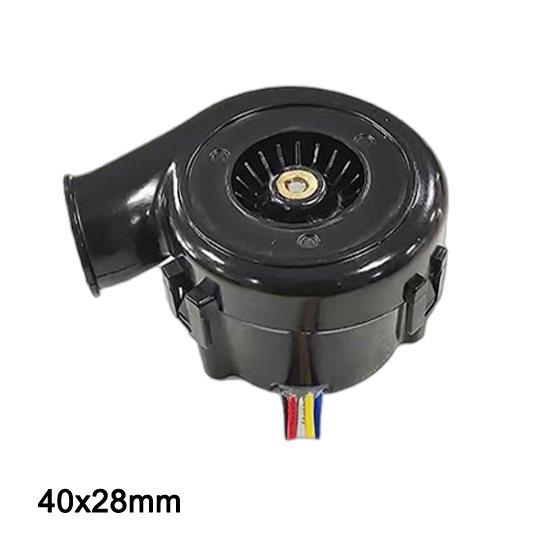
B. BA5025H24B — The Balanced Homecare/Subacute Solution (50×50×25mm)
With an intermediate profile, the BA5025H24B operates at a balanced speed of 38,000 RPM, delivering 10.5 CFM air flow and 4.05 kPa static pressure. This model focuses on thermal and electrical efficiency, consuming less power while maintaining consistent performance over long periods.
It is best suited for home-care pediatric bubble CPAP systems and subacute step-down care wards. Its optimized motor housing reduces heat generation, extending the operational life of adjacent lithium battery packs and making it ideal for non-hospital environments.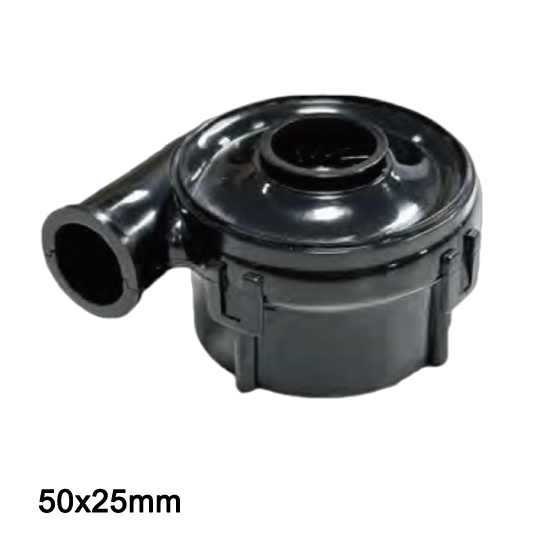
C. BA5060H24B-A — The Ultra-Silent Dual-Impeller Blower (50×50×60mm)
The BA5060H24B-A features an extended 60mm housing depth that accommodates a dual-impeller system spinning at 35,000 RPM. This layout generates 9.5 CFM flow and 4.50 kPa pressure. By distributing the workload across two serial compression stages, the blower achieves the required pressure at a much lower RPM.
This design makes it exceptionally quiet. It is an ideal choice for premium NICU bubble CPAP workstations where reducing ambient noise is a top priority, helping protect premature infants from auditory stress.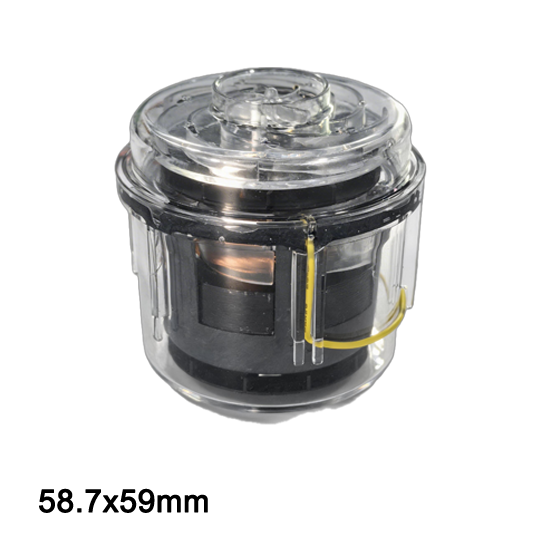
D. BA7060H24B-K — The High-Capacity Clinical Standard (70×70×60mm)
The BA7060H24B-K is a core component for institutional hospital equipment. Operating at 43,000 RPM, it delivers a high air flow rate of 17.0 CFM and a static pressure of 7.00 kPa. Its optimized volcanic inlet shroud helps minimize turbulence at the intake.
This model is highly versatile and handles high-flow hospital bubble CPAP installations with ease. It can effortlessly overcome resistance from multi-stage viral filters and complex humidifier configurations, ensuring consistent bubble creation even under demanding conditions.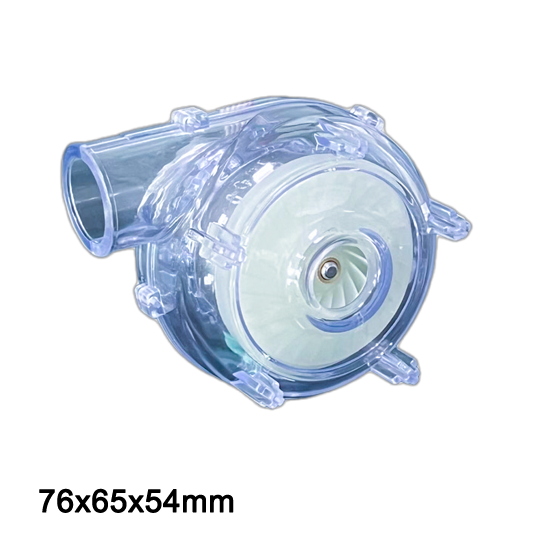
E. BA7060H24B-C — The Heavy-Duty High-Volume Powerhouse (70×70×60mm)
The BA7060H24B-C ramps up performance to 45,000 RPM, producing a peak air flow of 18.8 CFM and 7.40 kPa static pressure. It features reinforced structural walls and an optimized impeller angle to maximize gas delivery under continuous high loads.
This model is excellent for adult bubble CPAP systems and advanced infant care setups that require high flow rates to compensate for large leaks around unvented patient interfaces.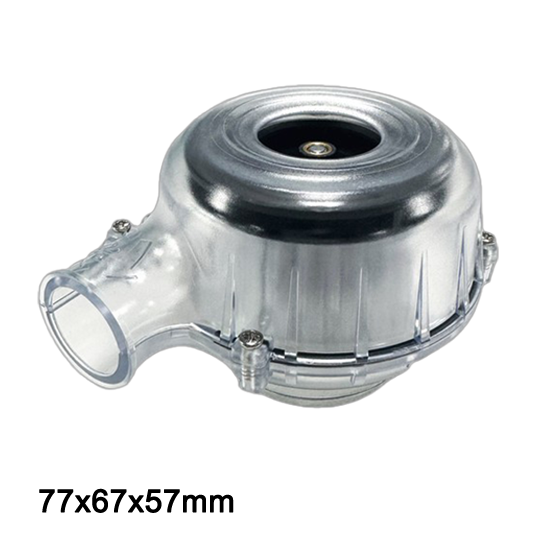
F. BA7060H24B-D2311 — The Intelligent Self-Cleaning Blower (70×70×60mm)
The BA7060H24B-D2311 features an advanced internal motor configuration operating at 50,000 RPM, delivering 18.2 CFM flow and 8.10 kPa static pressure. It includes an intelligent built-in control board that allows for rapid reversing cycles.
This feature enables automated diagnostic self-cleaning modes. By running in reverse during maintenance periods, the blower can clear lint and dust from internal filters, reducing maintenance down-time in busy medical environments.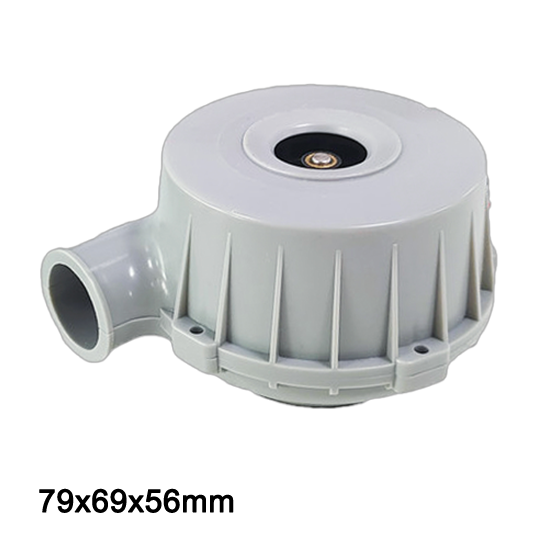
G. BA7060H24B-D2303 — The Ultimate Smart High-Pressure Engine (70×70×60mm)
The flagship BA7060H24B-D2303 stands at the top of performance, reaching 53,000 RPM to deliver a massive 8.40 kPa static pressure and 18.5 CFM air flow. It uses advanced rare-earth permanent magnets and high-efficiency coils to minimize energy loss.
This model is designed for next-generation smart respiratory devices that combine bubble CPAP, high-flow nasal cannula (HFNC) therapy, and non-invasive positive pressure ventilation (NIPPV) into a single clinical workstation. It provides ample performance headroom to handle any sudden circuit changes easily.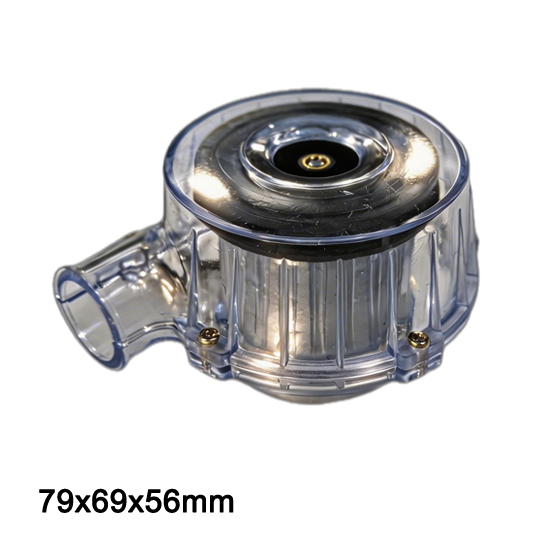
4. Technical Summary & Engineering Recommendation
Developing a high-performance bubble CPAP system requires careful selection of the underlying air blower technology. Standard off-the-shelf fans cannot handle the complex fluid mechanics and strict regulatory requirements of neonatal care. TKFAN's comprehensive range of 24V BLDC blowers offers medical equipment manufacturers proven reliability, ultra-low noise, and precise digital control options for any system configuration. By choosing the correct model tailored to your specific application—whether portable transport, high-end hospital ICU, or versatile combination workstations—engineering teams can ensure stable therapy delivery and full regulatory compliance. For complete technical documentation, step files, and sample requests, click below to consult with our engineering team.
Advanced Technical FAQ: Bubble CPAP Blower Applications
Why does a bubble CPAP system demand a high-pressure blower instead of a standard high-flow fan?
A standard cooling fan or axial fan is built to move air in open environments with low static resistance. A bubble CPAP circuit has significant resistance from items like HEPA inlet filters, active humidifier chambers, infant-sized patient tubes, and the physical water column itself. A high-pressure centrifugal blower, like TKFAN’s 24V BLDC series, is required to generate the necessary static pressure (4.0 to 8.5 kPa) to overcome these system resistances and maintain steady gas delivery.
How does the blower's response time affect the patient's breathing experience?
When an infant breathes spontaneously, circuit pressure drops slightly during inspiration and rises during expiration. If the blower has slow response times, these changes can cause large fluctuations in pressure, making the infant work harder to breathe. TKFAN’s blowers feature low-inertia impellers and high-speed motor tracking that adapt to these changes within milliseconds, ensuring smooth, steady therapy and comfortable breathing.
Are TKFAN blowers compliant with medical safety and biocompatibility standards?
Yes. All TKFAN blowers intended for respiratory care use high-grade, low-VOC PBT plastic components that meet ISO 10993 biocompatibility standards. This ensures no harmful chemicals or outgassing enter the patient gas path, making them perfectly safe for vulnerable neonates.
What are the advantages of using a 24V DC motor design for these medical applications?
A 24V DC setup is widely considered the industry standard for hospital equipment. It balances high torque and power efficiency with low electromagnetic emissions. It also integrates seamlessly with internal backup battery systems, which is essential for transport setups and keeping the equipment running reliably during power outages.
Can the blower speed be adjusted to control the bubbling rate in the reservoir?
Yes. Every model comes equipped with a dedicated control interface supporting 0-100% PWM speed adjustment and PG tachometer feedback. This allows the system’s primary controller to monitor performance in real time and precisely dial in the exact flow rate required to maintain consistent bubble frequency.
How does the dual-impeller design of the BA5060H24B-A model lower operating noise?
The BA5060H24B-A uses two impellers working in series inside a single housing. This allows the blower to generate the required static pressure at a much lower rotational speed (RPM) than a single-impeller design. Lowering the RPM significantly reduces aerodynamic shear and bearing noise, keeping overall noise output below 30 dB(A) for a quieter NICU environment.
How do TKFAN blowers handle internal moisture or high-humidity environments?
While the blower is positioned upstream of the active humidifier, pressure changes and infant exhalation can cause moisture to migrate backward during shutdown periods. TKFAN blowers feature sealed motor electronics and double-shielded NMB ball bearings to resist moisture damage and prevent premature corrosion or failure.
What is the expected operating life of these blowers under continuous 24/7 use?
Equipped with premium Japanese NMB dual-ball bearings and brushless electronic commutation, TKFAN medical blowers are rated for a continuous operating life of 20,000 to over 30,000 hours under normal conditions. This durability minimizes hospital maintenance cycles and ensures long-term operational reliability.
GET A QUOTE
Table of Contents
Latest Post

What are external-rotor motors and internal-rotor motors, and what are the differences between them?
14 September, 2026
The Critical Role of Blower Sealing Performance in PAPR, Particle Counter, and CPAP Medical Systems
14 August, 2026
Air Particle Counter Solutions: Working Principles, Brands & Architecture
25 July, 2026