

What Type of Blower Can Be Used in a High-Flow Oxygen Therapy System?
Published/Updated: 2026 | Technical Sourcing Guide for Medical Device OEMs & Mechanical Engineers
When medical device mechanical engineers, procurement managers, and respiratory system integrators source air-moving components, they face strict technical benchmarks. Heated Humidified High-Flow Nasal Cannula (HFNC) systems—commonly referred to as high-flow oxygen therapy equipment—demand an uncompromising power unit. These devices deliver a highly precise, temperature-controlled, and fully humidified air-oxygen blend.
The operational flow rate requirements are vast, covering a broad spectrum from 2 L/min for neonatal premature infants up to 80 L/min for adult severe intensive care patients. This therapeutic gas stream creates a physiological positive end-expiratory pressure (PEEP) ranging from 1 to 8 mbar inside the patient's airway. This critical pressure level stabilizes alveoli, reduces the work of breathing, and substantially lowers re-intubation rates for patients battling acute respiratory failure, chronic obstructive pulmonary disease (COPD), and neonatal respiratory distress syndrome.
At the absolute core of these respiratory assemblies sits the medical-grade miniature blower. This component serves as the pneumatic heart of the system, directly determining oxygen blending stability, dynamic pressure consistency, overall acoustic dampening, and the product's ultimate operating lifespan. Because it falls under the strict "Your Money or Your Life" (YMYL) regulatory threshold, choosing an uncertified industrial cooling fan or an oil-lubricated motor assembly poses severe safety risks and can lead to immediate regulatory rejection.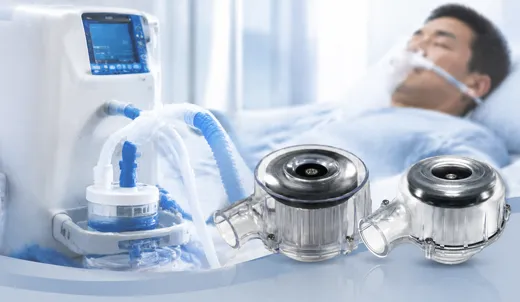
1. Fundamentals: Three Main Blower Technologies for HFNC Integration
Global medical regulatory compliance frame structures dictate that only three specific pneumatic configurations can safely deliver air within automated high-flow respiratory therapy circuits. Sourcing teams must analyze these technologies to ensure proper engineering alignment.
1.1 Oil-Free Brushless DC Centrifugal Turbo Blowers (The Universal Premium Solution)
An oil-free brushless DC centrifugal turbo blower serves as the primary built-in power system for over 95% of modern, all-in-one clinical and homecare HFNC hardware. Renowned market benchmarks—including the Fisher & Paykel Airvo 2, Vapotherm Precision Flow, and Mindray HF series—all build their pneumatic architectures around this core technology.
These specialized blowers utilize a high-speed three-phase permanent magnet brushless DC motor integrated with solid ceramic, pre-loaded oil-free bearings. When operating at velocities up to 48,000 RPM, the blower draws gas in axially and accelerates it centrifugally into a precision-engineered scroll housing. This mechanical translation yields substantial static pressure capacity, allowing the system to effortlessly overcome the high circuit impedance caused by bacterial intake filters, heated humidification water chambers, long 加温 internal circuits, and small-diameter nasal cannulas.
Even as downstream filters accumulate particulate dust or the delivery tubing flexes, this continuous-duty centrifugal configuration self-compensates to maintain a steady, un-attenuated airflow stream. TKFAN’s entire specialized line of seven 24V medical blowers utilizes this exact oil-free centrifugal configuration, providing single-component coverage across the entire 2–80 L/min therapeutic spectrum.
1.2 Side-Channel Brushless DC Blowers (Limited to Low-Flow Transport Units)
Side-channel brushless DC configurations utilize a flatter, highly ultra-thin profile that excels in extreme space-constrained installations. These components are primarily integrated within lightweight, battery-powered neonatal transport incubators or emergency field-rescue HFNC devices.
However, their internal fluid dynamics impose strict performance caps, limiting their maximum flow output to around 35 L/min. Because their maximum static pressure curve tops out at 6–8 mbar, they lack the pneumatic force required to push high-volume gas through adult-sized breathing circuits. Attempting to deploy side-channel configurations for adult heavy-duty therapy results in rapid airflow decay, massive oxygen blending inaccuracies, and a complete loss of the physiological PEEP effect. Therefore, they remain specialized backup components for transport systems rather than primary ICU hardware.
1.3 Oil-Free Medical Air Compressors (External Pressure Air Sources)
For modular, split-system HFNC configurations that lack an integrated internal turbine assembly, an external oil-free medical air compressor is required. These systems are divided into two main categories: small rocking-piston compressors dedicated to individual clinical workstations, and centralized oil-free screw compressors that power entire hospital department pipelines.
Any external compressor configuration must strictly provide compressed air that meets the ISO 8573-1 Class 0 zero-oil purity threshold. This requirement prevents trace hydrocarbon gases or microscopic oil droplets from entering the patient’s breathing path. While these units deliver exceptional static pressure reserves, they are large, heavy, power-hungry standalone modules that cannot be integrated into a compact, desktop HFNC enclosure.
2. Strategic Engineering Analysis: Fan vs. Blower vs. Compressor
Integrating the incorrect air-moving technology into a medical assembly can lead to systemic failures, motor overheating, or insufficient patient therapy. The technical table below details the performance boundaries of these three distinct fluid handling methods:
| Technical Vector | Axial Cooling Fan | Medical Blower (Centrifugal) | Medical Air Compressor |
|---|---|---|---|
| Pressure Capacity | Extremely Deficient (<0.5 kPa) | Excellent Target Range (4.0–8.5 kPa) | Ultra-High Overkill (>200 kPa) |
| Volumetric Flow Rate | High Free-Air Delivery | Fully Adjustable (Up to 80 L/min) | Restricted Volume per Unit |
| Path Resistance Fit | Stalls instantly under restriction | Maintains linear flow across filters | Overcomes heavy industrial piping |
| Core System Role | Broad open-space case cooling | Integrated internal air source for HFNC/CPAP | External independent high-pressure gas station |
3. Deep Dive: Six Major Industry Pain Points in HFNC Blower Procurement
Engineering teams face six persistent technical, manufacturing, and regulatory challenges when sourcing air-moving modules for high-flow respiratory platforms. Sourcing from non-specialized or industrial-grade suppliers frequently introduces these system bottlenecks:
Pain Point 1: Severe Flow Decay via Deficient Static Pressure
An HFNC pneumatic path presents multi-stage flow resistance. Standard industrial fans or low-cost turbines often output static pressures under 3 kPa. Once integrated into a complete clinical circuit with inlet HEPA filter layers and heated humidification fluid blocks, the actual delivered flow rate can decay by 20% to 40%. This drastic volume reduction drops the system's output below the target threshold, eliminating the PEEP effect needed to prevent alveolar collapse. ISO 80601-2-90 mandates a minimum 20% pressure headroom to handle real-world circuit changes.
Pain Point 2: Poor Dynamic Response Driving Oxygen Concentration Fluctuations
High-flow respiratory systems require millisecond-level motor velocity adjustments to adapt to the patient's breathing cycle and maintain steady gas blending ratios. Standard commercial turbines lacking closed-loop electronic control circuits experience slow acceleration curves. This sluggish tracking leads to oxygen concentration deviations of 4% to 6% during active inhalation changes. These precision errors trigger frequent device alarms and can extend regulatory approval timelines by 6 to 12 months. Compliance frameworks mandate keeping gas concentration variations under a strict ±2% limit.
Pain Point 3: Excessive Acoustic Emissions Violating Quiet Ward Standards
Clinical environments—particularly Neonatal Intensive Care Units (NICU) and pediatric wards—enforce strict acoustic limits, requiring systems to operate under 40 dB(A) at 1 meter. Traditional high-speed blower fans often emit loud mechanical whine and aerodynamic shearing sounds that exceed 55 dB(A). This continuous acoustic disturbance can interfere with neonatal neurological development and disrupt patient rest. Standard industrial fan designs often face a difficult trade-off: lowering noise levels typically compromises essential static pressure performance.
Pain Point 4: Lubricant Outgassing & Auto-Ignition Hazards in High-Oxygen Fields
HFNC gas management paths handle enriched gas fields with up to 100% pure oxygen, making them highly susceptible to combustion risks. Standard industrial blowers equipped with liquid-lubricated steel ball bearings can release microscopic oil mist particles into the patient breathing path. This outgassing can cause chemical pneumonitis and introduces severe fire hazards in hyperoxic environments. Furthermore, uncertified polymer impellers or rubber gaskets cannot pass the strict ISO 10993 biological evaluation or high-concentration oxygen age testing.
Pain Point 5: Short Operational lifespans Driving Up Field Warranty Liabilities
In critical-care situations, high-flow systems must run non-stop for 3 to 7 days. Low-grade commercial blower fans typically fail after 3,000 to 10,000 hours of continuous service. This limited operating life leads to frequent equipment downtime in hospitals, increases field warranty claims, and can negatively impact a medical device manufacturer's brand reputation. Sourcing robust internal components is essential for minimizing global post-sale service costs.
Pain Point 6: Fragmented Sourcing Certification Packages Delaying Device Launch
Generic blower suppliers generally offer only basic electrical test files, lacking dedicated medical component certifications. This documentation gap forces medical device OEMs to spend significant time and money on independent third-party testing. This extended verification process delays regulatory filing timelines for major global markets like the US FDA and EU MDR.
4. The Sourcing Solution: TKFAN 24V Medical-Grade Centrifugal Blowers
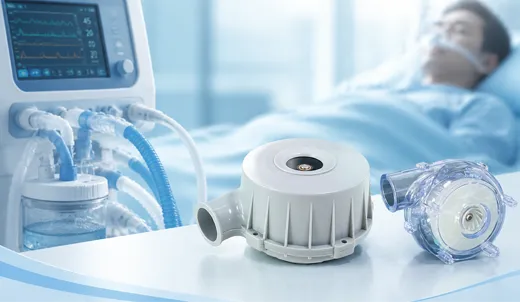
To address these six persistent industry pain points, TKFAN offers a standardized lineup of seven medical-grade 24V brushless DC centrifugal blowers. These components feature an oil-free internal fluid path, adjustable technical parameters, and comprehensive pre-packaged medical certifications.
Detailed technical parameters for all seven configurations are outlined below:
| Model Code | Dimensions | Max Speed | Max Airflow | Static Pressure | Calibrated HFNC Application Range |
|---|---|---|---|---|---|
| BA4028H24B | 40×28 mm | 48,000 RPM | 12 CFM | 5.9 kPa | 2–30 L/min (Neonatal NICU Systems) |
| BA5025H24B | 50×25 mm | 37,000 RPM | 9.5 CFM | 4.05 kPa | 5–25 L/min (Compact Pediatric Transport) |
| BA5060H24B-A | 58.7×59 mm | 31,000 RPM | 14 CFM | 8.4 kPa | 10–60 L/min (Shared Clinical/Homecare Wards) |
| BA7060H24B-K | 76×65×54 mm | 34,000 RPM | 15.7 CFM | 5.4 kPa | 10–70 L/min (Outpatient Clinic Stations) |
| BA7060H24B-C | 77×67×57 mm | 30,600 RPM | 18.8 CFM | 4.8 kPa | 10–80 L/min (ICU Critical Adult Care) |
| BA7060H24B-D2311 | 79×69×56 mm | 30,600 RPM | 15.9 CFM | 4.9 kPa | 10–65 L/min (Integrated Nebulizer Assemblies) |
| BA7060H24B-D2303 | 79×69×56 mm | 30,500 RPM | 15.9 CFM | 4.7 kPa | 10–65 L/min (Standard Global Bulk Sourcing) |
Each of these configurations features distinct performance profiles optimized for specific clinical applications:
- BA4028H24B: Designed specifically for neonatal respiratory circuits. Measuring a highly compact 40×28 mm, it operates within an exceptionally low noise range of 32–36 dB(A), fully satisfying the strict acoustic standards of modern NICU chambers. Its high-RPM capability generates the static pressure needed to overcome the resistance of ultra-fine infant nasal cannulas.
- BA5025H24B: Features an ultra-slim 50×25 mm structural design that helps minimize the enclosure depth of mobile respiratory devices. Optimized for low current draw, it helps extend battery operating time in portable emergency transit systems. It includes integrated closed-loop electronic hardware to help limit oxygen blending variations to ±2%.
- BA5060H24B-A: Delivers an exceptional static pressure output of 8.4 kPa. This robust performance helps ensure consistent volumetric airflow delivery, even when pushing through heavy inlet bacterial filter layers or extended patient delivery lines. It serves as a reliable power unit for versatile, shared clinical and homecare respiratory platforms.
BA7060H24B-C: Engineered specifically for high-capacity adult ICU platforms. It delivers an excellent airflow rate of up to 18.8 CFM, providing stable support for high-volume adult respiratory circuits up to 80 L/min. This model features an extended, continuous-duty mean time to failure (MTTF) lifespan of up to 22,000 hours.
5. Core Global Medical Compliance Standards Fufilled by TKFAN
To help engineering teams streamline the regulatory filing process and accelerate device launch schedules in major international markets, TKFAN's entire clinical blower lineup is fully documented and certified to adhere to strict global medical device sub-assembly frameworks:
- ISO 80601-2-90:2021: Specific regulatory performance rules for high-flow respiratory therapy hardware, requiring oil-free internal gas paths and high-concentration oxygen compatibility.
- IEC 60601-1: General basic electrical safety benchmarks for medical systems, regulating insulation barriers, thermal cutoffs, and electromagnetic compatibility (EMC).
- ISO 10993 Series: Comprehensive biological evaluations. Every component located within the primary patient air channel is tested and verified to be fully non-cytotoxic, non-irritating, and non-sensitizing.
- EU MDR 2017/745 & US FDA 21 CFR Part 868: Standard compliance paths for respiratory devices sold throughout the United States and European Union markets.
6. Technical FAQ
Q1: Why are standard industrial cooling fans strictly prohibited inside compliant HFNC device structures?
Standard industrial cooling fans typically utilize volatile petroleum-based liquid lubricants or low-cost sleeve bearing configurations that can vaporize over time. In an HFNC circuit running up to 100% pure oxygen, these trace hydrocarbon vapors present immediate auto-ignition and combustion risks. Additionally, industrial fans lack integrated closed-loop speed encoders, which can lead to significant flow rate decay as downstream system resistance changes.
Q2: How does a blower's static pressure capability affect the stability of the targeted HFNC volumetric flow rate?
An HFNC respiratory circuit—consisting of inlet bacterial filters, heated humidifier water blocks, internal proportional mixing valves, delivery tubing, and small-diameter nasal cannulas—creates dynamic air impedance. If a blower's static pressure capability is weak (e.g., <3 kPa), any increase in line resistance causes the output flow rate to decay rapidly. High static pressure (exceeding 4.5 kPa) maintains consistent flow output across all clinical flow targets.
Q3: What engineering measures does TKFAN deploy to fulfill the strict 40 dB(A) acoustic limit required for clinical wards?
TKFAN achieves low operational noise levels through precise dynamic balancing of our mixed-flow aluminum and specialized polymer impellers. This design eliminates high-frequency mechanical vibration. Combined with precision-ground ceramic ball bearing components and an aerodynamically optimized scroll chamber housing, our turbines minimize flow turbulence noise, keeping acoustic emissions below 38 dB(A) at 1 meter.
Q4: Can a single TKFAN CPAP blower model handle both neonatal low-flow and adult intensive-care high-flow rates?
For optimal performance across all patient demographics, we recommend selecting specific models tailored to the intended application. For example, our ultra-compact BA4028H24B is designed for neonatal configurations (2–30 L/min), while our high-capacity BA7060H24B-C delivers up to 18.8 CFM, providing stable support for adult intensive-care flow ranges up to 80 L/min.
Q5: How does the integrated closed-loop Hall sensor feedback loop control oxygen concentration blending accuracy?
The integrated Hall sensor feeds high-resolution rotor speed data directly back to the respiratory system's central MCU device controller. If patient movement or line kinking alters circuit pressure, the system detects the minute change within milliseconds and auto-adjusts the PWM drive voltage. This real-time loop keeps the blower's output stable, limiting oxygen concentration blending variations within a tight ±2% window.
Q6: Which biological tests are mandatory for blower components under the ISO 10993 framework?
Any blower component situated directly within the patient breathing gas path must pass three primary biocompatibility screenings: Cytotoxicity (ISO 10993-5), plus In Vitro Irritation and Skin Sensitization tests (ISO 10993-10). TKFAN uses medical-grade, non-cytotoxic, stable compounds across all air-channel areas to ensure full regulatory compliance during compliance reviews.
Q7: What technical advantages do solid ceramic bearing units offer over standard steel miniature ball bearings?
Silicon nitride ceramic rolling elements feature lower friction coefficients and zero thermal structural expansion properties at high speeds. They operate reliably without requiring liquid greases or oils, preventing outgassing into the patient breathing circuit. This structural layout provides clean operation and extends the continuous operating life of our turbines past 20,000 hours.
Q8: How do TKFAN's pre-packaged medical certifications accelerate the FDA and EU MDR device registration process for OEMs?
Device manufacturers frequently face compliance delays due to incomplete sub-component testing documentation. TKFAN addresses this bottleneck by providing fully documented testing records, including RoHS compliance metrics, IEC 60601-1 electrical safety reports, and ISO 10993 biological safety profiles. These pre-packaged files integrate directly into your regulatory technical files, helping reduce device certification timelines by up to 30%.
7. Conclusion
Developing high-flow oxygen therapy equipment requires careful engineering balance to ensure consistent therapeutic flow, precise gas blending, and long-term device reliability. Oil-free brushless DC centrifugal blowers remain the standard choice for integrated internal power units, providing quiet, reliable performance across all clinical applications.
Selecting an uncertified component can lead to systemic failures or prolonged regulatory delays. For engineering teams looking to resolve these technical bottlenecks, TKFAN's line of seven medical-grade 24V brushless blowers offers a proven, highly reliable, and cost-effective platform solution. Our flexible parameters can be tailored to meet your specific development goals. Contact our application engineering team today to request 3D STEP engineering models, detailed test reports, or sample evaluation units.