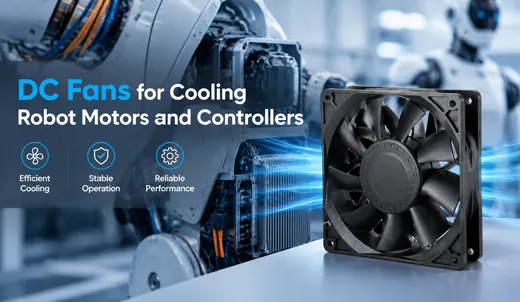


Medical Air Blower for CPAP Pressure and Airflow Control: Engineering the Core of Sleep Apnea Therapy
A high-performance Cpap blower—also globally recognized as a specialized medical air blower—serves as the mechanical heart and aerodynamic engine of every modern Obstructive Sleep Apnea (OSA) ventilation device. While end-users primary evaluate CPAP machines based on mask comfort, humidifier capacity, or mobile app tracking, original equipment manufacturers (OEMs) and biomedical engineers understand a fundamental engineering reality: precise, rapid-response pressure and dynamic airflow control depend entirely on the micro brushless centrifugal blower embedded within the chassis.
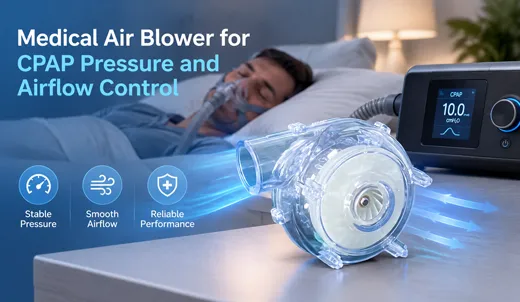
The specialized TKFAN Cpap blower series addresses the rigorous engineering and clinical challenges of respiratory hardware design. Engineered to solve critical industry pain points—such as acoustic resonance, structural vibration, dynamic inertia lag, fluidic biocompatibility, and long-term mechanical reliability—the TKFAN medical air blower portfolio offers seamless integration for both compact travel CPAP devices and full-sized homecare sleep therapy ventilators.
Engineering & Clinical Takeaways
- Dynamic Pressure Control: Precise modulation between 4 cmH₂O and 40 cmH₂O (0.4 kPa to 3.9 kPa) under shifting patient breathing cycles.
- Dual-Plane Dynamic Balancing: Advanced balancing technology reducing operational noise down to whisper-quiet levels of 26.5 dB(A).
- Biocompatible Airflow Path: Fully ISO 10993 compliant construction eliminating volatile organic compounds (VOCs) and toxic off-gassing.
- Extended Operating Lifespan: Precision Japanese NMB dual ball bearings providing L10 rated lifespan from 50,000 to 70,000 continuous hours.
What is a Medical-Grade CPAP Blower & Why Control Precision Matters
A medical-grade Cpap blower is a specialized 24V brushless DC (BLDC) centrifugal air blower specifically optimized to deliver continuous positive airway pressure (CPAP) or bi-level positive airway pressure (BiPAP) to human airways. Unlike generic industrial cooling fans or low-cost air pumps, a true medical air blower must maintain exact static pressure across rapidly fluctuating flow rates caused by inhalation, exhalation, mask leaks, humidifier chamber resistance, and high-efficiency particulate air (HEPA) filters.
Clinical CPAP systems typically operate within a therapeutic pressure spectrum ranging from 4 cmH₂O to 40 cmH₂O (approximately 0.4 kPa to 3.9 kPa static pressure). In standard CPAP mode, the blower maintains a singular, uninterrupted pressure setpoint. In Auto-CPAP (APAP) mode, algorithm-driven adjustments alter pressure breath-by-breath upon detecting upper airway resistance. In BiPAP mode, the motor must rapidly oscillate between higher IPAP (Inspiratory Positive Airway Pressure) and lower EPAP (Expiratory Positive Airway Pressure). All three modes demand that the TKFAN Cpap blower motor accelerates and decelerates with exceptional dynamic responsiveness guided by mainboard pressure sensors.
The Clinical Impact of Response Delays
If a medical air blower lacks dynamic responsiveness, severe clinical complications arise. During rapid patient inhalation, inadequate airflow speed causes therapeutic pressure drops below set levels, risking upper airway collapse. Conversely, during exhalation, delayed motor deceleration creates excessive backpressure, causing airway discomfort and patient-ventilator dyssynchrony.
Patient non-compliance remains the largest hurdle in sleep medicine. Studies confirm that patients abandon CPAP therapy primarily due to acoustic disturbance, motor vibration, or expiratory discomfort. Deploying an advanced TKFAN medical air blower solves these issues at the mechanical source, providing immediate pressure compensation for maximum therapeutic efficacy.
5 Essential Engineering Requirements for CPAP Medical Blowers
When evaluating a candidate Cpap blower for medical device certification, biomedical hardware engineers must validate five non-negotiable performance criteria. The entire TKFAN Cpap blower line is engineered around these benchmarks to ensure seamless compliance with international medical device standards.
1. Aerodynamic Output: High Static Pressure & Airflow Range
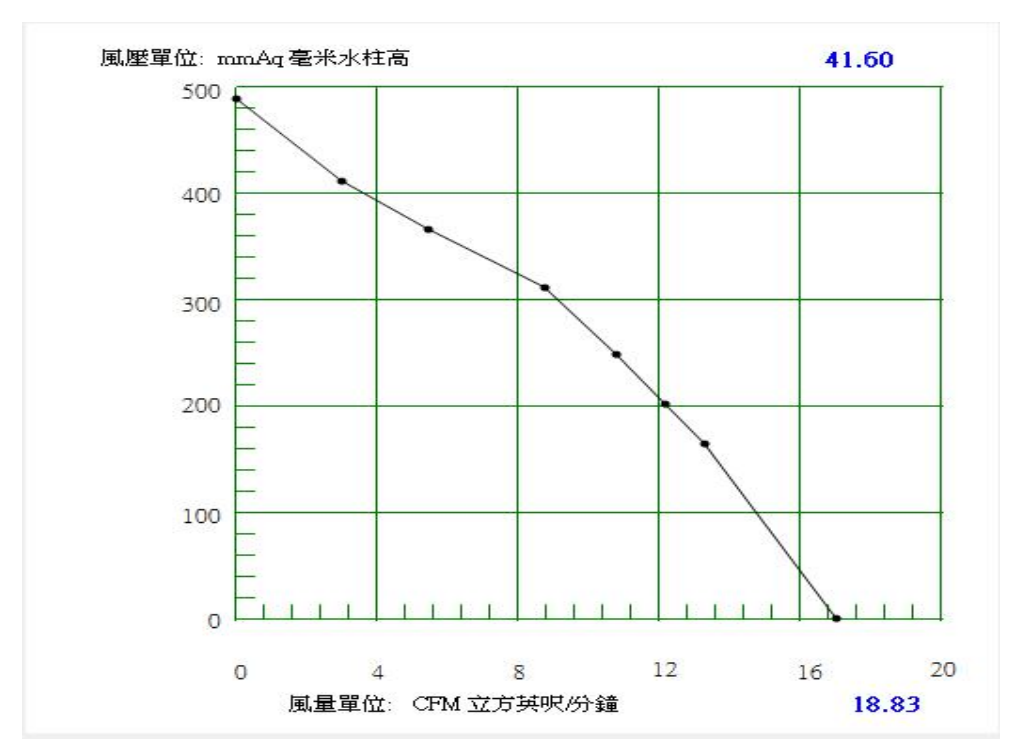
Sleep therapy circuits introduce significant pneumatic impedance. Humidification chambers, long corrugated tubing, anti-bacterial filters, and intentional mask vent leaks create high backpressure. A reliable TKFAN medical air blower must maintain its pressure curve under varying flow rates. TKFAN units span frame sizes from 40mm to 70mm, offering maximum static pressure ratings from 4.05 kPa to 8.4 kPa and airflow capacities up to 18.8 CFM (440 L/min).
2. Ultra-Low NVH (Noise, Vibration, and Harshness) Performance
Acoustic noise is the primary cause of user dissatisfaction. Standard commercial blowers utilize single-plane dynamic balancing, leaving residual unbalance along the inner motor rotor. At high operational speeds (30,000 RPM to 48,000 RPM), this unbalance generates structural micro-vibrations, escalating noise levels and transmitting hum into the enclosure. TKFAN solves this through proprietary dual-plane dynamic balancing, achieving ultra-quiet noise ratings down to 26.5 dB(A) at 10 cmH₂O therapy pressure.
3. Dynamic Acceleration and Speed Modulation
APAP and BiPAP devices demand instant motor speed transitions. Low-inertia impeller geometry allows the TKFAN Cpap blower to ramp up or down within milliseconds. Integrated Pulse-Width Modulation (PWM) and 0–5V analog speed control interfaces allow system architects to incorporate the blower into high-speed closed-loop firmware algorithms seamlessly.
4. Biocompatible & Non-Toxic Airway Materials
All air passing through a medical air blower directly enters human lungs. Consequently, impellers, volute housings, and internal seals must strictly comply with ISO 10993 material biocompatibility guidelines. TKFAN utilizes medical-grade engineering polymers free from toxic additives, heavy metals, or volatile organic compounds (VOCs), ensuring zero toxic off-gassing during high-temperature continuous duty.
5. Long-Term Reliability Under Continuous Duty
CPAP machines operate continuously for 6 to 9 hours every night over several years. Blower failure can lead to severe health risks. The TKFAN medical air blower integrates Japanese NMB double ball bearings and optimized thermal dissipation channels, yielding an L10 operational lifespan rating of 50,000 to 70,000 hours.
TKFAN Medical Air Blower Product Specification Matrix
The TKFAN Cpap blower line covers a versatile range of physical dimensions and performance profiles. Standard models run on a 24V DC bus, matching modern medical device power architectures. Custom voltage options (such as 12V DC) and tailored wiring harnesses are available upon OEM request.
| Model Part No. | Frame Size (mm) | Rated Voltage | Speed (RPM) | Max Airflow (CFM) | Max Pressure (kPa) |
|---|---|---|---|---|---|
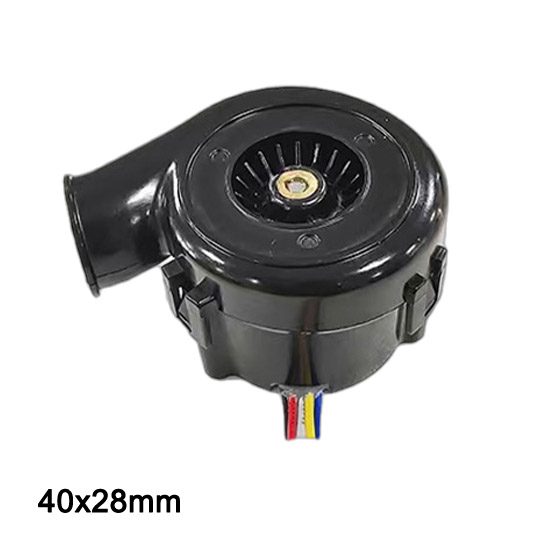
| BA4028H24B | 40 × 28 mm | 24 VDC | 48,000 | 12.0 | 5.9 |
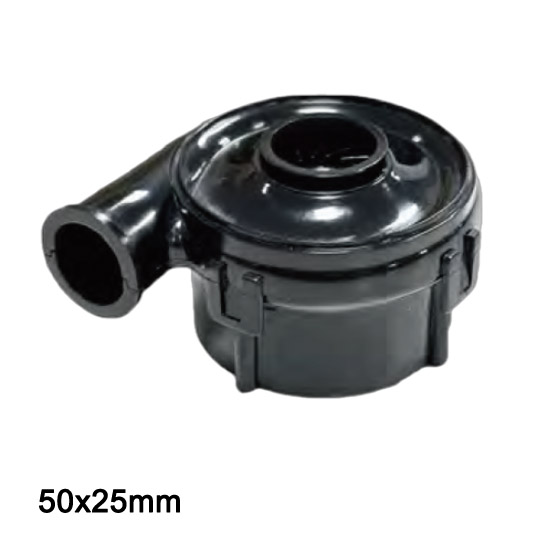
| BA5025H24B | 50 × 25 mm | 24 VDC | 37,000 | 9.5 | 4.05 |
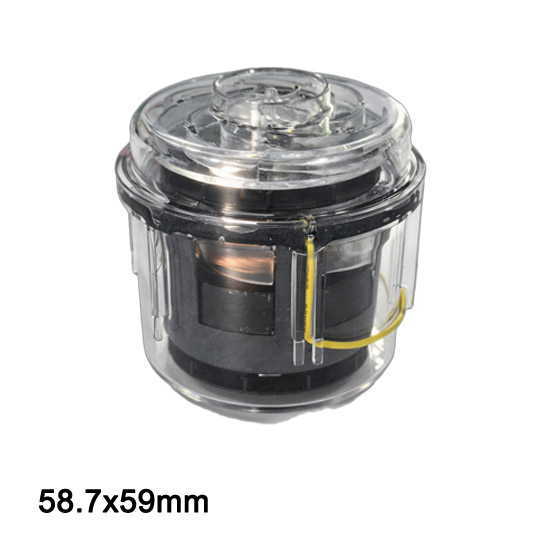
| BA5060H24B-A | 58.7 × 59 mm | 24 VDC | 31,000 | 14.0 | 8.4 |
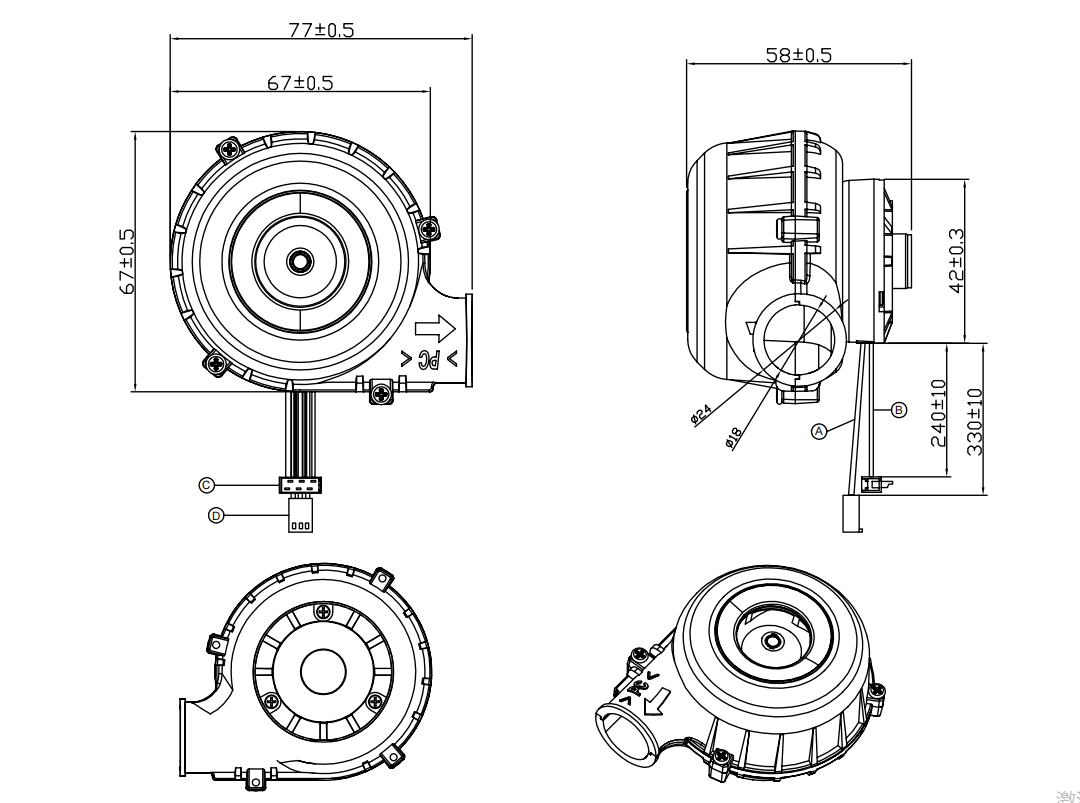
| BA7060H24B-C | 77 × 67 × 57 mm | 24 VDC | 32,000 | 18.8 | 4.8 |
| BA7060H24B-D2311 | 79 × 69 × 56 mm | 24 VDC | 30,600 | 15.9 | 4.9 |
| BA7060H24B-D2303 | 79 × 69 × 56 mm | 24 VDC | 30,500 | 15.9 | 4.7 |
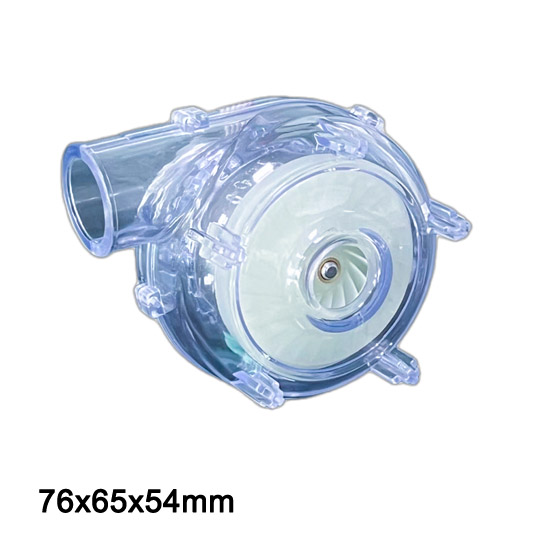
| BA7060H24B-K | 76 × 65 × 54 mm | 24 VDC | 34,000 | 15.7 | 5.4 |
Dual-Plane Dynamic Balancing: The TKFAN Core Advantage
Conventional Cpap blower designs rely on single-plane dynamic balancing, where material is removed solely from the outer face of the plastic impeller. However, because the rotor stack and internal magnets possess physical length along the axial shaft, single-plane balancing fails to address couple unbalance. At operational speeds above 30,000 RPM, this unresolved balance component creates micro-wobble and bearing chatter.
The TKFAN medical air blower solves this through a dual-plane dynamic balancing architecture. The shaft extends bi-directionally, supporting the aerodynamic impeller at the front end and a precision brass counterweight assembly at the rear end. During manufacturing, automated balancing equipment measures both correction planes simultaneously, executing micro-milling on two independent correction planes.
Key Engineering Benefits of Dual-Plane Balancing:
- Drastic NVH Reduction: Eliminates structural vibration transmitted through the blower mounting isolators into the plastic host housing.
- Acoustic Refinement: Operates at an ultra-quiet 26.5 dB(A), significantly lower than the 30 dB(A) night-time bedroom noise ceiling.
- Extended Bearing Longevity: Minimizes asymmetrical radial forces on NMB ball bearings, extending L10 lifespan beyond 50,000 hours.
- Sensor Signal Stability: Prevents mechanical vibration from distorting high-sensitivity airflow and differential pressure sensor readings on the main PCB.
Travel CPAP vs. Homecare Ventilators: Blower Selection Guide
Biomedical hardware designers must carefully align Cpap blower selection with the intended medical device form factor. Structural, acoustic, and thermal constraints vary significantly between travel-sized devices and stationary bedside sleep therapy stations.
Portable Travel CPAPs: Travel CPAP devices emphasize compact footprints, minimal weight, and battery compatibility. Because internal housing volume is severely restricted, these devices offer little space for thick sound-baffling foam or complex multi-stage dampening mounts. Travel CPAP designs rely heavily on ultra-compact models like the TKFAN BA4028H24B or BA5025H24B. In these space-constrained environments, the dual-plane dynamic balance of the TKFAN Cpap blower is critical to prevent vibration from escalating noise levels.
Stationary Homecare CPAP/BiPAP Machines: Full-sized bedside ventilators prioritize whisper-quiet operation and high-pressure headroom for BiPAP or APAP modes. These systems utilize larger frame units such as the TKFAN BA5060H24B-A or BA7060 Series. The larger impeller volume yields higher static pressure capacity (up to 8.4 kPa) while running at lower relative RPM, enabling exceptional thermal efficiency, rapid pressure transitions, and maximum patient comfort.
CPAP鼓风机部分图片
Why Industrial Centrifugal Blowers Cannot Replace Medical Blowers
Medical device startups occasionally attempt to adapt low-cost industrial centrifugal blowers into early CPAP prototypes. This approach introduces major compliance failures, patient safety risks, and operational defects:
- Chemical Safety & VOC Hazards: Industrial plastics lack ISO 10993 testing. When subjected to internal motor heat, industrial polymers can off-gas phthalates and volatile compounds directly into the airway.
- Aerodynamic Instability Under Backpressure: Industrial blowers are designed for high free-flow ambient air circulation. Under high backpressure (filters, tubing, humidifiers), their pressure curves stall, causing severe pressure drop-offs during inhalation.
- Excessive Acoustic Harassment: Unbalanced industrial rotors generate harsh tonal whining and motor buzz, rendering night-time sleep therapy impossible for patients.
- Premature Bearing Breakdown: Standard industrial sleeve bearings fail quickly under continuous high-RPM thermal cycles, leading to high warranty return rates for medical device OEMs.
Frequently Asked Questions (FAQ) - Technical & OEM Guide
Q1: Can the TKFAN Cpap blower support both fixed CPAP and BiPAP variable pressure modes?
Yes. Thanks to ultra-low impeller inertia and rapid BLDC motor response, the TKFAN Cpap blower supports CPAP, Auto-CPAP (APAP), and BiPAP mode protocols. The motor ramps speed seamlessly via PWM or 0–5V analog signals to deliver rapid IPAP and EPAP pressure transitions.
Q2: What control interfaces are available for speed and pressure regulation?
TKFAN medical air blowers support integrated or external driver board configurations. Motor speed can be modulated using Pulse-Width Modulation (PWM) or 0–5V DC analog input signals, enabling microcontrollers to execute closed-loop PID pressure control loops.
Q3: What is the expected L10 operating lifespan of a TKFAN medical air blower?
Equipped with premium Japanese NMB dual ball bearings and specialized thermal dissipation channels, TKFAN medical air blowers achieve an L10 lifespan rating of 50,000 to 70,000 hours under standard clinical operating conditions.
Q4: Are all air-contact materials compliant with ISO 10993 medical biocompatibility standards?
Yes. All impellers, volutes, and seals along the fluid pathway are constructed from medical-grade polymers compliant with ISO 10993 standards, ensuring zero harmful VOC off-gassing into the patient's breathing circuit.
Q5: Does TKFAN offer custom OEM/ODM modifications for unique ventilator designs?
Yes. TKFAN provides comprehensive OEM/ODM engineering services, including custom operating voltages, modified housing mounting flanges, specialized impeller pitch configurations, and custom wire harness connector terminations.
Q6: What noise level can be achieved inside a finished CPAP enclosure using a TKFAN blower?
When integrated into a properly dampened chassis, TKFAN medical air blowers operate at whisper-quiet sound levels as low as 26.5 dB(A) at 10 cmH₂O operational pressure, well under the standard 30 dB(A) bedroom threshold.
Q7: How does dual-plane dynamic balancing improve blower performance over single-plane balancing?
Dual-plane balancing corrects dynamic unbalance along two separate rotational planes, preventing axial wobble at high RPM (30,000–48,000 RPM). This significantly reduces vibration, acoustic noise, and bearing stress.
Q8: Are 12V DC variants available for mobile or battery-powered medical equipment?
While standard catalog models are optimized for 24V DC systems, TKFAN provides customized 12V DC versions tailored for portable travel CPAPs, emergency transport ventilators, and field medical units.
Q9: Can TKFAN medical blowers be used in applications outside of sleep therapy?
Yes. Due to their high static pressure, compact design, and low vibration, TKFAN blowers are also utilized in high-precision medical oxygen concentrators, air sampling devices, and specialized high-end 3D printer cooling systems (such as Voron setups).
Q10: What documentation is provided for regulatory FDA or CE medical device filings?
TKFAN supplies complete technical datasheets, performance P-Q curves, material safety declarations, ISO 10993 compliance documentation, and MES-tracked serial data to support customer FDA 510(k) and CE MDR regulatory submissions.
Conclusion & OEM Integration Support
A medical-grade Cpap blower is far more than an air mover—it is the central component determining medical efficacy, regulatory compliance, acoustic comfort, and field reliability for respiratory equipment. The comprehensive TKFAN Cpap blower and TKFAN medical air blower portfolio offers advanced dual-plane balancing, ISO 10993 medical biocompatibility, dynamic speed responsiveness, and complete OEM/ODM customization options.
For engineering datasheets, CAD models, samples, or customized project inquiries, visit the official TKFAN medical blower product portal: https://www.tkfan.com/products/airblower/cpap-air-blower.html.