

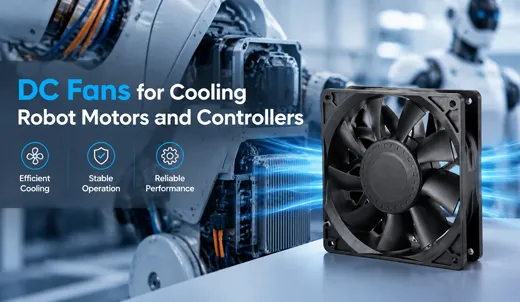
DC Fans for Cooling Robot Motors and Controllers: Comprehensive Thermal Management Guide
The global robotics revolution demands ever-higher power density, ultra-compact hardware configurations, and continuous 24/7 operational capability across industrial mobile robots, collaborative robot arms (Cobots), warehouse Autonomous Mobile Robots (AMRs), inspection drones, and automated material handling equipment. However, as high-torque brushless servo motors operate under strenuous duty cycles and motion controllers execute high-frequency positioning commands, vast amounts of thermal waste accumulate rapidly inside tight robotic enclosures. Without an engineered active forced-air thermal management solution, extreme heat accumulation triggers thermal throttling, permanent demagnetization of servo motor magnets, power MOSFET degradation on controller PCBs, encoder signal drift, and catastrophic unscheduled downtime that disrupts entire automated production lines.
To overcome these aggressive thermal barriers, high-performance DC cooling fans for robots have transitioned from simple add-on accessories to vital structural components within robotic hardware engineering. Specifically, integrating industrial-grade TKFAN DC cooling fans for robots ensures thermal equilibrium, maximum system reliability, and sustained operational efficiency under harsh industrial environmental conditions.
Quick Insights: Thermal Management for Robotics
- Standard Voltage Alignment: Using a native 24V DC fan eliminates step-down DC-DC converters, eliminating extra heat generation while saving valuable PCB real estate.
- Proactive Protections: Premium TKFAN 24V DC fan units incorporate built-in circuit protections against voltage spikes, reverse polarity, and electrical noise typical of DC battery buses.
- Intelligent Closed-Loop Control: 4-wire PWM speed regulation combined with FG tachometer feedback allows robot controllers to dynamically scale cooling based on real-time temperature telemetry.
- Long Mechanical Lifespan: Precision dual ball bearings rated for over 50,000 hours are essential to handle orientation shifts and continuous multi-shift robotic operation.
Thermal Risks in Robotics Motors and Motion Controllers
Thermal management challenges in modern robotics differ fundamentally from standard stationary server cabinets or consumer electronics. Modern robot joint actuators, servo windings, motor drivers, power MOSFETs, primary motion controllers, and embedded edge AI compute modules are densely packed within sealed or semi-sealed chassis. These enclosures are purposefully sealed to protect delicate electronics from industrial dust, oil spray, airborne metal particles, and physical impacts. Unfortunately, this physical barrier completely prevents natural air convection.
During heavy acceleration, deceleration, and continuous high-torque holding phases, robot drive motors release significant Joule heat. Copper winding resistance increases proportionally with internal temperature. Higher winding temperatures lead to lower motor efficiency, increased battery current draw, and accelerated insulation breakdown. In brushless servo motors deployed across cobot joints and AMR wheel drives, exposure to prolonged high temperatures causes permanent demagnetization of neodymium magnets, resulting in irreversible torque loss and shortened equipment lifespans.
Concurrently, robot motion controllers and servo drivers face severe operational hazards from internal heat buildup. Microprocessors, current-sensing ICs, and power switching transistors operating above design thermal thresholds activate internal thermal throttling mechanisms. This forces the robot system to reduce speed, limit output torque, or trigger an emergency shutdown to prevent hardware destruction. For warehouse AMRs executing 24/7 fulfillment or cobots on assembly lines, unexpected thermal shutdowns lead to immediate production losses and costly operational downtime.
Because battery-powered mobile robots operate under strict power budgets, thermal efficiency directly impacts run-time. Every watt consumed by thermal management hardware reduces operational range. Uncontrolled cooling fans operating at maximum speed during low-load cycles drain energy unnecessarily. Therefore, robotic engineers favor intelligent, controllable DC cooling fans for robots capable of adjusting power draw dynamically relative to motor and controller heat levels.
Axial DC Fans vs. Centrifugal Blowers in Robotic Design
When engineering active thermal cooling systems for robotic motors and controllers, design teams must choose between axial DC cooling fans for robots and centrifugal blowers. Both technologies offer unique airflow profiles suited for different chassis locations.
Axial DC fans move air parallel to the fan impeller axis, offering high volumetric airflow (CFM) in low-impedance environments. These units excel at cabinet-level ventilation—drawing ambient air into the primary chassis and pushing accumulated heat out through exhaust ports. Consequently, an axial TKFAN 24V DC fan is ideal for main controller enclosures where airflow pathways remain relatively unobstructed.
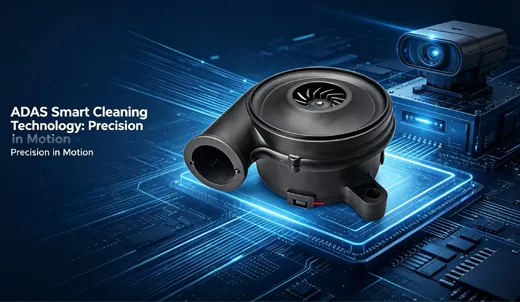
Conversely, centrifugal blowers generate higher static pressure by deflecting air outwards at a 90-degree angle. Blowers perform exceptionally well against high backpressure—forcing air through dense heatsink fins, narrow internal ducts, or tightly enclosed robot joint cavities. However, blowers typically consume more power and produce higher acoustic noise compared to equivalent axial fans.
| Cooling Parameter | Axial DC Fan (e.g., TKFAN 24V Series) | Centrifugal Blower Fan |
|---|---|---|
| Airflow Characteristics | High Volume Airflow (CFM) | High Static Pressure (mmH₂O) |
| Primary Robotic Application | Control cabinet ventilation, broad heat sink cooling | Narrow joint cavities, localized motor spot-cooling |
| Power Efficiency | Higher airflow per watt consumed | Higher power consumption for equivalent CFM |
| Acoustic Noise Profile | Lower average operating noise | Higher noise at maximum operating static pressure |
| System Impedance Tolerance | Best in low-to-medium pressure resistance | Excels in high airflow resistance environments |
Many modern robotic systems utilize a hybrid cooling architecture: an axial TKFAN 24V DC fan handles overall control cabinet air exchange, while compact centrifugal blowers provide targeted spot-cooling directly to high-thermal-load servo joints. Deciding on the correct fan geometry early in the CAD design phase prevents thermal bottlenecks during physical prototyping.
Core Advantages of TKFAN 24V DC Fan Solutions for Robotics
1. Native 24V DC Bus Integration
Industrial mobile platforms, AGVs, AMRs, and robotic controllers utilize 24V DC power rails as a global standard. Deploying a native TKFAN 24V DC fan allows direct connection to the primary power bus without needing step-down converters. Eliminating auxiliary power regulators reduces bill-of-materials (BOM) costs, frees up board space, and removes secondary heat sources within the enclosure.
Furthermore, industrial TKFAN DC cooling fans for robots feature wide operating voltage ranges (e.g., 14.0V to 27.6V DC). This accommodates voltage droops during heavy battery discharge and suppresses transient inductive voltage spikes caused by high-power motor start-stop cycles.
2. High-Pressure Airflow and Optimized Blade Hydraulics
Engineering robust internal airflow requires overcoming resistance from dense wiring harnesses, motor driver boards, and protective dust filters. High-performance TKFAN DC cooling fans for robots feature precision-engineered impeller blades and stator vanes designed to deliver balanced airflow and static pressure profiles. Even when dust accumulates on cabinet air filters, these fans maintain sufficient pressure to prevent internal heat stagnation.
3. Precision Dual Ball Bearings for Continuous Operation
Robotic hardware operating in 24/7 manufacturing plants demands long-life components. TKFAN industrial models feature precision dual ball bearings lubricated with high-temperature synthetic grease, offering an operational lifespan exceeding 50,000 hours at 40°C. Unlike consumer sleeve-bearing fans, dual ball bearings maintain structural integrity regardless of mounting angle—whether installed horizontally, vertically, or subjected to continuous multi-axis motion in dynamic robotic arms.
4. Closed-Loop Intelligent Thermal Regulation (PWM & FG Signals)
Advanced 4-wire TKFAN 24V DC fan models support standardized Pulse Width Modulation (PWM) for speed control alongside Frequency Generator (FG) tachometer output. Main motion controllers monitor thermistors placed on motor windings and power switching MOSFETs to dynamically adjust fan RPM. During low-load states, the fan scales down RPM to conserve battery power and minimize acoustic noise; under heavy duty cycles, it ramps up to 100% capacity for maximum thermal dissipation.
Simultaneously, the FG signal provides continuous speed feedback to the robot safety software. If an obstruction locks the fan rotor, the system instantly detects the drop in RPM and executes defensive measures—such as scaling back motor output torque or flagging a maintenance alert—preventing severe thermal damage.
5. Low Electromagnetic Interference (EMI) for Sensitive Sensors
Modern robotics rely on precise sensor feedback from optical encoders, LiDAR sensors, stereo cameras, force-torque sensors, and high-speed CANbus communications. Inferior brushless fans can inject electromagnetic noise into shared power lines, disrupting signal integrity. The brushless driver electronics within TKFAN DC cooling fans for robots are engineered for low EMI output, ensuring electromagnetic compatibility across all onboard electronic subsystems.
Real-World Robotic Application Scenarios
Active cooling requirements vary significantly across robotic operational domains. Industrial implementations demonstrate the flexibility and performance of TKFAN DC cooling fans for robots:
- Warehouse Autonomous Mobile Robots (AMRs & AGVs): Logistics AMRs rely on 24V lithium battery power to drive heavy payload wheel motors and running onboard navigation processors. Installing a compact TKFAN 24V DC fan ensures constant air circulation across the main drive electronics. PWM functionality minimizes idle battery drain, while rugged construction withstands continuous floor vibrations.
- Collaborative Robot Arms (Cobots): Cobots integrate multiple multi-axis servo drives within small base enclosures and joint housings. High-airflow TKFAN DC cooling fans for robots keep base-mounted controller cards within target thermal limits, while low-vibration rotor balancing prevents mechanical resonance from interfering with joint torque sensor accuracy.
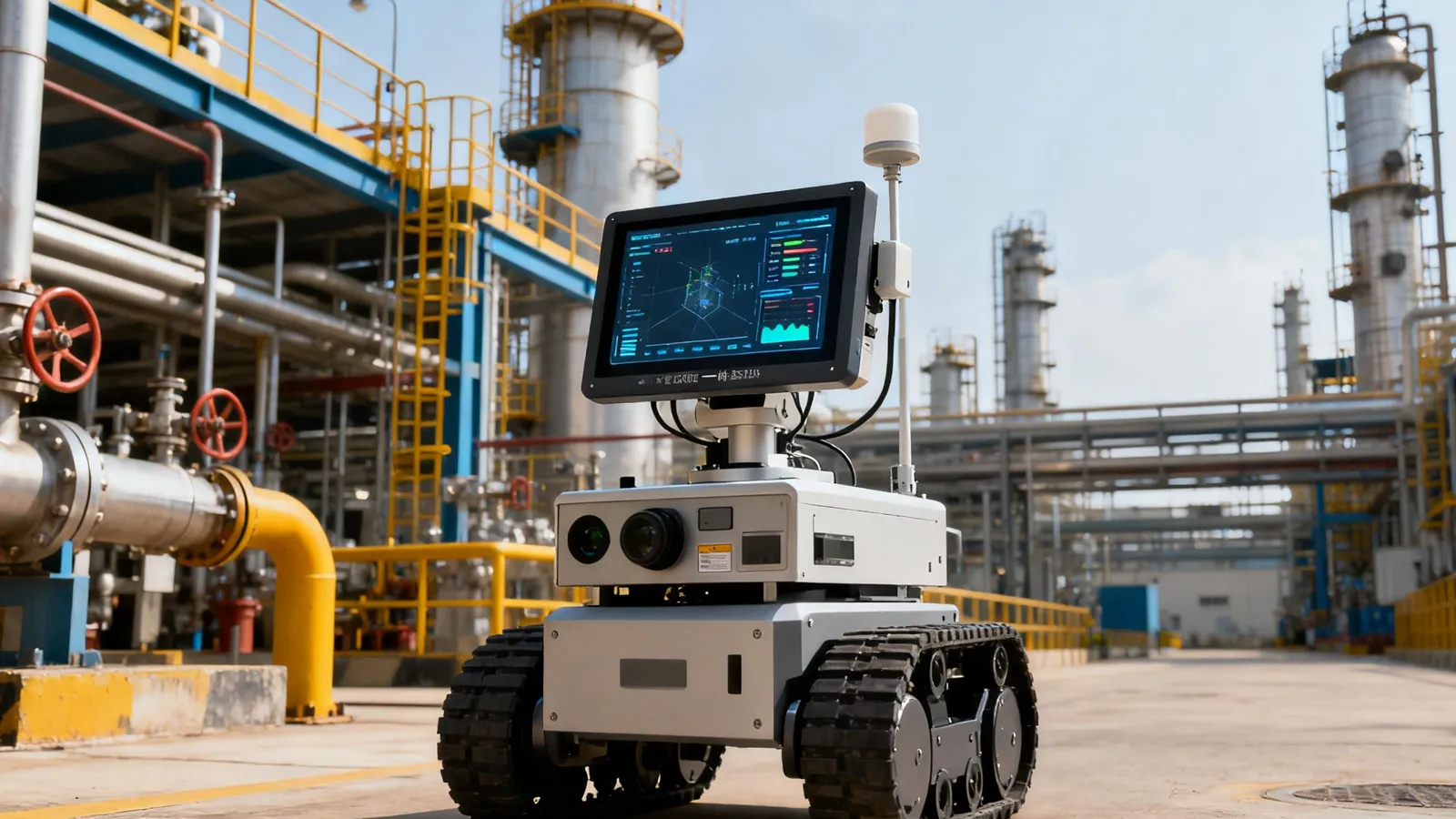
- Outdoor & Industrial Inspection Robots: Inspection rovers operating in dusty or humid environments require robust thermal hardware. Protective conformal-coated or IP-rated TKFAN 24V DC fan variants protect motor control electronics against moisture, dust, and outdoor ambient temperature fluctuations.
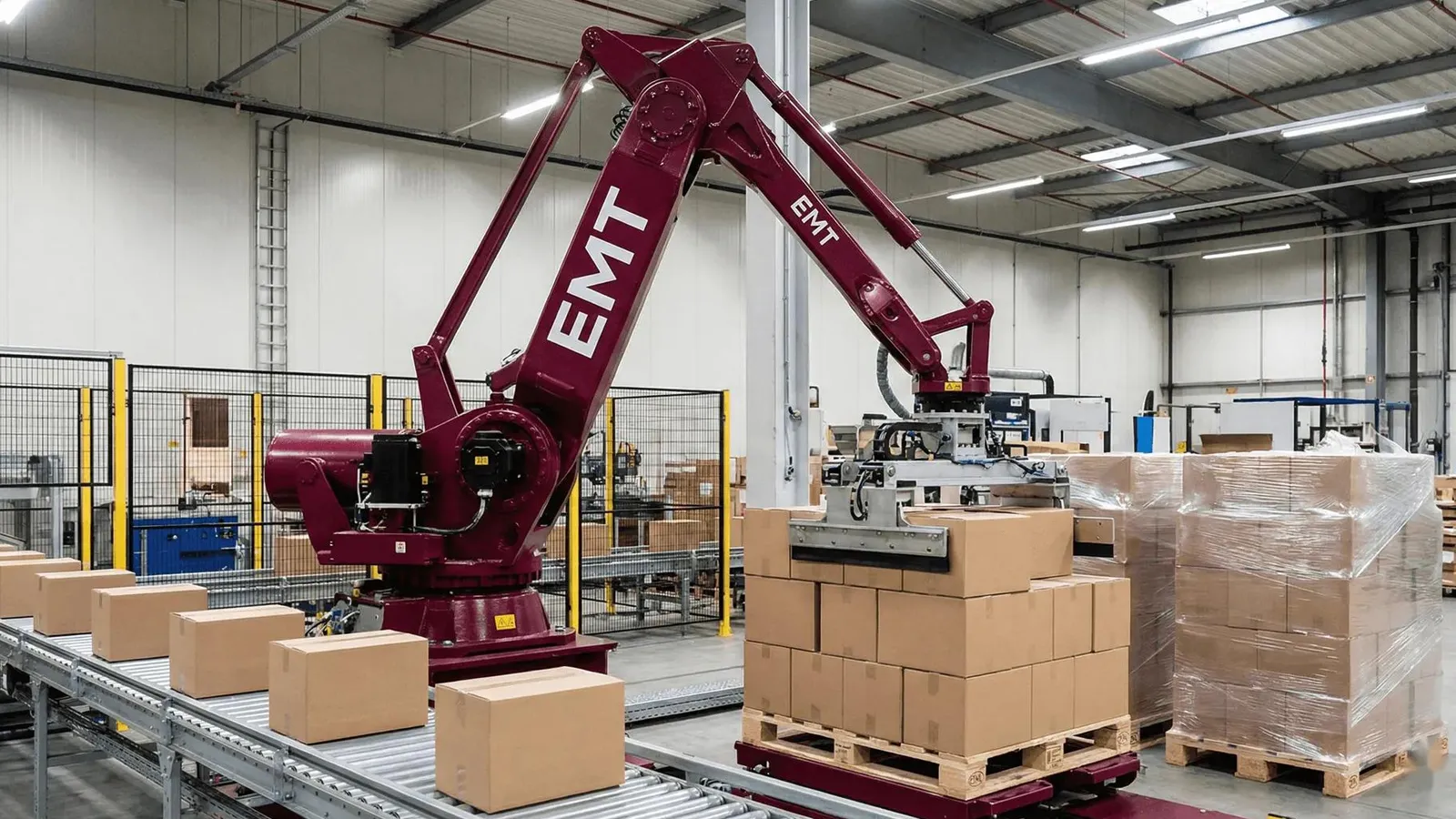
- Heavy Material Handling & Palletizing Robots: Heavy-duty robotic arms require high-power servo drives that generate continuous waste heat. Large-frame high-CFM TKFAN cooling fans deliver the volume needed to maintain air exchange across multi-axis driver racks inside primary power cabinets.
Real-World Robot Application Scenarios
.webp "Warehouse Autonomous Mobile Robots (AMRAGV).webp")
.webp "Collaborative Robot Arms (Cobots).webp")
Engineering Checklist: Selecting DC Fans for Robotics
When selecting a TKFAN 24V DC fan for new robotic developments, hardware engineers should evaluate the following criteria:
- P-Q Airflow Curve Matching: Always evaluate the fan P-Q (Pressure vs. Volume) performance curve rather than relying solely on zero-resistance free-air CFM ratings to ensure adequate airflow under actual chassis backpressure conditions.
- Input Voltage Range Tolerance: Confirm that the selected 24V DC fan can safely handle voltage fluctuations across the battery discharge curve and withstand back-EMF spikes generated by braking motors.
- Mechanical Dimensions and Form Factor: Account for fan frame depth, wire lead routing, connector orientation, and maintenance clearances during early 3D CAD modeling.
- Control Interface Configuration: Determine whether the design requires simple 2-wire power, 3-wire tachometer speed monitoring, or full 4-wire PWM intelligent thermal speed control.
- Bearing Type and Orientation Stability: Select dual ball bearing configurations for industrial machinery to avoid premature sleeve-bearing failure caused by multi-axis acceleration forces.
- Environmental Ingress Protection: Specify IP55 or IP68 environmental protection ratings alongside conformal circuit coatings for robots deployed in dusty, greasy, or outdoor environments.
Integration Best Practices for Thermal Reliability
Optimizing the physical layout of active cooling components within robotic chassis maximizes overall thermal efficiency:
- Isolate Intake and Exhaust Pathways: Prevent internal thermal recirculation by physically separating cold air inlet vents from warm exhaust ports using internal baffling.
- Pair Active Airflow with Conductive Heat Sinks: Mount power MOSFETs and driver ICs on aluminum heat sinks using high-conductivity thermal interface materials (TIM), directing high-velocity airflow straight across the heatsink fins.
- Implement Closed-Loop Temperature Regulation: Program the robot motion firmware to adjust fan PWM duty cycles dynamically based on temperature sensors placed on critical power components.
- Dampen Structural Vibration: Use anti-vibration rubber isolation mounts when securing fans to structural frames to isolate motor harmonics from sensitive optical encoders and IMUs.
Frequently Asked Questions (FAQ)
Conclusion
Effective thermal management remains a critical engineering requirement for high-density robotic systems. Protecting high-torque motors, driver PCBs, and sensitive motion controllers from heat degradation requires robust forced-air cooling. Specifying high-efficiency TKFAN DC cooling fans for robots prevents thermal throttling, safeguards magnet performance, and extends the operational lifespan of automated machinery.
To explore detailed technical datasheets, CAD dimensional models, and P-Q performance curves, visit the official TKFAN 24V DC fan product center. Whether you are engineering warehouse AMRs, collaborative assembly arms, or outdoor inspection rovers, industrial-grade TKFAN 24V DC fan solutions deliver the reliable thermal protection your hardware demands.