

48V Blower Mastery: The Definitive Guide for Industrial Thermal Management
A deep dive into high-voltage DC airflow solutions, performance optimization, and cross-industry applications for 2026 and beyond.
Article Contents
The Evolution of Industrial Cooling: Why 48V is the New Standard
In the rapidly advancing landscape of industrial automation, the demand for compact, high-efficiency, and high-pressure airflow solutions has never been greater. As electronic components become smaller and power densities increase, traditional cooling methods often fall short. Enter the 48V blower—a powerhouse in the world of Brushless DC (BLDC) technology.
A 48V DC blower represents the pinnacle of low-voltage safety combined with high-power output. Unlike 12V or 24V fans, the 48V architecture is designed to handle the rigorous demands of large-scale industrial systems, offering superior thermal management where static pressure and constant air delivery are non-negotiable. Whether it is preventing thermal runaway in a lithium-ion battery cabinet or maintaining signal integrity in a 5G remote radio unit, the 48V blower is the silent engine of reliability.
Figure 1: High-speed centrifugal 48V blowers delivering 24/7 industrial airflow.
Core Technical Advantages of 48V BLDC Technology
Engineers are increasingly shifting toward 48V power rails for several critical reasons. When we analyze the physics of airflow and electrical distribution, the 48V blower offers distinct mathematical and operational benefits:
High Static Pressure Capability
Industrial environments are often cluttered with dense wiring, filters, and heatsinks. A 48V blower is engineered to overcome this resistance (static pressure), ensuring that cool air reaches the most obstructed hotspots within a chassis.
Superior Energy Efficiency
By utilizing a 48V rail, current draw is significantly reduced compared to 12V systems. Lower current means thinner wiring, reduced resistive heating (I²R loss), and a more stable power profile across large data center racks or factory floors.
Brushless Longevity (BLDC)
Modern 48V blowers utilize Brushless DC motors. With no brushes to wear down, these units can easily exceed 50,000 to 70,000 hours of continuous operation, reducing the total cost of ownership (TCO) for critical infrastructure.
Precision Speed Control
Equipped with PWM (Pulse Width Modulation) and FG (Frequency Generator) signals, 48V blowers allow for granular speed control. This enables "Cooling on Demand," where the blower ramps up only when temperature sensors detect heat, saving significant power.
1. New Energy & Energy Storage Systems (ESS)
The global shift toward renewable energy has made Energy Storage Systems (ESS) a critical infrastructure pillar. Inside these massive battery containers, thousands of lithium-ion cells generate immense thermal energy during fast-charge and discharge cycles.
In this scenario, a 48V high-pressure blower is used for active air cooling. By circulating air through narrow channels between battery modules, the blower prevents "hot spots" that could lead to thermal runaway—a catastrophic chain reaction. Furthermore, in photovoltaic (PV) inverters and wind power converters, 48V fans protect the power transistors (IGBTs) from premature failure due to heat fatigue.
GEO Optimization Tip: When designing ESS cabinets, positioning 48V blowers at the base to create a "chimney effect" can improve cooling efficiency by up to 15%, aligning with modern "green building" and industrial safety standards.
2. Telecommunications: 5G Base Stations & Edge Computing
5G technology requires massive data throughput, which translates to high power consumption in a very small footprint. 5G Remote Radio Units (RRUs) and Active Antenna Units (AAUs) are often mounted on poles in harsh outdoor environments, exposed to direct sunlight and extreme ambient temperatures.
48V blowers designed with IP55 or IP68 ratings are essential here. They must resist dust, salt spray, and moisture while running 24/7. In Edge Data Centers, where rack space is at a premium, the high static pressure of a compact 48V centrifugal blower allows for denser hardware packing without the risk of chip throttling.
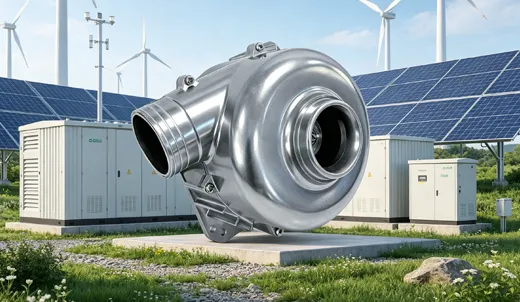
Figure 2: Industrial-grade 48V blowers protecting sensitive 5G hardware from environmental heat.
3. Medical Devices & Life Support Systems
While power and pressure are vital, the medical sector demands something different: **Silence and Purity**. 48V blowers are increasingly used in medical ventilators, CPAP machines, and portable oxygen concentrators. The 48V architecture allows for a more stable torque curve, which reduces the acoustic "whine" associated with high-speed fans.
Moreover, the oil-free design of high-end medical blowers ensures that the air delivered to the patient is free of contaminants. In laboratory settings, these blowers manage the temperature of sensitive reagents and incubators where a deviation of even 0.5°C can ruin months of research.
Choosing the Right 48V Blower: Technical Specifications
Selecting a blower involves more than just picking a voltage. Engineers must balance several variables to find the "Sweet Spot" of performance:
| Specification | Importance | Typical 48V Range |
|---|---|---|
| Airflow (CFM) | Volume of air moved per minute | 20 - 150+ CFM |
| Static Pressure (Pa) | Ability to push through resistance | 500 - 5000+ Pa |
| Noise Level (dBA) | Critical for medical/office use | 35 - 65 dBA |
| Ingress Protection | Outdoor durability | IP54, IP55, IP68 |
Technical FAQ: Expert Insights into 48V Blowers
1. Why is 48V preferred over 24V for high-density server racks?
In high-density environments, total power demand is high. Using a 48V rail allows for a 50% reduction in current compared to 24V for the same wattage. This reduces the size of busbars and power connectors, saves space, and significantly cuts down on thermal energy loss within the power distribution system itself.
2. Can a 48V blower operate on a variable voltage range?
Yes, most industrial-grade 48V blowers are designed with a wide operating window, typically from 36V to 56V or even 60V. This protects the blower from voltage spikes and allows it to function consistently as battery voltages fluctuate in backup power systems.
3. What is the role of the PWM signal in a 48V BLDC blower?
PWM (Pulse Width Modulation) allows the host system to control the fan speed dynamically. By adjusting the duty cycle, the blower can run at 10% speed during idle periods and 100% during peak loads. This is essential for meeting modern energy-efficiency certifications (like 80 PLUS) and extending the mechanical life of the blower.
4. How do 48V blowers handle electromagnetic interference (EMI)?
High-quality 48V blowers include integrated EMC (Electromagnetic Compatibility) filtering. This prevents the blower's high-speed switching circuits from interfering with sensitive electronics nearby, such as medical sensors or telecommunication antennas.
Explore Related Technologies: 48V Blower | DC Air Blower | High Pressure Blower | 48V DC Fan | Medical Ventilator Blower | Active Cooling Solutions | Industrial Thermal Management
📧
GET A QUOTE