

Brushless DC Air Blower Engineering & Buying Guide for B2B OEMs: Design, Performance, and Applications
In modern industrial automation, medical device design, autonomous vehicle technology, and high-density electronics, thermal and airflow management systems face rigorous demands. Among the available air-moving solutions, the brushless DC air blower (also known as a brushless DC blower, brushless air blower, or brushless blower) stands out as an indispensable component for high-static-pressure, continuous-duty, and space-constrained applications. Unlike standard axial fans, a high-performance brushless DC air blower delivers concentrated, pressurized airflow designed to overcome significant internal system resistance.
This comprehensive B2B technical guide explores the architectural mechanics, operational metrics, OEM selection procedures, and multi-industry applications of the modern brushless DC air blower. Designed for procurement specialists, thermal engineers, and system designers, this guide highlights how transitioning to advanced brushless blower technology optimizes total cost of ownership (TCO) and elevates overall system reliability.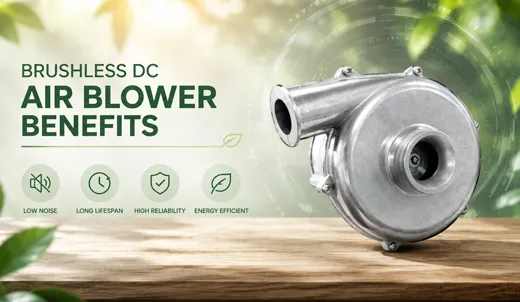
1. What is a Brushless DC Air Blower? Structural & Operational Architecture
A brushless DC air blower is a compact centrifugal air-moving device powered by an electronically commutated Brushless DC (BLDC) motor. Traditional brushed blowers rely on physical carbon brushes sliding against a mechanical commutator to switch winding polarity. In contrast, a brushless DC air blower achieves contactless electronic commutation via integrated PCB microcontrollers and Hall-effect magnetic sensors.
The aerodynamic architecture of a brushless DC air blower differs significantly from standard axial fans:
- Air Flow Orientation: An axial fan draws air in and pushes it out along the same parallel axis. A brushless air blower draws air in axially along its center shaft and accelerates it outward at a 90-degree radial angle through a specialized scroll housing.
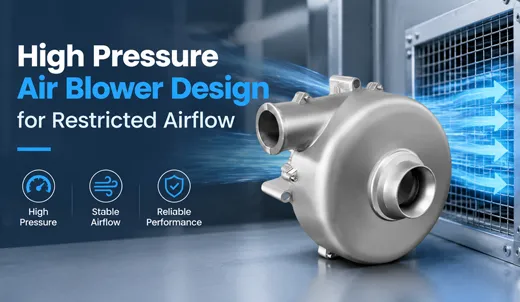
- Static Pressure Generation: By utilizing centrifugal force via forward-curved or backward-curved impeller blades, a brushless DC blower transforms kinetic air velocity into high static head pressure. This allows it to force air through dense HEPA filters, narrow ducts, micro-channel heat sinks, and tightly packed enclosures.
- Contactless Motor Mechanics: The elimination of mechanical brushes eliminates friction, physical wear, carbon dust build-up, and electrical arcing. The permanent magnet rotor turns smoothly around the energized stator coils, guided purely by magnetic fields.
From micro-size units like 40×40×10mm micro blowers operating at 5V up to heavy-duty 48V industrial blowers, manufacturers like TKFAN Brushless DC Air Blower Solutions provide scalable OEM configurations designed to meet specific engineering constraints.
2. Technical Comparison: Brushless DC Blower vs. Traditional Brushed Blower
Evaluating the transition from brushed to brushless technology requires analyzing key operational metrics. The table below details why a modern brushless DC air blower is superior for commercial and industrial OEM integration:
| Performance Metric | Traditional Brushed Air Blower | Advanced Brushless DC Air Blower | B2B Operational Impact |
|---|---|---|---|
| Commutation Method | Mechanical (Carbon Brushes + Copper Commutator) | Electronic (PCB Controller + Hall Sensors) | Eliminates physical contact wear, avoiding sudden mechanical failure. |
| Operational Lifespan (MTBF) | 5,000 to 12,000 Hours | 30,000 to 80,000+ Hours | Reduces equipment downtime by over 80% in 24/7 continuous applications. |
| Energy Efficiency | 65% – 75% (Heat losses from brush friction) | 85% – 92% (Optimized magnetic coupling) | Lowers power consumption by 30%–50%; extends portable battery runtime. |
| Acoustic Noise & Vibration | 58 – 72 dBA (High-frequency brush hum) | 20 – 48 dBA (Dynamically balanced impellers) | Essential for noise-sensitive environments like hospital ICUs and automotive cabins. |
| Electromagnetic Interference (EMI) | High EMI (Sparking across mechanical contacts) | Ultra-Low EMI (Smooth, sparkless switching) | Protects sensitive sensors, wireless modules, and medical monitoring circuits. |
| Speed Control & Feedback | Voltage regulation only (Imprecise under load) | Closed-Loop PWM + FG Speed/RD Alarm Feedback | Enables real-time thermal management and proactive failure warning. |
| Maintenance Requirements | Periodic brush replacement & cleaning | Zero routine maintenance (Life-long lubrication) | Substantially reduces field service costs and total cost of ownership. |
3. Key Engineering Advantages of a Brushless DC Air Blower
3.1. Extended Operational Lifespan and System Reliability
The defining advantage of a brushless DC air blower is its extended operational life. Because carbon brushes degrade over time—causing contact loss, high noise, and ultimate seizure—brushed blowers present a risk in long-term deployments. With high-precision dual ball bearings sealed with high-temperature grease, a quality brushless blower routinely exceeds 50,000 hours of continuous operation. In critical medical ventilators or industrial air sampling units, this longevity ensures uninterrupted operation.
3.2. Drastic Reduction in Total Cost of Ownership (TCO)
While the initial unit cost of a brushless DC blower can be higher than a brushed counterpart, the lifetime savings are substantial. Eliminating brush replacement procedures, emergency field repairs, and warranty claims drastically reduces total operating expenses. OEMs deploying thousands of devices globally avoid recurring field maintenance costs, achieving a complete return on investment (ROI) within months of deployment.
3.3. Superior Energy Efficiency & Battery Friendly Design
Modern power electronics allow a brushless DC air blower to achieve thermal and electrical efficiency above 85% to 92%. For portable medical devices, military field gear, and handheld inspection instruments, this efficiency translates directly into a 35% to 45% increase in battery operating life, allowing product designers to utilize smaller, lighter lithium-battery packs.
3.4. Low Acoustic Signature and Minimal Vibration
Acoustic performance is critical in residential, clinical, and automotive application spaces. Modern brushless air blower designs combine fluid dynamic blade profiling with dynamic balance calibration. By removing high-frequency electrical brush noise and suppressing airflow turbulence, high-tier medical blowers operate at sound levels as low as 20 to 25 dBA, meeting ISO clinical noise standards.
3.5. Smart Control Integration (PWM, FG, and RD Signals)
Unlike basic fans, an advanced brushless DC air blower integrates directly with modern microcontrollers via multi-wire interfaces:
- PWM (Pulse Width Modulation): Enables precise, continuous speed adjustments based on real-time temperature or pressure sensors.
- FG (Frequency Generator / Tachometer): Outputs frequency pulses corresponding to exact rotor RPM for closed-loop monitoring.
- RD (Rotation Detector Alarm): Triggers a warning signal if the blower rotor is locked or obstructed, protecting critical systems from thermal damage.
3.6. Low Electromagnetic Interference (EMI) & Zero Arcing
Because no electrical sparks are generated during operation, a brushless DC air blower produces minimal electromagnetic noise. This makes it suitable for sensitive RF equipment, autonomous vehicle LiDAR sensors, and hospital patient monitors that must comply with strict CISPR 25 and medical EMC regulations.
4. Key B2B Industry Applications for Brushless DC Blowers
4.1. Medical & Respiratory Care Devices
In life-support equipment, reliability is non-negotiable. Medical-grade 24V brushless DC air blowers provide rapid pressure response, clean airflow, and quiet performance in applications such as:
- CPAP (Continuous Positive Airway Pressure) and BiPAP machines
- ICU ventilators and neonatal resuscitation units
- Oxygen concentrators and negative pressure wound therapy (NPWT) systems
- Air particle counters for pharmaceutical cleanrooms
Full specifications for healthcare-compliant units are accessible via the TKFAN Brushless DC Blower B2B Guide.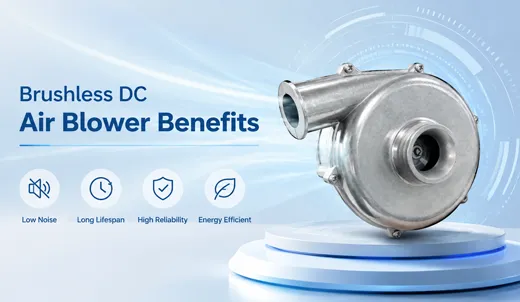
4.2. Automotive Electronics & Autonomous Driving Systems (ADAS)
Modern vehicles use compact high-pressure brushless DC blowers to clean critical exterior sensors and support cabin climate controls:
- LiDAR, radar, and HD camera surface air-jet cleaning systems
- Seat climate control and active ventilation modules
- EV battery thermal management and onboard charger cooling
4.3. Industrial Automation & Commercial Equipment
Industrial machinery relies on heavy-duty 24V and 48V brushless DC air blowers for focused, high-pressure air delivery:
- Air cushion packaging and bubble wrap inflation machines
- Hot-air soldering rework stations and industrial drying tunnels
- High-density server rack forced convection cooling
- IP67 water-proof blowers for harsh outdoor environments
4.4. Smart Home & Compact Commercial Appliances
- Robotic vacuum cleaner high-suction vacuum modules
- Portable air purifiers and desktop dehumidifiers
- Precision cooling systems for 3D printers
5. Critical Selection Parameters for OEM Thermal Engineers
When selecting a brushless DC air blower model, design engineers should evaluate these key parameters:
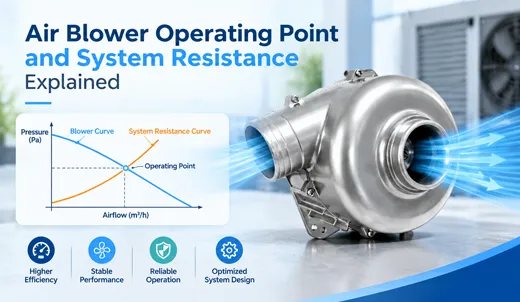
- Static Pressure (Ps in Pa or mmH2O): Calculate total system air resistance (filters, duct length, chassis restrictions). High-resistance systems require specialized high-pressure blowers.
- Airflow Volume (CFM or m³/h): Determine the required volumetric flow rate needed to remove heat or maintain pressure under normal working conditions.
- Operating Voltage: Select standard operating rails: 5V/12V for portable electronics, 24V for medical/industrial systems, or 48V for telecom racks.
- Acoustic Thresholds (dBA): Check noise ratings at maximum load, especially for clinical or residential equipment.
- Control Signal Interfaces: Determine if your board requires 2-pin (power only), 3-pin (FG tachometer), or 4-pin (PWM control + FG feedback) configurations.
- Environmental Ingress Protection: Specify IP ratings (e.g., IP54 to IP67) for outdoor or moisture-prone operating conditions.
6. Step-by-Step OEM Selection & Customization Process
To successfully integrate a brushless DC air blower into a custom product line, follow these engineering steps:
- Step 1: System Resistance Mapping: Measure or simulate pressure drops across filters, heat exchangers, and ducts.
- Step 2: Voltage & Power Budgeting: Align the blower's electrical demands with the system's power supply capabilities.
- Step 3: Signal Interface Alignment: Confirm PWM signal frequency compatibility (typically 15kHz – 25kHz) with the host microcontroller.
- Step 4: Mechanical Customization: Define requirements for custom scroll housings, mounting flanges, cable lengths, and connector pinouts. Explore custom options at TKFAN OEM Air Blower Product Catalog.
- Step 5: Prototype Validation Testing: Evaluate sample units in realistic thermal chambers to verify thermal management, noise, and vibration levels.
7. Technical FAQ: Frequently Asked Questions
An axial fan moves air parallel to its rotational axis, providing high airflow volume at low static pressure. A brushless DC air blower intake draws air axially and expels it radially at a 90-degree angle, generating significantly higher static pressure to overcome internal flow resistance.
It uses an internal PCB controller with Hall sensors to electronically shift current through the stator coils. Because there are no mechanical brushes rubbing against a physical commutator, mechanical friction and arcing wear are eliminated, leaving precision ball bearings as the only moving contact point.
Medical applications demand dynamic pressure responsiveness, exceptionally quiet operation (often under 25 dBA), low EMI emissions, and tens of thousands of hours of maintenance-free continuous operation. Brushed fans cannot meet these strict medical and safety requirements.
With dual precision ball bearings and proper thermal management, a standard brushless DC blower lasts between 30,000 and 80,000 hours of continuous operation—5 to 10 times longer than typical brushed alternatives.
PWM allows the system controller to adjust blower speed dynamically according to real-time cooling or pressure needs. Operating at reduced speeds during lower loads significantly reduces energy consumption, acoustic output, and component wear compared to full-speed operation.
Yes. Custom manufacturing processes utilize conformal coatings or full motor potting techniques to achieve IP54, IP55, or IP67 ratings, making the blower resistant to moisture, dust, salt spray, and outdoor weathering.
The two standard diagnostic signals are the FG (Frequency Generator) signal, which outputs speed pulses to calculate exact RPM, and the RD (Rotation Detector) signal, which alerts the main system controller if the impeller locks or stalls.
Yes. Standard models operate on continuous DC rails such as 5V, 12V, 24V, or 48V. Internal drive electronics handle all commutation processing automatically upon power application.
OEMs can request specialized scroll housing shapes, modified flange mounting points, custom lead-wire lengths, specialized connectors, unique PWM curves, dynamic balancing tolerances, and custom IP weatherproofing seals.
Their minimal EMI output simplifies circuit design by reducing the need for heavy external shielding filters. Integrated smart controls also remove the requirement for external power switching circuitry, while long service lives eliminate post-sale field service expenses.
8. Conclusion: Strategic Advantages for OEM System Designers
Integrating a modern brushless DC air blower into your equipment design ensures long-term performance, high energy efficiency, and low field-failure rates. Whether you are engineering medical respiratory equipment, ADAS sensor cleaners, or industrial packaging machinery, adopting high-pressure brushless blower technology delivers a superior operational experience and lower overall ownership costs.
To evaluate engineering samples, review detailed airflow curves, or request custom OEM housing modifications, contact the engineering team via the official portal at TKFAN Brushless Blower Product Center.