

Waterproof DC Blower Guide: Engineering Selection for Waterproof Air Blowers & Waterproof DC Fans
Designing or procuring forced-air cooling and thermal management systems for environments exposed to high humidity, dust, splashing water, chemical vapors, or complete submersion presents severe engineering hurdles. Standard open-frame DC fans fail rapidly under these conditions due to moisture intrusion, winding corrosion, bearing contamination, and electrical short circuits. A dedicated waterproof DC blower—frequently searched across industrial sectors as a waterproof air blower, waterproof DC fan, or waterproof blower—solves these critical points of failure through fully sealed motor assemblies, protective conformal/epoxy encapsulation, and corrosion-resistant structural components.
This technical guide provides a comprehensive overview of fundamental definitions, operating principles, IP protection standards, engineering features, industry applications, and step-by-step selection procedures. All IP protection ratings can be customized based on specific project requirements. Explore the complete product lineup at the TKFAN Waterproof Blower Product Zone.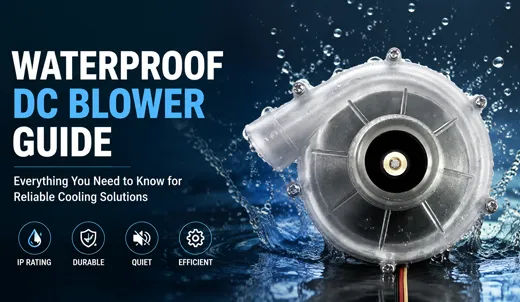
What is a Waterproof DC Blower?
Core Definitions: Waterproof DC Blower, Waterproof Air Blower, and Waterproof DC Fan
A waterproof DC blower is a brushless DC (BLDC) centrifugal air-moving device manufactured with multi-layer sealing, moisture-proof potting, and dust-tight enclosures. It is engineered to operate reliably in environments where standard cooling units fail due to moisture, dust, salt spray, or liquid splashes. While several terms are used interchangeably within the industry, distinct mechanical and operational characteristics define each category:
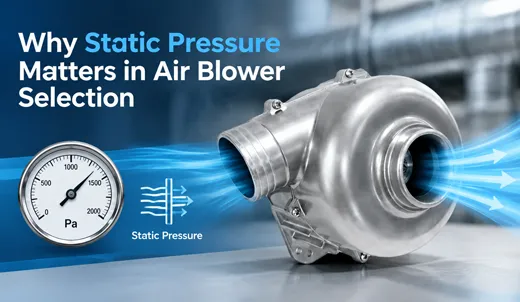
- Waterproof DC Blower: The precise engineering terminology for a brushless DC centrifugal blower utilizing an axial air intake and radial (90-degree side) discharge. This architectural layout generates high static pressure, forcing air through dense dust filters, narrow ducts, and high-impedance enclosures. This capability offers a distinct advantage over axial-flow waterproof DC fans.
- Waterproof Air Blower: A broad commercial term referring to any protective forced-air equipment applied across medical, agricultural, consumer, and industrial systems requiring forced air in humid or wet conditions.
- Waterproof DC Fan: Typically describes an axial-flow cooling fan housed in a square or round frame. These units move high volumes of air at low static pressure and are primarily used for unconstricted cabinet-level heat dissipation.
- Waterproof Blower: A standard industry abbreviation used in bill-of-materials (BOM) specs, industrial purchase orders, and component catalogs for all ingress-protected blower units.
Standard open-frame fans leave control circuit boards, copper stator windings, and bearing assemblies exposed to ambient air. Conversely, a high-reliability waterproof blower relies on two primary protective barriers:
- Electrical Vacuum Encapsulation: Motor stators, driver ICs, and PCB components are fully potted with thermally conductive epoxy resin or vacuum-coated with protective conformal coatings. This creates a hermetic seal against condensation, direct liquid jets, and fine airborne particulates.
- Mechanical Sealing Systems: Labyrinth rubber gaskets, dual-sealed stainless steel ball bearings, and precision-molded PBT plastic enclosures isolate rotating mechanical components from external contaminants, preventing shaft oxidation and lubricant breakdown.
Every TKFAN Waterproof DC Blower Series component utilizes a fully sealed brushless core combined with aerodynamically optimized impellers to deliver consistent airflow and static pressure in demanding operating environments.
Key Performance Discrepancies: Standard DC Fans vs. Waterproof Blowers
Standard open-frame fans deployed in humid environments suffer from three main catastrophic failure modes, which are mitigated by a dedicated waterproof air blower:
| Failure Mode | Standard Unprotected DC Fan | TKFAN Encapsulated Waterproof DC Blower |
|---|---|---|
| Condensation & Short Circuits | Moisture droplets bridge PCB traces, causing overcurrent spikes, trace corrosion, and total motor failure. | Thermally conductive epoxy resin creates a 100% airtight barrier over PCB traces, eliminating short-circuit risks. |
| Bearing Degradation | Salt spray and humidity displace bearing grease, leading to friction, high noise, and mechanical seize. | Dual precision ball bearings featuring labyrinth rubber seals isolate grease from ambient contaminants. |
| Dust & Debris Accumulation | Particulates coat stator windings and bearings, causing thermal buildup and insulation degradation. | IP6X-certified dust-tight enclosures block particulate ingress into mechanical and electrical cores. |
Where is a Waterproof DC Blower Required?
Five High-Risk Operating Environments
If equipment is exposed to ambient moisture, fine dust, liquid spray, or corrosive gases, a waterproof DC blower or waterproof DC fan is required to protect system integrity. Substituting standard components in these environments can result in unexpected downtime and frequent field failures.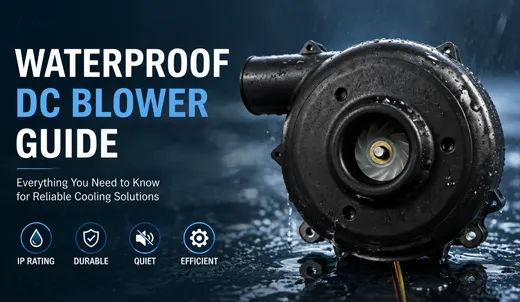
- High-Humidity Enclosures (RH > 80%): Automated greenhouses, livestock ventilation controllers, medical humidification systems, and underground wastewater cabinets experience constant internal condensation. Encapsulated waterproof blowers prevent water vapor from penetrating sensitive electronics.
- Liquid Washdown & Splashing Stations: Commercial food processing lines, automated car washes, high-pressure industrial wash bays, and EV charging kiosks require regular washdowns with hot water and cleaning agents. An IP-rated waterproof blower tolerates direct fluid streams without dielectric breakdown.
- Fully Exposed Outdoor Installations: 5G telecom cabinets, solar string inverters, outdoor LED displays, and off-grid battery energy storage systems (BESS) are continuously exposed to rain, fog, blowing dust, and temperature cycles. Fully outdoor equipment relies on high-IP waterproof air blowers to maintain internal thermal balance.
- Marine and Coastal Environments: Shipboard electronics, offshore wind turbine control panels, coastal monitoring sensors, and port automation machinery encounter salt spray that rapidly accelerates copper and steel corrosion. Upgrading to salt-fog-resistant waterproof DC blowers extends operating lifespans in these locations.
- Particulate-Heavy Industrial Sites: Mining ventilation, textile processing, chemical processing, and agricultural fertilizer handling present dense dust combined with high humidity. Dusty, moist environments cause unsealed fan bearings to bind. Sealed waterproof DC blowers block solid contaminants from entering the housing.
Hidden Financial Costs of Omitting Ingress Protection
Selecting standard fans to minimize initial bill-of-materials (BOM) costs in humid applications often leads to higher long-term Total Cost of Ownership (TCO):
- High labor expenses for emergency field service and fan replacements
- Collateral damage to surrounding inverter or control electronics caused by short-circuit fires
- Increased warranty claims and product return rates from humid regional markets
- Risk of non-compliance with international safety and ingress requirements (CE, UL, IP standards)
- Damage to brand reputation resulting from recurring component failure
Deplopying a properly matched waterproof air blower mitigates these secondary costs, providing L10 bearing lifespans of up to 70,000 hours under rated operating conditions.
Understanding Ingress Protection (IP) Ratings for DC Blowers
Ingress Protection ratings follow the IEC/EN 60529 standard, defining the mechanical enclosure sealing efficiency of a waterproof DC blower, waterproof air blower, or waterproof DC fan against solids and liquids. The designation consists of two digits: the first specifies solid dust protection, and the second specifies liquid ingress protection.
First IP Digit: Solid Particle Protection
| Level | Effective Protection Level | Application Suitability for Blowers |
|---|---|---|
| IP0X | No specialized protection against solid objects. | Unsuitable for industrial waterproof blowers. |
| IP4X | Protected against solid objects > 1.0 mm (tools, wires). | Indoor control cabinets with light dust filtration. |
| IP5X | Dust-protected: Ingress of dust is not entirely prevented, but does not interfere with operation. | Standard outdoor telecom cabinets, EV chargers, and solar inverters. |
| IP6X | Dust-tight: Zero ingress of dust; complete protection against contact. | Heavy-duty mining, marine, desert, and washdown applications. |
Second IP Digit: Liquid Ingress Protection
| Level | Effective Protection Level | Application Suitability for Blowers |
|---|---|---|
| IPX4 | Splashing water against the enclosure from any direction. | Semi-sheltered outdoor kiosks, light commercial equipment. |
| IPX5 | Water jets projected by a nozzle (6.3 mm) against enclosure from any direction. | Standard industrial washdown equipment, exposed outdoor chassis. |
| IPX6 | Powerful water jets (12.5 mm nozzle, 100 kPa pressure at 3 meters). | Heavy marine deck equipment, food processing washdown stations. |
| IPX7 | Ingress of water in harmful quantity shall not be possible when immersed under defined conditions (1m up to 30 mins). | Temporary submersion, flood-prone locations, marine bilge systems. |
| IPX8 | Continuous submersion in water under specified hydrostatic pressure conditions. | Deepwater equipment, submerged pumps, underwater cooling loops. |
| IPX9K | High-pressure, high-temperature washdown jets (80°C water at 80–100 bar). | Pharmaceutical and food processing facilities with strict sanitization protocols. |
Engineering Recommendation: Match the IP rating to the worst-case environmental conditions of the end application. While an IP68-rated waterproof DC blower offers high protection for marine or submerged designs, an IP54 or IP65 rating may provide a cost-effective solution for semi-sheltered outdoor systems. All TKFAN units can be customized to targeted IP standards.
Key Engineering Features of TKFAN Waterproof DC Blowers
1. Vacuum Epoxy Potting
TKFAN utilizes specialized, thermally conductive epoxy resin to completely encapsulate the motor stator, driving circuit board, and control ICs under vacuum conditions. Unlike thin conformal coatings, full vacuum potting eliminates internal air pockets, allowing the unit to operate continuously under full liquid immersion. The potting compound also acts as a thermal bridge, conducting heat away from the motor windings to the outer housing to prevent thermal throttling.
2. Labyrinth-Sealed Dual Ball Bearings
Sleeve bearings are prone to lubricant displacement when exposed to moisture. Industrial-grade TKFAN waterproof DC blowers incorporate dual NMB stainless steel ball bearings fitted with multi-lip rubber labyrinth seals. This construction prevents water vapor, salt fog, and fine grit from contaminating the internal synthetic lubricant.
3. Aerodynamically Optimized Centrifugal Impellers
Molded from PBT plastic (UL 94V-0 rated), TKFAN backward-curved and forward-curved centrifugal impellers are engineered for high static pressure generation. This ensures stable volumetric airflow even when pushing air through damp particulate filters or restrictive duct networks.
4. Integrated MCU Protection Architecture
Every TKFAN waterproof air blower features built-in microcontroller unit (MCU) protection features to guard against electrical and mechanical anomalies:
- Overvoltage Protection (OVP) & Undervoltage Protection (UVP): Prevents driver IC damage caused by power supply instability.
- Overcurrent Protection (OCP): Cuts winding current if mechanical load limits are exceeded.
- Locked-Rotor Protection & Auto-Restart: Disconnects drive current if an object jams the impeller, attempting auto-restarts at set intervals to prevent winding burnout.
- Reverse Polarity Protection: Prevents circuit board failure if power leads are miswired during installation.
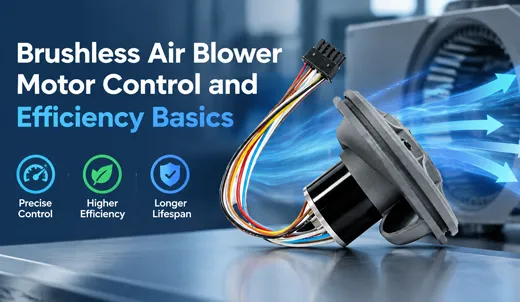
- PWM & 0-10V Speed Control: Allows dynamic system-level fan speed adjustments based on real-time thermal readings.
- Tachometer (FG) & Alarm (RD) Output: Sends frequency signals back to system controllers for closed-loop monitoring.
Primary Application Cases
1. Outdoor Renewable Energy & EV Infrastructure
DC fast-charging stations (150kW–360kW+), solar string inverters, and commercial battery storage banks generate significant heat within sealed outer enclosures. Utilizing IP65 or IP67 waterproof DC blowers ensures heat is drawn through intake filters while preventing rain, heavy mist, and windblown dust from entering electrical cabinets.
2. Medical Ventilators & Respiratory Equipment
Medical-grade humidifiers, ICU ventilators, and home therapy devices require low-noise waterproof air blowers compatible with elevated oxygen levels and high moisture contents. Encapsulated blowers isolate internal motor components from humidified air circuits while operating below 25 dB(A).
3. Marine, Naval, and Offshore Systems
Deck-mounted control junction boxes, marine engine room electronics, and coastal radar installations are subject to constant salt fog and direct wave splashing. Custom salt-spray-treated waterproof blowers with IP68 seals withstand these conditions without salt crusting or winding shorts.
4. Commercial Food Processing & Sanitization Lines
Processing plants for meat, dairy, and beverage production undergo daily high-pressure washdowns using caustic chemical foam and hot water streams. Employing IP69K waterproof DC blowers allows equipment to be cleaned thoroughly without removing thermal management components.
Step-by-Step Waterproof DC Blower Selection Guide
- Evaluate Environmental Factors: Determine peak ambient temperatures, expected relative humidity, exposure to direct liquid spray or submersion, airborne dust levels, and chemical or salt fog presence. Establish the required baseline IP rating (e.g., IP54, IP67, IP68, IP69K).
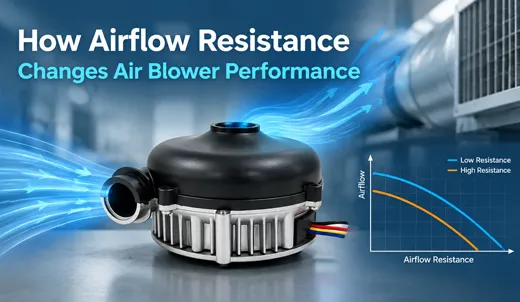
- Calculate System Airflow (CFM) and Static Pressure (Pa / mmH₂O): Determine the required volumetric flow rate based on total heat dissipation requirements ($\Delta T$). Measure total system impedance across air paths, filters, and heatsinks to select a blower with an appropriate performance curve.
- Select Input Voltage: Match system rail voltage to standard DC blower configurations—typically 12V, 24V, or 48V DC. 24V and 48V models are generally preferred in industrial automation to reduce current draw and conductor sizing.
- Verify Physical Dimensions & Discharge Orientation: Choose between an axial-flow waterproof DC fan (high airflow, low pressure) and a centrifugal waterproof DC blower (high pressure, right-angle discharge). Ensure selected housing dimensions fit within cabinet constraints.
- Define Control & Signal Specifications: Determine if fixed-speed operation is sufficient or if 4-wire PWM/0-10V speed control and FG tachometer feedback are needed for dynamic system monitoring.
- Select Bearing System for Target Operating Life: For 24/7 continuous industrial deployment, specify dual ball bearings rated for 70,000 hours L10 lifespan at 40°C. Avoid sleeve bearings in critical outdoor or washdown applications.
- Review Compliance & Customization Requirements: Verify required agency certifications (CE, RoHS, REACH, UL). Request specialized modifications such as custom harness lengths, IP68 water-tight connectors, or anti-salt-spray coatings from the manufacturer.
Technical Frequently Asked Questions (FAQ)
Q1: What is the primary operational difference between a waterproof DC blower and a standard industrial cooling fan?
The core difference lies in internal sealing architecture. Standard industrial fans leave copper windings, PCB traces, and bearings exposed to ambient air. A waterproof DC blower utilizes full vacuum epoxy encapsulation for electrical components and labyrinth-sealed ball bearings for mechanical parts, allowing continuous operation in humid, wet, or dusty conditions.
Q2: Can TKFAN customize IP ratings for specific OEM project requirements?
Yes, TKFAN offers customizable protection options ranging from IP54 (dust and splash resistance) up to fully submerged IP68 and high-pressure IP69K washdown configurations. Formulations, seals, and testing procedures are tailored to match application requirements without adding unnecessary cost.
Q3: Does epoxy resin encapsulation cause the motor to overheat during continuous operation?
No. TKFAN uses specialized thermally conductive epoxy compounds engineered to transfer internal winding heat out to the PBT plastic frame. This design maintains operating temperatures within safe limits during continuous 24/7 full-load operation.
Q4: Are standard waterproof air blowers suitable for marine environments exposed to salt spray?
Standard IP67 units prevent liquid water ingress but may suffer long-term surface corrosion on exposed metallic shafts or fasteners when exposed to salt fog. For oceanographic, naval, or coastal installations, TKFAN provides specialized marine upgrades, including passivated metal components, anti-corrosion shaft plating, and salt-fog-tested synthetic lubricants.
Q5: Can TKFAN waterproof DC blowers be integrated into PLC automated control systems?
Yes. All TKFAN brushless waterproof DC blowers can be configured with 4-wire control options compatible with industrial PLCs, single-board computers, and microcontrollers. This includes PWM or 0-10V inputs for variable speed control, along with FG tachometer outputs for real-time speed monitoring and stall detection.
Q6: Why should centrifugal waterproof blowers be selected over axial waterproof fans for filtered enclosures?
Axial fans move large volumes of air in open spaces but experience severe airflow drop-offs under backpressure. Centrifugal blowers compress air and output it at a 90-degree angle, generating high static pressure. This makes them better suited for pushing air through damp dust filters, dense heatsinks, or narrow internal ducting.
Q7: How are TKFAN waterproof blowers tested to verify their IP rating before shipment?
TKFAN units undergo stringent quality testing, including vacuum bubble leak checks, automated high-voltage dielectric breakdown tests (Hi-Pot), full submersion testing under energized conditions for IP68 models, and high-pressure temperature washdown tests for IP69K specifications.
Q8: What is the expected operating life (L10) of a TKFAN waterproof DC blower in outdoor environments?
Equipped with dual precision NMB ball bearings and vacuum epoxy potting, TKFAN industrial waterproof blowers achieve an L10 life expectancy of up to 70,000 hours at 40°C ambient temperatures, enabling multi-year continuous field service in outdoor cabinets.
Q9: Are custom lead lengths and IP-rated quick-connect wiring harnesses available?
Yes. Full OEM/ODM customization is available for wire lead lengths, protective sleeving (corrugated tubing, teflon insulation), pin terminal configurations, and integrated IP67/IP68 waterproof quick-connect plugs to streamline field installation.
Q10: Where can complete technical datasheets and CAD models for TKFAN waterproof blowers be downloaded?
Detailed specification sheets, dimensional drawings, performance curves, and 3D CAD models (STEP/IGES) are available directly on the TKFAN Waterproof Blower Series Category Page or by contacting the technical support team.
Summary: Secure Long-Term System Reliability
Protecting forced-air cooling systems against liquid, moisture, and particulate damage requires engineered ingress protection. By selecting a dedicated waterproof DC blower, waterproof air blower, or waterproof DC fan with appropriate IP ratings, system engineers can prevent component field failures caused by condensation short-circuits, bearing corrosion, and dust buildup. For detailed performance curves, engineering consultation, or project-specific quotations, visit the official TKFAN Waterproof Blower Product Zone.
GET A QUOTE