

Industrial Blower: What Is It, How It Works, and Key Applications
Executive Summary: Modern automated manufacturing, automotive technology, medical devices, and electronics thermal management rely on controlled, pressurized air movement. According to market research by Grand View Research on Industrial Blowers, the global industrial blower market size reached USD 10.8 billion and is projected to expand at a CAGR of 4.2%, driven by rapid growth in medical equipment and industrial automation. Unlike conventional open-air circulation fans, an industrial blower is engineered to generate high static pressure to force air or gas through tight ducts, HEPA filters, enclosed cabinets, and complex process systems. This ultimate guide breaks down industrial blower working principles, major technical types, system design calculations, and primary industrial applications.
1. What Is an Industrial Blower?
An industrial blower (also widely referred to as an industrial air blower or industrial blower fan) is a heavy-duty electromechanical device designed to accelerate air or inert gas and deliver it at a substantially increased static pressure. According to standards established by the Air Movement and Control Association (AMCA Publication 210 / ANSI Standard), industrial blowers operate at a pressure ratio ranging from 1.11 to 1.20, positioning them precisely between low-pressure industrial axial fans and ultra-high-pressure air compressors.
Industrial blowers are indispensable when air encounters structural resistance. Whether pushing air through dense particulate air filters compliant with ISO 29463 HEPA Standards, forcing cooling streams into micro-channel heat sinks, or inflating protective air-cushion packaging materials, an industrial blower provides the mechanical force required to overcome system impedance.
Industrial Blower vs. Standard Industrial Axial Fan
Engineers and procurement managers frequently evaluate the difference between an industrial fan and an industrial blower. While both move air, their internal aerodynamic mechanics and pressure characteristics are fundamentally distinct:
| Performance / Feature Parameter | Industrial Axial Fan | Industrial Blower (Centrifugal) |
|---|---|---|
| Primary Air Flow Pattern | Parallel to the drive shaft (Axial) | Enters axially, exits radially at 90° (Centrifugal) |
| Air Flow Volume (CFM) | Very High in open-air environments | Moderate to High, concentrated and directed |
| Static Pressure Capacity | Low to Minimal (<100 Pa / 0.4 inH2O) | High to Extremely High (Up to 15,000+ Pa / 60 inH2O) |
| System Resistance Sensitivity | Airflow drops rapidly when restricted | Sustains directional airflow against heavy restriction |
| Typical Industrial Roles | Factory wall ventilation, space cooling | Enclosed cooling, CPAP/medical, air knives, dust extraction |
Key Features of Professional-Grade Industrial Blowers
To withstand rigorous 24/7 continuous duty cycles in modern factories and medical facilities, premium industrial blowers engineered by leading vendors like TKFAN incorporate advanced electromechanical features:
- Brushless DC (BLDC) Motors: Eliminates carbon brush wear, reduces magnetic interference, lowers power consumption by 30%–50% compared to traditional AC motors, and extends operational lifespan up to 50,000+ continuous hours (L10 rating at 40°C).
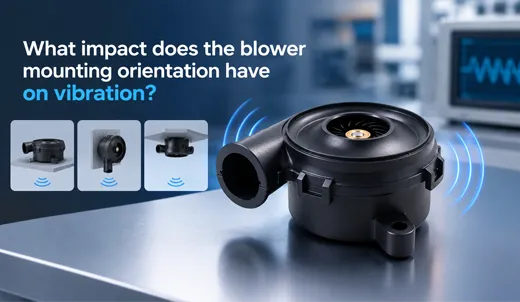
- Dynamic Aerodynamic Balancing: Impellers are dynamically balanced to G2.5 standards according to ISO 21940 Balance Quality Requirements, eliminating structural vibration and ensuring ultra-quiet operation (<28 dB(A) at 1 meter for medical CPAP equipment).
- IP54 / IP65 / IP68 Environmental Protection: In compliance with IEC 60529 Ingress Protection Standards, fully potted motor housings protect internal electronics against moisture ingress, high-pressure washdowns, and conductive industrial dust.
- Precision Speed Control & Feedback: Integrated Pulse Width Modulation (PWM) and Frequency Generator (FG) speed signal outputs allow microcontrollers to dynamically govern airflow based on real-time pressure sensors.
2. How an Industrial Blower Works: Step-by-Step Operating Principle
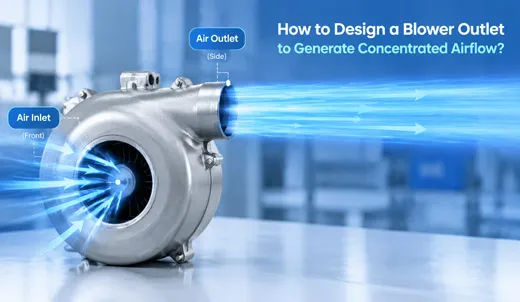
The vast majority of compact industrial blowers (specifically micro centrifugal blowers and radial blowers) convert rotational kinetic energy into static gas pressure through centrifugal action governed by Bernoulli's Principle and Euler's Turbomachinery Equation. The energy transformation process occurs across four synchronized stages: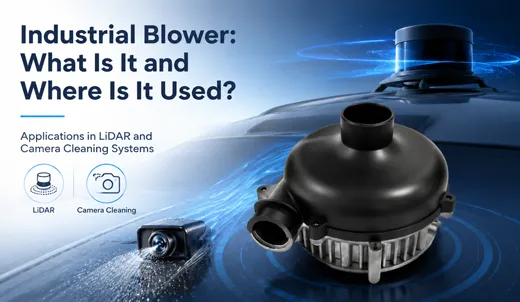
- Axial Air Intake: As the motor rotates the impeller at speeds up to 30,000+ RPM, a strong negative pressure differential forms at the center hub. Ambient air or process gas is drawn axially into the blower inlet.
- Centrifugal Kinetic Acceleration: The spinning blades accelerate air molecules radially outward toward the edge of the blower housing via centrifugal force.
- Static Pressure Conversion: The air enters an expanding spiral scroll housing (volute). As the cross-sectional area increases, air velocity decreases, converting up to 70%–80% of kinetic energy into stable static pressure.
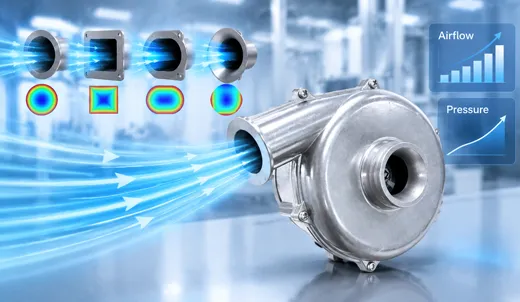
- Directional Discharge: The pressurized air stream exits at a 90-degree angle relative to the intake, delivering focused air through attached air ducts, nozzles, or restrictive internal circuitry.
3. Major Types of Industrial Blowers
Industrial applications require diverse blower geometries, motor designs, and pressure ratings. Below are the primary commercial blower classifications deployed across manufacturing, medical, and technology sectors:
3.1 Micro Centrifugal DC Industrial Blowers
Measuring from ultra-compact 30×10mm units up to 120mm blower configurations, these low-voltage (5V, 12V, 24V, 48V DC) blowers deliver localized high-pressure cooling and precision gas delivery in space-constrained hardware.
Primary Uses: CPAP medical devices, automotive LiDAR sensor cleaning, portable air samplers, and thermal rework stations. Learn more at our Industrial DC Blower Portfolio.
3.2 High-Pressure Industrial Blowers
Designed specifically to overcome system impedances exceeding 5,000 Pa, high-pressure blowers feature reinforced impellers and high-torque BLDC motors. They sustain steady CFM rates even when blowing through ultra-dense HEPA filters or long narrow tubes.
Primary Uses: Automated air-cushion packaging machines, industrial dust collection, medical ventilators, and server rack cooling. Explore our High-Pressure Blower Models.
3.3 Waterproof & Harsh-Environment Blowers (IP65 / IP68)
Engineered with fully potted motor stators, anti-corrosion PBT thermoplastic or aluminum alloy housings, and sealed ball bearings, these blowers operate reliably in 95%+ relative humidity environments.
Primary Uses: Outdoor automated equipment, wastewater treatment aeration, food processing plants, and marine electronics.
3.4 High-Voltage AC Industrial Blowers (110V / 220V)
Powered directly by grid electricity, AC blowers are designed for fixed industrial installations demanding continuous high-volume air movement across large process networks.
Primary Uses: Factory hall air extraction, industrial combustion ovens, heat treatment plants, and pneumatic conveying systems.
3.5 Fully Customized OEM Industrial Blowers
When off-the-shelf blowers do not align with specialized enclosure spaces, voltage inputs, or acoustics, custom OEM engineering is required. Customization includes housing mold modification, tailored wiring harnesses, custom PWM speed curves, and specialized mounting flanges. Submit your custom engineering specs via TKFAN Custom Blower Services.
4. Primary Applications of Industrial Blowers Across Key Markets
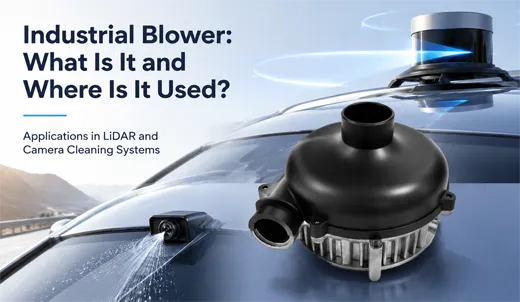
Due to their versatility and pressure capability, industrial blowers serve as critical sub-components across dozens of global industries:
4.1 Medical & Life Sciences Equipment
Medical environments demand strict biological compatibility under ISO 10993 Biocompatibility Evaluation, whisper-quiet sound levels (<28 dB), and instant pressure adjustments within milliseconds:
- CPAP & Medical Ventilators: Compact 24V BLDC high-pressure blowers supply smooth, steady, oxygenated airflow at pressures up to 60 cmH2O (5,880 Pa) to assist patient breathing.
- Air Particle Counters & Cleanroom Monitors: Micro blowers draw controlled 28.3 L/min (1 CFM) air samples across laser particle sensors to monitor cleanrooms conforming to ISO 14644 Cleanroom Standards.
4.2 Automotive Systems & Autonomous Vehicles
As vehicles integrate advanced computing and optical sensors, thermal management and optical cleanliness become vital safety requirements verified under ISO 26262 Road Vehicles Functional Safety Standards:
- LiDAR & Camera Jet Cleaning: Micro high-pressure blowers deliver rapid air pulses exceeding 100 km/h to blow rain droplets, dirt, and mud off autonomous vehicle cameras and LiDAR lenses in under 0.5 seconds.
- EV Battery Management & ECU Thermal Control: 12V/24V DC industrial blowers actively circulate cooling air around high-power Electronic Control Units (ECU) and EV battery modules.
4.3 Automated Packaging & Air-Cushion Machinery
Modern e-commerce logistics depend on high-speed air-pillow packaging machines. High-pressure blowers continuously inflate protective air bags at speeds up to 30 meters per minute without overheating or losing pressure during 24-hour warehouse shifts.
4.4 Enclosed Industrial Electronics & Server Racks
Telecommunication chassis, high-density server racks, and industrial inverter cabinets contain tightly packed circuit boards. Axial fans fail to force air through such narrow gaps, whereas industrial centrifugal blowers deliver forced air directly through dense micro-channels.
5. How to Select the Right Industrial Blower: Critical Engineering Parameters
Selecting the correct industrial air blower requires calculating total system impedance and matching it with the blower's P-Q (Pressure vs. Volume) curve tested in accordance with AMCA Standard 210 Air Performance Testing. Key technical metrics to specify include:
- Static Pressure (Pa or inH2O): The static pressure required to overcome friction losses caused by filters, bends, and narrow passages.
- Air Volume / Flow Rate (CFM or m³/min): The volume of air required per minute to meet cooling or pneumatic displacement requirements.
- Operating Voltage: Select from 5V/12V/24V/48V DC for equipment integrated systems, or 110V/220V AC for facility setups.
- Acoustic Noise Level (dB(A)): Crucial for indoor, medical, or office-adjacent machinery. Measured in accordance with ISO 3744 Acoustic Test Standards.
- Control Signals: Verify if your system controller requires 4-wire configuration (VCC, GND, FG speed pulse output, PWM speed regulation input).
6. Why Partner with TKFAN for Industrial Blower Solutions?
Procuring industrial blowers requires a manufacturing partner with deep fluid dynamics expertise and stringent quality controls. TKFAN is a globally recognized manufacturer of industrial fans and blowers offering:
- Comprehensive Product Portfolio: From 30mm micro DC blowers to high-pressure waterproof blowers.
- Advanced CFD Fluid Simulation: Housing and blade designs optimized through Computational Fluid Dynamics (ANSYS Fluent) for maximum aerodynamic efficiency and quiet operation.
- Rapid OEM/ODM Prototyping: Custom samples manufactured and delivered in as little as 48 hours to accelerate your R&D pipeline.
- International Quality Compliance: ISO 9001, CE, RoHS, and UL certified production facilities featuring 100% dynamic balancing and electrical testing.
7. Top 10 Technical FAQs About Industrial Blowers
Q1: What is the main difference between an industrial blower and a standard fan?
A standard industrial fan moves large volumes of air in open spaces but produces low static pressure (<100 Pa). An industrial blower uses centrifugal force to concentrate airflow, producing high static pressure (up to 15,000+ Pa) capable of forcing air through restrictive ducts, filters, and tight enclosures.
Q2: Why are Brushless DC (BLDC) motors preferred for industrial blowers?
BLDC motors do not use mechanical carbon brushes, eliminating friction wear, sparks, and electrical noise. This results in significantly longer operational lifespans (50,000+ hours), higher energy efficiency, and reliable continuous 24/7 operation.
Q3: What does the P-Q curve of an industrial blower mean?
The P-Q curve, tested per AMCA 210 Laboratory Methods, illustrates the relationship between Static Pressure (P) and Air Volume Flow Rate (Q). As system resistance increases, airflow decreases. Engineers use P-Q curves to identify the exact operating point of a blower in a specific system.
Q4: How does PWM speed control work on an industrial DC blower?
Pulse Width Modulation (PWM) speed control sends a high-frequency digital signal (typically 25 kHz per Intel 4-Wire PWM specifications) to the blower's internal control circuitry. By adjusting the duty cycle (0%–100%), the blower dynamically changes its motor speed to match real-time thermal or pressure demands.
Q5: What IP rating is required for an outdoor industrial blower?
According to IEC 60529 specifications, a minimum rating of IP54 (dust and splash protected) is recommended for sheltered outdoor use. For direct exposure to rain, high-pressure washdowns, or severe outdoor dust, IP65 or IP68 fully potted blowers should be specified.
Q6: Can custom voltage configurations be developed for specialized equipment?
Yes. Leading manufacturers like TKFAN offer OEM custom motor windings to support non-standard DC voltages (such as 18V, 36V, or custom 60V industrial DC buses) along with specialized wire length and connector choices.
Q7: How do industrial blowers assist in medical CPAP machines?
Medical CPAP machines require ultra-quiet, rapid-responding high-pressure micro blowers. Operating at high speeds (up to 30,000+ RPM), they deliver continuous positive airway pressure (4 to 20 cmH2O) to keep patient airways open while maintaining ultra-low noise (<28 dB) and strict ISO 10993 biological safety standards.
Q8: What causes an industrial blower to produce excessive noise, and how can it be prevented?
Excessive noise is usually caused by turbulent airflow, mechanical vibration, or unbalanced impellers. By utilizing ISO 21940 dynamic balancing, CFD-optimized volute scroll housings, precision NMB ball bearings, and PWM speed control, acoustic noise levels can be reduced by 5–10 dB(A).
Q9: What is the typical service lifespan of a TKFAN industrial blower?
TKFAN industrial blowers equipped with dual NMB ball bearings and BLDC motors offer an operational lifespan (L10 rating) of 50,000 to 70,000 hours under standard operating temperatures (25°C to 40°C).
Q10: What information is needed to get an accurate quote for a custom industrial blower?
To get an accurate engineering quote, provide your required airflow (CFM/m³-min), target static pressure (Pa/inH2O), operating voltage, physical dimensional constraints, IP protection level, and estimated annual production volume.
Conclusion
Industrial blowers are essential components powering modern manufacturing, medical technology, autonomous transport, and environmental automation. Selecting the ideal industrial air blower requires balancing airflow volume, static pressure capability, electrical specifications, and acoustic requirements. Whether you require micro DC centrifugal blowers, waterproof blowers, or fully tailored OEM air movement solutions, TKFAN delivers high-efficiency, durable engineering built for performance.
GET A QUOTE