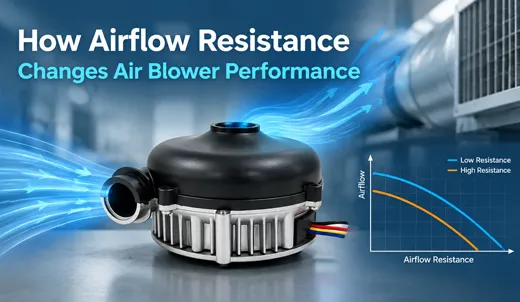


Car Seat Cooling Fans
As cars have evolved from mere transportation tools into highly comfortable and experiential mobile living spaces, cabin comfort has become a key area of competition for global automakers. Among the many components that enhance comfort, car seat cooling fans stand out as a crucial element, effectively addressing discomfort caused by overheated seats during summer driving or long commutes. The global car seat cooling fan market is projected to grow steadily by 2026, primarily driven by increasing consumer demand for premium comfort, the rise of electric vehicles (EVs), and continuous technological innovation.
What is a Car Seat Cooling Fan? Core Functions and Importance
A car seat cooling fan is a compact, highly reliable miniature fan device installed inside car seats—typically within the seat cushion and backrest—to provide seat ventilation. These fans, consisting of a motor and fan impeller, circulate air within the seat structure by blowing or drawing air in, effectively reducing the temperature and humidity in the areas where occupants contact the seat. Unlike a central air conditioning system that cools the entire cabin, seat cooling fans act directly on the points of contact with the body, providing faster and more precise relief from stuffiness and discomfort.
In recent years, the importance of these fans has increased significantly. During hot summers, car interior temperatures can soar; when the outside temperature is 35°C (95°F), dashboard surface temperatures can exceed 80°C (176°F). Leather or synthetic seats absorb and retain this heat, causing occupants to sweat excessively, feel uncomfortable, and even experience skin irritation. Car seat cooling fans solve the problem of stuffy and damp seats by promoting airflow, accelerating sweat evaporation, and keeping seat surfaces dry and cool, making this once-luxury feature a practical necessity for many drivers and passengers.
Key performance requirements for car seat cooling fans include low noise (typically below 50 decibels when the seat is unoccupied), stable airflow, long-term operational reliability, and compatibility with the vehicle's electrical system (operating voltage range of 9V to 16V with undervoltage protection). These requirements ensure that the fan enhances comfort without causing interference or system malfunction.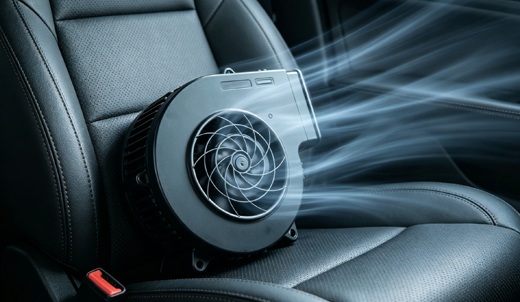
Global Market Trends in 2026: Growth Drivers and Key Statistics
Driven by several key factors, the global automotive seat cooling fan market is poised for strong growth in 2026 and beyond. Market research indicates that the global automotive seat cooling fan market size was estimated at US$2.487 billion in 2024 and is projected to grow at a CAGR of 8.82% from 2025 to 2035, reaching US$6.304 billion by 2035. Another report shows that the market revenue was approximately US$1.508 billion in 2025 and is projected to grow at a CAGR of 4.1% from 2026 to 2032, reaching nearly US$2.022 billion by 2032. In 2024 alone, over 44 million automotive seat cooling fans were used globally, with an average unit price of approximately US$4.43.
Key growth drivers include:
• Upgrading of automotive consumption: As consumers increasingly value the driving experience, comfort features are no longer optional. Seat ventilation, once an exclusive feature of high-end vehicles, is now standard on mid-range passenger cars, SUVs, and even commercial vehicles.
• Rising Electric Vehicle Adoption: Electric vehicles prioritize in-car comfort and energy efficiency, often using seat ventilation as a key feature to enhance the user experience. The rapid global adoption of electric vehicles has directly driven demand for high-quality seat ventilation fans.
• Technological Advancements: Innovations in fan design and motor technology have improved performance, reduced noise, and extended lifespan, making seat ventilation systems more widespread and reliable for both automakers and consumers.
• Regional Climate Factors: Demand for seat ventilation fans is particularly strong in hot and humid regions such as Southeast Asia, the Middle East, and parts of North America and Europe, driving growth in these regional markets.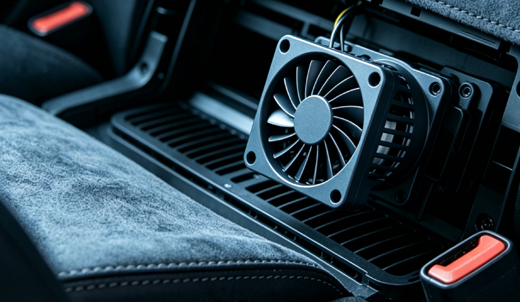
Technological Advancements: From Basic to Intelligent Cooling Solutions
The automotive seat cooling fan industry has undergone significant technological innovation in recent years, evolving from basic brushed motor designs to advanced, intelligent, and energy-efficient solutions. Here are the key technology trends shaping the market landscape in 2026:
1. Motor Technology: From Brushed DC Motors to Brushless DC Motors
Early automotive seat cooling fans primarily used brushed DC motors, which, while inexpensive, had limitations in noise control, lifespan, and energy efficiency. Today, the industry is moving towards brushless DC (BLDC) motors, which offer numerous advantages: lower noise, higher energy efficiency, longer lifespan (up to 70,000 hours), and more stable airflow. BLDC motors also allow for precise speed control, enabling users to adjust the cooling intensity to their needs—typically offering 2-3 speed settings.
2. Fan Design: Axial Fans, Centrifugal Fans, and Disc Fans
Fan design plays a crucial role in airflow efficiency and noise levels. Currently, there are three main types of car seat cooling fans on the market:
• Axial fans: The most common type, with a simple design that blows air along the fan axis. They are economical and suitable for basic cooling needs, but can generate significant noise at high speeds.
• Centrifugal fans: Designed to generate higher air pressure, they are ideal for seats with thick foam or complex airflow channels. They operate with less noise than axial fans and are increasingly used in mid-to-high-end models.
• Butterfly fans: A newer, more advanced design that can simultaneously blow and draw air, allowing them to flexibly adapt to different seat structures. They are often used in conjunction with semiconductor cooling modules or air conditioning ducts in luxury cars to achieve "air-conditioned seats," providing constant temperature control year-round.
3. Smart Integration and System Synergy
By 2026, car seat cooling fans will increasingly be integrated with vehicle smart cockpit systems. Many new models are equipped with fans that can synchronize with central air conditioning, seat heating, and even user preference settings. For example, some systems can automatically adjust cooling intensity based on outside temperature, passenger body temperature, or driving duration. Furthermore, smart control via mobile apps or in-vehicle infotainment systems is becoming increasingly common, allowing users to pre-cool their seats before entering the vehicle.
4. Durability and Environmental Adaptability
Automotive seat cooling fans must be able to withstand harsh automotive environments, including extreme temperatures, vibrations, and humidity. Leading manufacturers now produce fans with IP68 or IP6K9K waterproof and dustproof ratings, ensuring reliable operation in a variety of weather conditions. These fans also undergo rigorous testing, including simulated human weight impacts, saltwater immersion, and high and low temperature cycling tests, to meet automotive industry standards for durability and safety.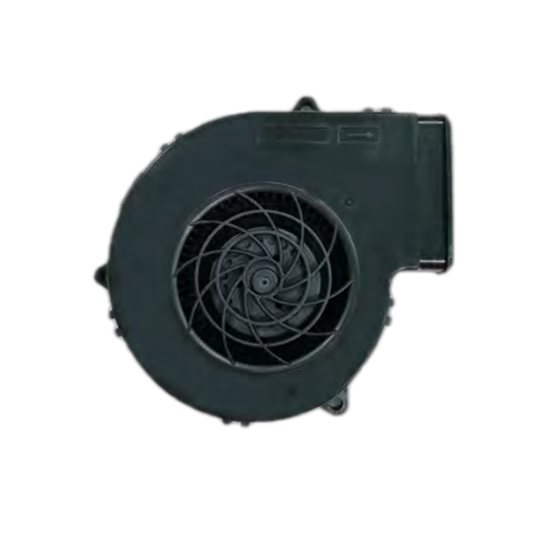
Regional Demand Analysis: Geographic Optimization for Target Markets
Understanding regional demand differences is crucial for optimizing geographic search visibility, as consumer preferences and market drivers vary across regions. Below is a breakdown of key regional markets for automotive seat cooling fans in 2026:
1. North America: Mature Market with Strong Demand for Premium Features
North America remains the largest market for automotive seat cooling fans, primarily driven by strong consumer purchasing power, a preference for premium vehicles, and the hot summer climate in regions such as the US Southwest (Texas, Arizona) and Florida. The US and Canada are home to major automakers and parts suppliers, including TKFAN, which leads in technological innovation and market share. In this region, consumer demand for smart, quiet cooling fans integrated into advanced cabin systems is particularly strong, as consumers prioritize comfort and convenience. Key geographic targeting keywords for this region include “US automotive seat cooling fans,” “Canada automotive seat cooling systems,” and “North American truck premium seat cooling.”
2. Asia Pacific: Fastest Growing Market Driven by Electric Vehicles and Urbanization
The Asia Pacific region is the fastest growing market for automotive seat ventilation fans, primarily driven by the rapid expansion of the automotive industries in China, India, Japan, and South Korea. As the world's largest automotive market, China is a key driver, fueled by surging electric vehicle sales (represented by manufacturers such as BYD and NIO) and growing demand for comfort features in mid-range vehicles. India's hot and humid climate is also driving increasing demand for affordable seat ventilation solutions, both OEM and aftermarket. Japanese and South Korean automakers (Toyota, Honda, Hyundai, Kia) are integrating advanced seat ventilation systems into their vehicles, further boosting demand in the region. Key geographic keywords include "Chinese automotive seat ventilation fans," "Indian automotive seat ventilators," and "Japanese electric vehicle seat ventilation."
3. Europe: Focus on Sustainability and Noise Reduction
The European automotive seat ventilation fan market is characterized by a focus on sustainability, energy efficiency, and low noise levels, complying with the region's stringent environmental and safety regulations. Strong demand for high-end cars exists in countries like Germany, France, and Italy, with luxury brands such as Mercedes-Benz, BMW, and Audi offering advanced seat ventilation systems as standard or optional equipment. The European market also values aftermarket solutions, with consumers frequently retrofitting seat ventilation fans into older vehicles. Key geographic keywords include "German car seat ventilation fans," "European low-noise seat coolers," and "French sustainable seat ventilation."
4. Middle East and Southeast Asia: Climate-Driven Demand
In the Middle East (Saudi Arabia, UAE, Qatar) and Southeast Asia (Thailand, Malaysia, Indonesia), extreme heat and humidity are the primary drivers of demand for car seat ventilation fans. These regions boast some of the world's hottest temperatures, making seat ventilation essential for both passenger and commercial vehicles. Aftermarket sales are particularly strong here, as many consumers opt for affordable and easy-to-install seat cooling fans to upgrade their vehicles. Key geographic keywords include "UAE car seat cooling fans," "Thailand seat coolers," and "Middle East car ventilation."
Key Players and Competitive Landscape
The global car seat cooling fan market is highly competitive, featuring both international and regional players. Key manufacturers in 2026 include:
• TK FAN: As a leading global provider of thermal management solutions, TK FAN offers a wide range of seat cooling fans for OEM and aftermarket applications, focusing on intelligent integration and energy efficiency.
• TK FAN: Specializing in high-performance blowers, axial fans, and centrifugal fans, TK FAN is known for its durability and low noise levels. The company has established partnerships with leading automotive manufacturers worldwide.