

Reversible DC Fan: Frequently Asked Questions
I. Basic Definitions
1. What is a Reversible DC Fan?
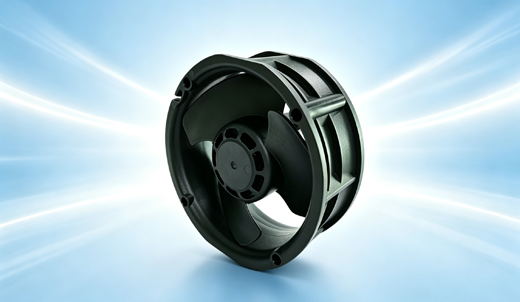
A reversible DC fan is a direct current fan capable of bidirectional operation—switching between forward airflow (blowing) and reverse airflow (exhaust)—via control signals or wiring adjustments. It allows for a change in airflow direction without the need to physically reverse the fan's mounting orientation.
2. How does it differ from a standard DC fan?
Standard Fan: Fixed rotation direction; capable of blowing in only one direction; cannot change direction via electronic control.
Reversible Fan: Features built-in commutation drive logic or a dedicated IC; supports three methods of electronic direction switching: logic level signals, PWM signals, or wiring reversal. It is suitable for applications requiring bidirectional switching for cooling, dust removal, or ventilation.
3. Are the airflow volume and air pressure identical in both forward and reverse modes?
Not exactly identical.
At the same rotational speed: The airflow volume and air pressure in the forward direction are slightly higher than in the reverse direction. The deviation typically ranges from 5% to 12%; therefore, when selecting a model, it is advisable to allow for a safety margin based on the reverse-mode operating conditions.
II. Control and Wiring
4. What are the different methods for controlling the direction of a Reversible DC Fan?
Wiring Reversal: Swapping the positive and negative input terminals to directly reverse the rotation (typically found in simpler models).
Logic Level Control: Utilizing a dedicated "REV" control line, where switching between high and low logic levels toggles the direction between forward and reverse.
PWM Speed Control + Direction Switching: A 4-wire fan configuration featuring PWM for speed regulation alongside a dedicated pin for direction switching, allowing for independent control of speed and direction.
5. Can a Reversible DC Fan operate continuously in the reverse direction?
Yes, it can.
The manufacturer's design—including the structure, bearings, and motor—is engineered to accommodate long-term bidirectional operation. This does not compromise the fan's service life or risk burning out the motor; the only difference is that the air pressure and airflow volume are slightly lower in the reverse direction.
6. Does a Reversible DC Fan support PWM speed control?
Most 4-wire Reversible DC Fans support a combination of PWM speed control, FG (Frequency Generator) speed sensing, and direction switching control.
Simpler 2-wire reversible models typically support only direction switching and do not offer PWM speed control.
7. Is there any risk of momentary stalling during direction switching, or abnormal noises during reverse operation? Standard industrial-grade reversible fans feature soft-start commutation logic, ensuring smooth, glitch-free switching;
Budget models utilize direct "hard" commutation, which causes momentary vibration and current surges; therefore, it is recommended to incorporate a delayed commutation circuit.
III. Performance and Operating Conditions
8. Is the rotational speed the same for both forward and reverse directions?
At the rated voltage, the speeds are essentially identical, with a tolerance of within ±3%;
Only the airflow efficiency and static pressure differ.
9. Can reversible fans be used in enclosed equipment with high static pressure?
Yes. Select a high-static-pressure reversible fan model (e.g., the reversible version of the 9HV series). These are suitable for server cabinets, frequency converters, EV charging stations, locomotive electrical control systems, and racing vehicle electronics compartments.
10. What are the practical applications of bidirectional switching?
Forward rotation provides equipment cooling, while reverse rotation performs dust removal (blowing dust off air filters);
Air circulation within cabinets/enclosures, facilitating the exchange of internal and external airflow;
Racing/Automotive Electronics: In winter, reverse rotation retains heat internally; in summer, forward rotation expels hot air externally;
Communication Base Stations and Outdoor Cabinets: Scheduled forward/reverse cycling prevents dust accumulation.
IV. Selection and Troubleshooting
11. What parameters should be considered when selecting a model?
Rated voltage (12V/24V/48V), forward/reverse airflow and static pressure curves, bearing type (dual ball bearings are preferred), control method (Level/PWM), operating temperature range, and protection rating (IP54/IP68 waterproof reversible models).
12. What causes a reversible fan to fail to switch directions?
The voltage level on the REV control line is incorrect;
Incorrect wiring—the positive/negative power terminals have been confused with the commutation control pin;
The controller's commutation signal delay is insufficient, resulting in excessively rapid or frequent switching;
The specific fan model does not support electronic reversibility and is merely a standard fan.
13. Will frequent forward/reverse switching shorten the fan's lifespan?
For compliant industrial-grade products, scheduled low-speed switching does not negatively impact lifespan;
However, continuous, high-frequency switching over short periods increases mechanical stress on the bearings and motor; therefore, a switching interval of at least 30 seconds is recommended.
14. Are waterproof reversible DC fan models available? Yes, we offer IP55, IP67, and IP68-rated waterproof reversible DC fans, suitable for outdoor cabinets, new energy systems, water treatment facilities, and vehicle-mounted field equipment.
V. Application Scenarios
15. What are the primary industries for these applications?
Industrial: Variable Frequency Drives (VFDs), Industrial Control Cabinets, Laser Equipment, UPS Power Supplies
New Energy: EV Charging Stations, Energy Storage Cabinets, PV Inverters
Automotive / Racing: Racing Vehicle Electronics Compartments, New Energy Vehicle Cooling Systems, Bus Air Conditioning
Telecommunications: Base Station Cabinets, Outdoor Communication Cabinets
Home Appliances: Fresh Air Systems, Smart Cabinets, Dehumidification Equipment