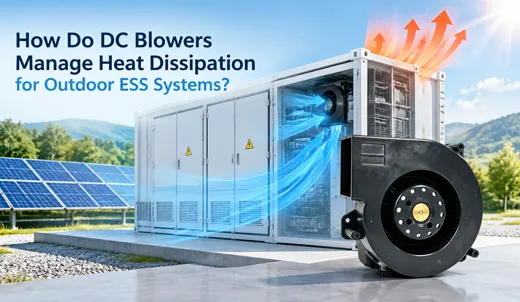


Which blowers handle hot spot cooling and airflow for GPU servers?
As artificial intelligence large language model training, high-performance computing (HPC), cloud rendering, and digital currency mining operations continue to expand exponentially, GPU servers have become the core computing horsepower of modern data centers. Within a single rack-mounted GPU server, dense configurations of 4, 8, or even more high-performance graphics processing units operate simultaneously. This architectural density produces extraordinarily high local heat flux densities—commonly referred to in the industry as hot spots. Unlike traditional general-purpose servers, modern AI GPU chips feature peak power consumption levels reaching hundreds of watts. Thermal energy concentrates heavily on the chip surfaces, rendering conventional axial fans incapable of penetrating the severe internal airflow resistance found in high-density hardware arrangements. Consequently, these standard fans fail to deliver sufficient cooling air precisely to the heat-generating cores.
Many data center operations engineers encounter a common and stubborn challenge: while overall ambient rack temperatures remain compliant, localized thermal hot spots on the GPU chips continuously spike. This triggers automatic thermal throttling, performance degradation, and computing power decay, and in severe instances, leads to hardware damage and catastrophic failure. For engineering teams looking to master GPU server hot spot cooling and comprehensive airflow management, deploying a specialized High pressure blower stands out as one of the most reliable engineering solutions available today. Specifically, the server cooling blower is structurally optimized explicitly for tight, enclosed server chassis environments. This guide deeply explores the root causes of thermal distress in GPU servers, outlines critical blower selection criteria, and highlights how the TKFAN High pressure blower and TKFAN server cooling blower lines resolve high-density GPU cluster airflow and cooling bottlenecks.
1. Why Do GPU Servers Produce Hot Spots, and Why Are Standard Fans Insufficient?
The thermal crisis within modern GPU servers stems from a compounding intersection of extreme power consumption, tight physical component layouts, and high internal airflow resistance. Modern AI GPU units can draw upwards of 700 watts per single chip. When multiple high-draw GPUs are installed side-by-side inside compact server enclosures, the localized concentration of GPUs, VRAM memory modules, and power MOSFETs generates heat faster than it can naturally dissipate, creating severe thermal hot spots. While standard axial fans excel at moving high volumes of air in open spaces, their static pressure generation capability remains inherently weak. When faced with dense heat sink fins, metallic separator baffles, and tightly packed internal cable harnesses, their airflow pressure drops rapidly. As a result, the majority of cooling air follows the path of least resistance and bypasses the heatsinks entirely, failing to penetrate deep into the cooling fins to reach the GPU silicon core.
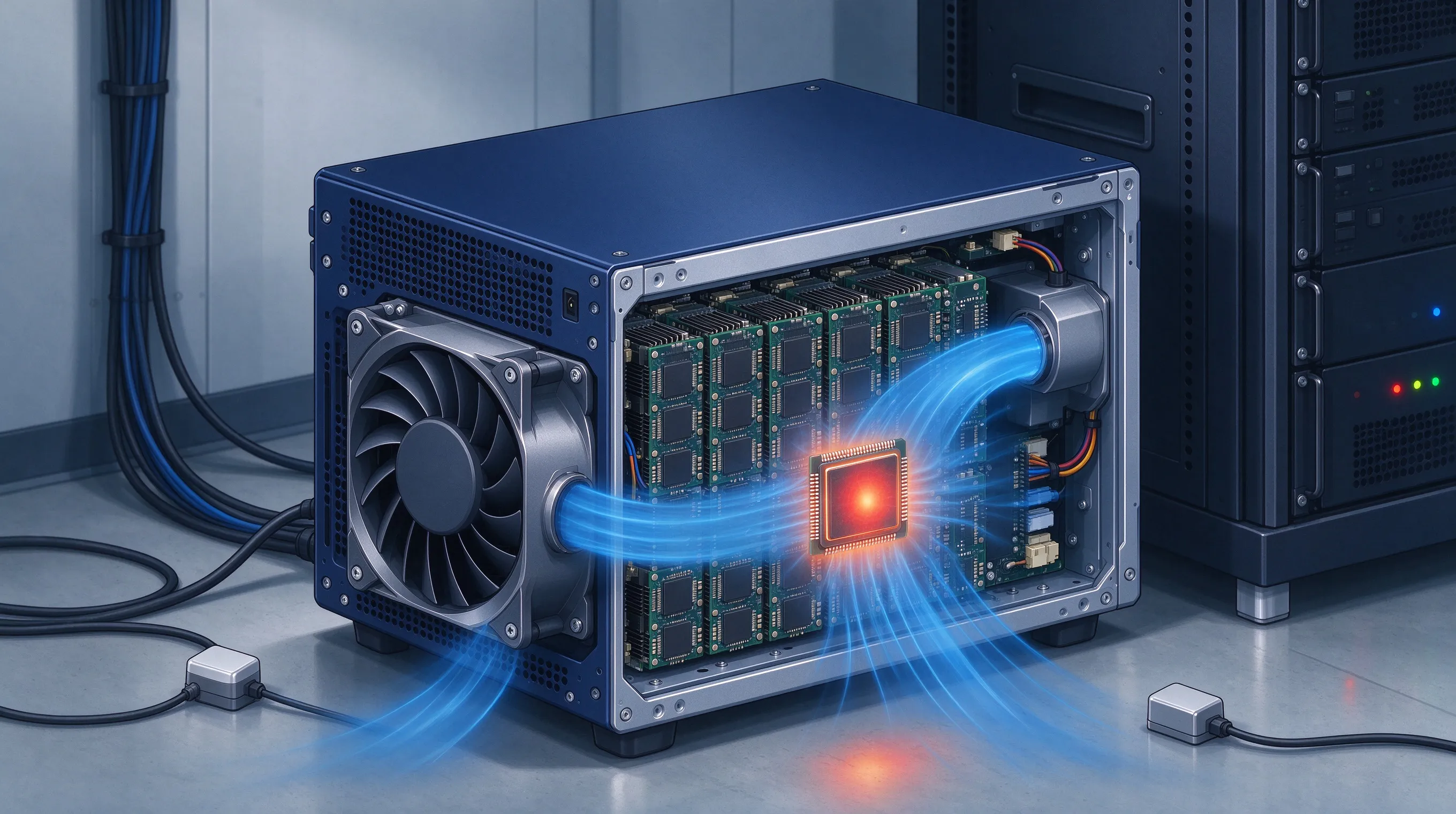
This explains why many data center operators struggle with chronic hot spot issues despite installing multiple auxiliary axial fans: overall airflow volume may look sufficient on paper, but static pressure performance falls severely short. The core advantage of a High pressure blower lies in its high static pressure output. Relying on advanced centrifugal impeller mechanics, it generates superior wind pressure capable of overcoming the heavy internal flow resistance of dense server chassis and intricate heatsink fins. This forces cooling air streams directly through tight thermal architectures to extract accumulated heat from GPU hot spots. Furthermore, the server cooling blower category represents a specialized subset of high-pressure blowers meticulously engineered to fit standard 1U, 2U, and 4U rack server spaces while adhering to strict structural vibration, acoustic, and power interface standards required for continuous 24/7 data center operations.
The business and operational losses caused by unmanaged thermal hot spots are profound. Overheating GPUs automatically engage thermal throttling, drastically slowing down deep learning training loops and scientific simulations. Long-term exposure to elevated temperatures accelerates the aging of surrounding VRAM and electrolytic capacitors, shortening the operational lifespan of expensive server hardware. In extreme scenarios, uncontrolled thermal spikes trigger emergency server shutdowns and unexpected outages, causing abrupt service interruptions and direct financial losses in computational rental revenue. For enterprises hosting dedicated GPU clusters or operating proprietary AI cloud computing centers, implementing a stable, high-pressure forced-air cooling infrastructure is a mandatory requirement rather than an optional upgrade.
2. Core Technical Specifications for GPU Server Cooling Blower Selection
Selecting the optimal High pressure blower and TKFAN server cooling blower requires evaluating more than just nominal airflow rates. Engineers must comprehensively assess a rigorous matrix of technical parameters, which serve as foundational benchmarks during TKFAN product development:
Static Pressure
Static pressure is the single most critical performance indicator for high-pressure blowers, representing the fan's mechanical capability to overcome flow channel resistance. High-density GPU cooling environments demand high static pressure models. While conventional axial fans typically achieve only dozens of Pascals, the TKFAN High pressure blower series delivers thousands of Pascals of wind pressure, easily penetrating multi-layered fin arrays to target GPU hot spots directly.
Airflow Volume (CFM)
Airflow volume measures the volumetric throughput delivered per unit of time. High static pressure must be paired with adequate volumetric output to guarantee continuous heat removal. Selection models must strike an optimal balance between static pressure and CFM delivery without sacrificing pressure capability. TKFAN server cooling blowers utilize advanced BLDC brushless motors and optimized impeller geometry to balance high wind pressure and effective volumetric displacement.
Operating Voltage
Enterprise server architectures rely heavily on standardized direct current power distribution rails, predominantly 12V, 24V, and 48V DC. The TKFAN server cooling blower lineup supports standard server DC power specifications, allowing direct integration into server power backplanes and streamlined deployment within 1U, 2U, and 4U GPU chassis designs.
PWM Speed Control Functionality
Intelligent pulse-width modulation speed control is mandatory for contemporary server cooling subsystems. Systems dynamically adjust blower RPM in real-time based on active GPU thermal telemetry: lowering speeds during low-load periods to conserve energy and reduce acoustic output, and ramping to maximum RPM under full-load AI model training workloads to output peak pressure and volume. TKFAN high-pressure blowers feature integrated PWM signal interfaces that integrate seamlessly with Baseboard Management Controllers (BMC) to establish closed-loop thermal regulation.
Operational Lifespan and MTBF
Data center servers operate continuously under 24/7 schedules, making Mean Time Between Failures (MTBF) a paramount metric. TKFAN high-pressure blowers utilize long-life brushless bearings tested strictly against rigorous industrial server standards, satisfying continuous data center operational demands while reducing long-term maintenance and replacement expenditures.
Vibration and Acoustic Control
High-density rack GPU servers feature multiple units stacked tightly together, meaning mechanical blower vibration can easily couple into sensitive hard disk drives and printed circuit boards, inducing solder joint fatigue over time. High noise levels also complicate physical maintenance in server rooms. TKFAN optimizes dynamic impeller balancing and housing damping structures to deliver powerful high-pressure airflow while maintaining strict vibration and noise suppression.
Protection Class and Environmental Tolerance
Although modern data center white spaces maintain relative cleanliness, airborne particulate contamination and thermal-humidity fluctuations persist. TKFAN High pressure blower models can be configured with specialized dust-resistant protective coatings, adapting smoothly to ASHRAE-compliant server intake temperature ranges and ensuring stable performance under elevated operating intake conditions.
3. Comparative Analysis: High Pressure Blowers vs. Standard Axial Fans
The comparative evaluation below illustrates why standard axial fans fall short in high-density GPU deployment scenarios, validating the targeted engineering approach of TKFAN High pressure blower and TKFAN server cooling blower technologies.
| Evaluation Parameter | Standard Axial Fan | High Pressure Blower | TKFAN Server Cooling Blower |
|---|---|---|---|
| Core Advantage | High airflow volume, low component cost | High static pressure overcoming system flow resistance | High static pressure, server-optimized form factor, intelligent PWM |
| Target Application Scenarios | Open-space cooling, low-impedance enclosures | Sealed chassis, dense fin arrays, high-impedance hot spots | 1U/2U/4U GPU servers, AI compute nodes, high-density HPC racks |
| Hot Spot Cooling Effectiveness | Poor; airflow easily bypasses obstacles, failing to penetrate heatsinks | Superior; high-pressure streams reach GPU core zones directly | Outstanding; precision-engineered for multi-GPU hot spot mitigation |
| Mounting Form Factor | Various sizes, typically bulky profile depths | Compact centrifugal housing architecture | Standardized rack-server compatible envelopes for seamless integration |
| Reliability & Continuous Duty | Moderate lifespan, rapid bearing wear under high static loads | Industrial-grade extended operational lifespan | Data center grade 24/7 MTBF with advanced BLDC motor longevity |
As demonstrated in the comparison table, deploying standard axial fans in high-density multi-GPU servers fails to resolve localized thermal challenges. TKFAN high-pressure and dedicated server cooling blowers provide the precise engineering intervention required for modern computing infrastructure.
4. How TKFAN High Pressure Blowers Solve GPU Server Thermal and Airflow Management
The TKFAN High pressure blower product line is engineered specifically for high-impedance thermal environments such as industrial machinery, energy storage enclosures, and high-density servers. Within this category, the TKFAN server cooling blower is tailored directly to the spatial limitations of GPU server chassis internals.
Internal airflow design within a GPU server aims to establish organized, directional airflow while preventing turbulence and dead zones. Airflow turbulence causes localized stagnation, accelerating thermal hot spot accumulation. TKFAN high-pressure blowers utilize centrifugal impellers to generate steady, high-pressure air streams, allowing thermal engineers to construct targeted directional wind tunnels that channel cooling air precisely toward GPU heatsinks, VRAM modules, and power delivery circuits, eliminating dead zones and suppressing hot spot formation.
- Precision Spot Cooling to Eliminate Localized GPU Hot Spots: In 8-card GPU server topologies, graphics cards are arranged tightly side-by-side with narrow gaps and extreme flow impedance. While standard fans lose efficiency here, the TKFAN server cooling blower forces high-pressure airflow directly through the tightly packed GPU fin arrays. This continuously evacuates thermal energy from chip surfaces, securing safe operational temperatures and protecting AI training and inference workloads from thermal throttling.
- Intelligent PWM Control Balancing Energy Efficiency and Cooling: Supporting standard PWM signaling, TKFAN blowers integrate directly with server BMC management architectures. During low-load inference tasks, blowers automatically downshift to conserve system power and reduce facility cooling overhead. When deep learning model training workloads spike GPU power consumption, the BMC instantly commands higher blower speeds, elevating pressure and airflow to suppress thermal surges dynamically.
- Compact Form Factor Optimized for Rack Servers: Space is at a premium within 1U and 2U rack GPU servers. Dedicated server models from TKFAN utilize low-profile centrifugal blower architectures that consume minimal internal volume, empowering mechanical engineers to embed TKFAN server cooling blower units directly into chassis ducting without major structural overhauls.
- High Reliability Minimizing Cluster Maintenance Overhead: Large-scale AI compute clusters often deploy hundreds of GPU servers simultaneously. Frequent blower failures introduce significant maintenance burdens and costly downtime. TKFAN blowers incorporate brushless DC motors and precision-balanced impellers validated through rigorous thermal-stress and vibration testing, ensuring robust 24/7 data center reliability and extending maintenance intervals.
- Standardized DC Power Integration: Supporting standard 12V, 24V, and 48V DC power distribution schemes, TKFAN server cooling blowers align seamlessly with enterprise power supply backplanes. OEM server manufacturers and ODM system builders can embed these blowers effortlessly into new hardware designs, shortening product development cycles.
5. Practical Guidelines for Server Blower Deployment and Airflow Design
Selecting a high-quality blower is only the first step; proper system-level airflow design is equally essential to maximize the performance of every TKFAN High pressure blower and completely eliminate thermal hot spots.
- Chassis Sealing: Unsealed gaps in the enclosure allow high-pressure air to leak out, causing static pressure drops and rendering cooling streams ineffective. Proper deployment of internal baffling and sealing gaskets ensures all forced air travels strictly along engineered channels toward the GPU heatsinks.
- Airflow Direction Planning: Implement a front-to-back airflow topology. High-pressure blowers draw cool ambient air from the front chassis intake, direct it purposefully across the multi-GPU modules, and exhaust heated air out the rear. This prevents hot air recirculation, which is a primary contributor to thermal hot spot escalation.
- Strategic Thermal Sensor Placement: Temperature sensors should not be limited to general chassis intake locations. Sensors must be positioned directly adjacent to critical hot spot zones, including GPU silicon dies, VRAM modules, and power MOSFET stages, feeding real-time thermal telemetry to the BMC for accurate PWM control.
- Redundancy Engineering: For mission-critical AI compute servers, adopt dual-blower parallel redundancy schemes. Operating dual TKFAN units in parallel ensures that if one blower experiences an anomaly, the secondary unit automatically ramps up to maintain critical static pressure and prevent catastrophic hardware shutdowns.
- Scheduled Preventive Maintenance: Airborne dust settling on dense GPU heatsink fins increases system flow resistance over time, impairing cooling efficiency. Establishing regular cleaning schedules ensures unobstructed airflow paths, allowing TKFAN high-pressure blowers to sustain peak performance indefinitely.
6. Real-World Industry Application Scenarios
The versatility and performance of TKFAN high-pressure cooling solutions are proven across diverse high-performance computing deployments:
AI Training GPU Server Clusters
Large-scale technology enterprises and cloud service providers operating multi-card GPU training clusters execute prolonged, multi-day large language model pre-training tasks where GPUs run continuously at maximum capacity. Hardware manufacturers integrate the TKFAN High pressure blower as the central server cooling core, leveraging high static pressure to penetrate dense fin arrays, protect silicon chips from thermal degradation, and ensure uninterrupted model training progress.
Cloud GPU Inference Servers
Cloud providers running GPU inference servers experience heavy workload fluctuations with distinct daytime concurrency spikes. TKFAN server cooling blower units utilize dynamic PWM regulation to conserve energy during low-demand periods while instantly expanding pressure output during demand surges, successfully optimizing data center PUE metrics.
High-Performance HPC Simulation Servers
Industrial computer-aided engineering (CAE) and scientific simulation HPC servers utilize hybrid GPU-CPU architectures. These compact systems feature dense internal components and multiple localized thermal hot spots. TKFAN high-pressure targeted ducting solutions resolve complex internal airflow resistance bottlenecks to satisfy continuous, long-duration industrial calculation requirements.
High-Density Edge AI Computing Appliances
Edge AI servers operate within severe spatial constraints, featuring compact enclosures and restricted ventilation that easily foster thermal hot spots. Compact TKFAN High pressure blower models integrate directly into space-constrained edge chassis designs, delivering sufficient static pressure to extract heat effectively within confined physical boundaries.
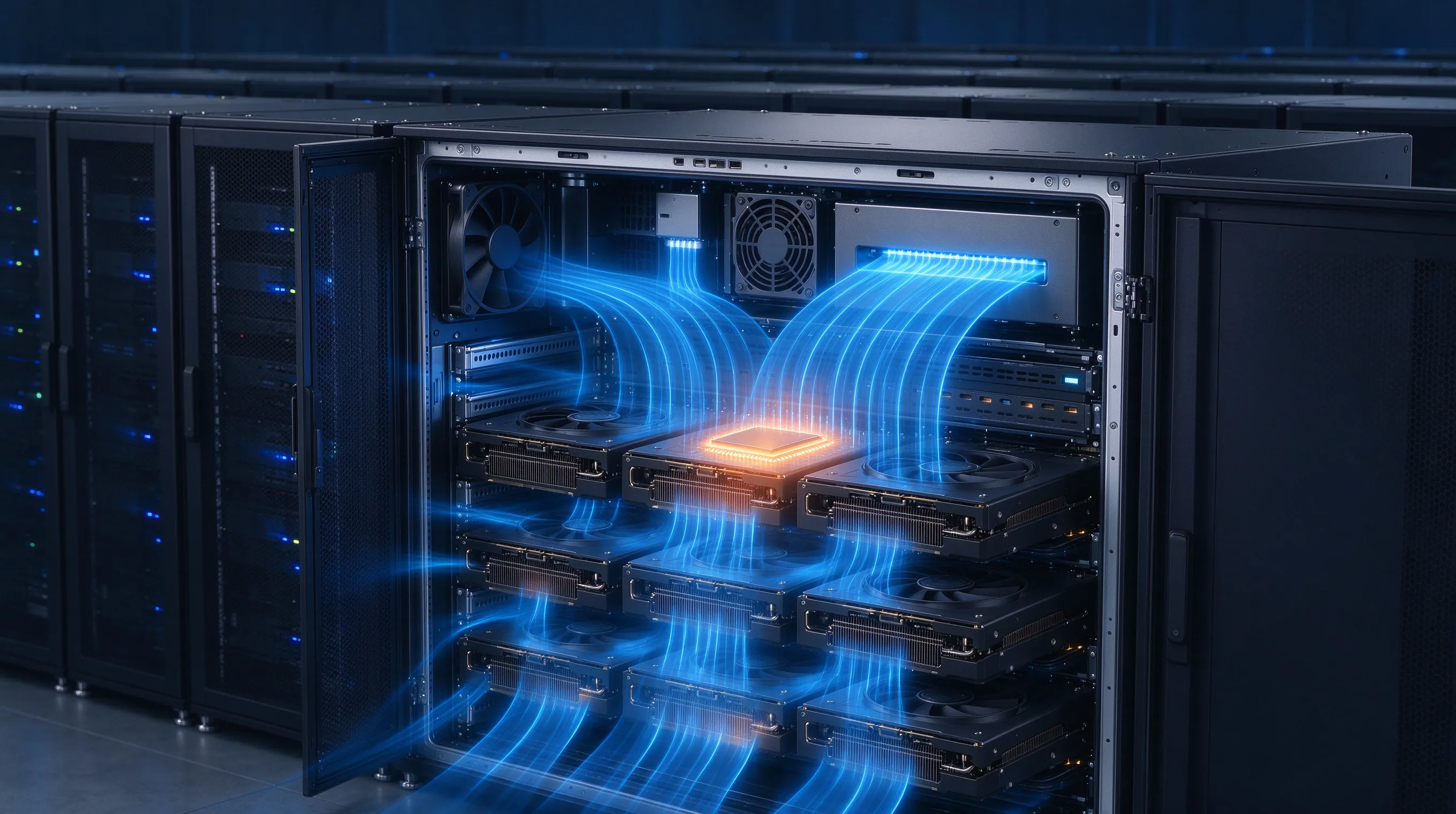
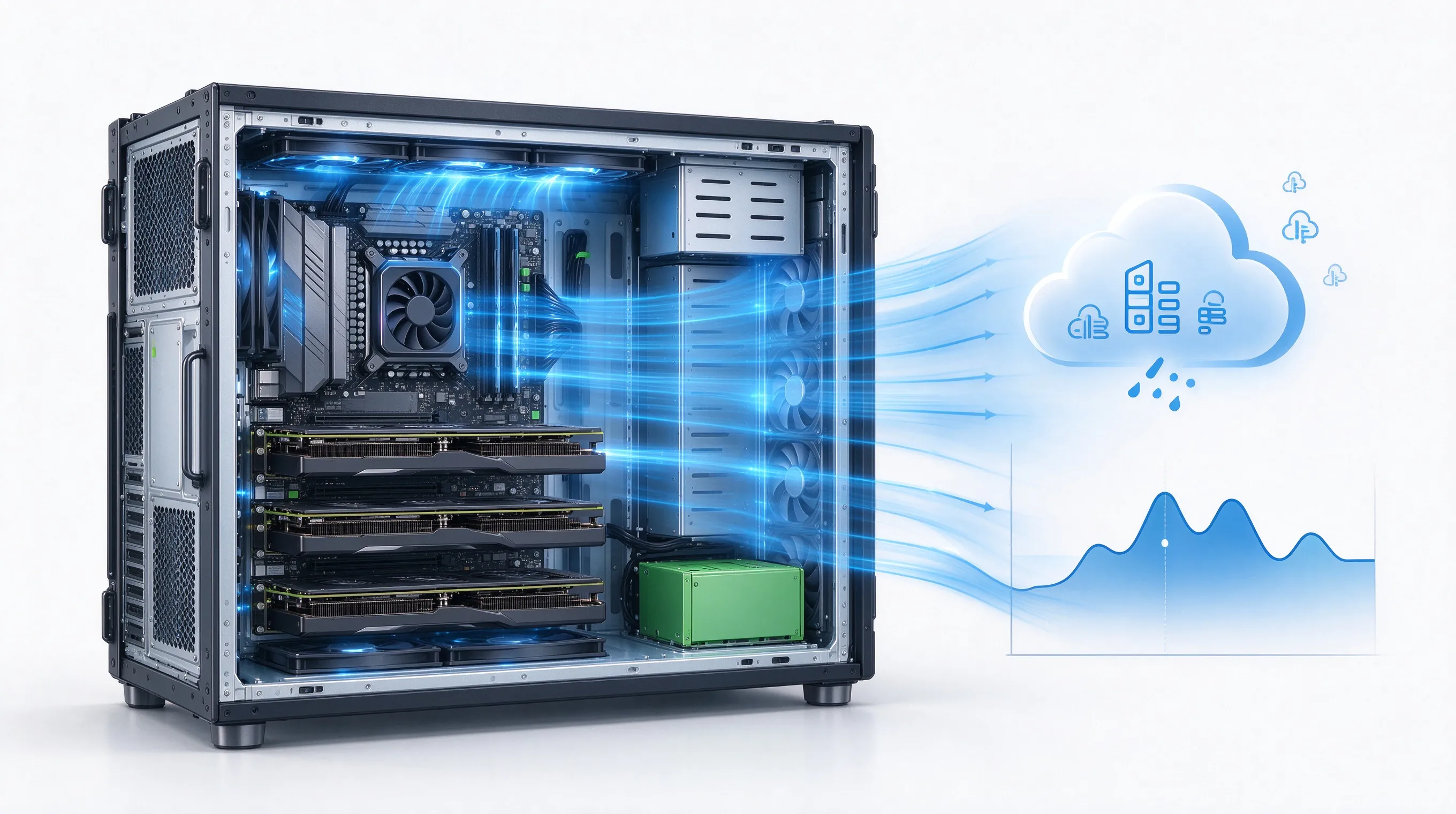
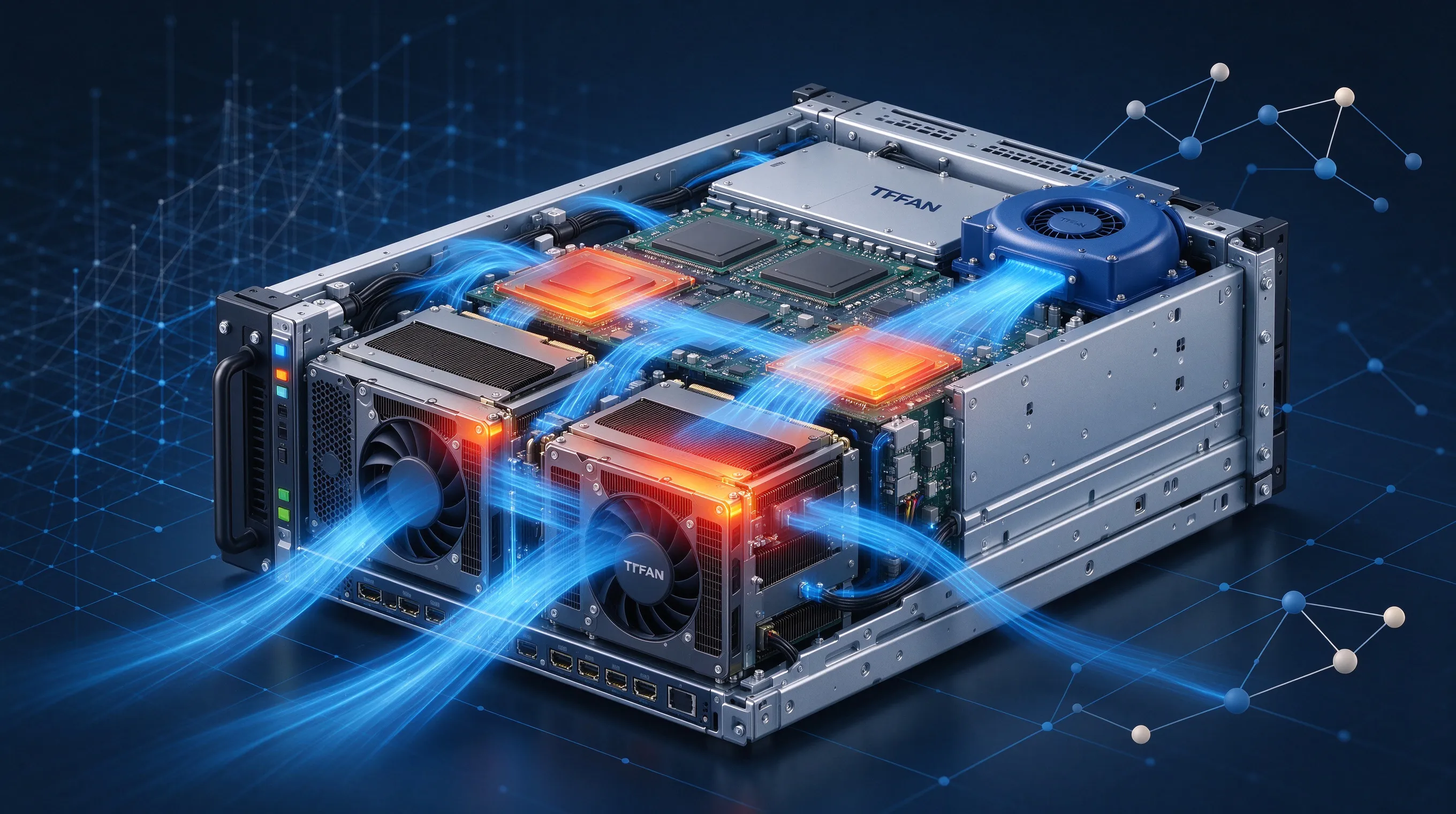
TKFAN High Pressure Blower Application Gallery
Visual showcase of TKFAN server cooling blowers deployed across various high-density computing environments (Click image to zoom)
7. How to Procure and Select TKFAN High Pressure Server Cooling Blowers
For server ODM and OEM manufacturers and system integrators seeking reliable high-pressure solutions, exploring the complete technical specifications on the official TKFAN High pressure blower product page provides comprehensive insight into available product models, performance curves, dimension blueprints, and electrical characteristics.
TKFAN supports tailored engineering development: by analyzing specific server enclosure airflow requirements, the engineering team can adjust static pressure, volumetric output, physical dimensions, voltage rails, and electrical interface definitions to deliver a custom TKFAN server cooling blower version optimized for unique customer hardware platforms. When initiating selection inquiries, sharing parameters such as chassis form factor (1U/2U/4U), GPU quantity, target chip thermal design power, airflow path layouts, maximum allowable acoustic thresholds, and operating temperature ranges allows TKFAN engineers to assist with airflow resistance simulation and recommend the ideal model to accelerate your hardware validation cycle.
8. Conclusion
The core challenge of GPU server hot spot cooling is not a lack of volumetric airflow, but rather an absence of sufficient static pressure to overcome the flow impedance created by dense internal component layouts. While standard axial fans remain limited to low-resistance environments, high-density multi-GPU server chassis demand specialized solutions. The High pressure blower—and specifically the professional server cooling blower—delivers high static pressure and directional airflow to eliminate localized GPU hot spots effectively. Backed by advanced BLDC motor technology, optimized impeller geometries, server-specific form factors, PWM intelligent thermal control, and rigorous 24/7 data center reliability, TKFAN High pressure blower and TKFAN server cooling blower products represent trusted cooling solutions adopted across the global server and HPC industry.
Whether you are architecting next-generation AI GPU servers or maintaining operational compute clusters, resolving thermal hot spots and performance throttling is achievable with TKFAN high-pressure cooling technology. Visit the TKFAN High pressure blower product page to review detailed specifications and connect with the technical support team for expert blower selection assistance tailored to your GPU server projects.
Frequently Asked Questions (FAQ)
1. Why do standard axial fans fail to cool high-density GPU server hot spots?
Standard axial fans are designed for high volumetric output in open spaces and possess weak static pressure capabilities. When faced with dense heatsink fins and tight component layouts inside a GPU server, their airflow pressure drops rapidly, causing air to bypass obstacles rather than penetrate deep into the thermal core.
2. What makes a High pressure blower essential for modern AI servers?
Modern AI GPUs draw hundreds of watts, concentrating massive heat flux onto small silicon areas. A high-pressure blower utilizes centrifugal mechanics to generate high wind pressure, forcing cooling air through restrictive server enclosures and heatsinks to eliminate critical hot spots.
3. How does a TKFAN server cooling blower integrate with rack server management systems?
TKFAN server cooling blowers feature integrated PWM control interfaces that connect directly to server Baseboard Management Controllers (BMC), enabling real-time closed-loop speed adjustments based on active GPU thermal telemetry.
4. What power supply voltages do TKFAN server cooling blowers support?
TKFAN server cooling blowers fully support standard server direct current power rails, including 12V, 24V, and 48V DC, allowing seamless integration into standard 1U, 2U, and 4U rack server power backplanes.
5. How do TKFAN high-pressure blowers maintain reliability in 24/7 data center environments?
TKFAN products utilize advanced brushless DC (BLDC) motor technology, precision-balanced impellers, and industrial-grade bearings that undergo rigorous thermal and vibration testing to satisfy stringent data center continuous operational requirements.
6. Can TKFAN customize blower dimensions or electrical parameters for proprietary server designs?
Yes, TKFAN offers customized engineering support, adjusting static pressure profiles, airflow volumes, physical dimensions, and electrical connector definitions to match unique customer server chassis requirements.
7. What is the recommended airflow layout for multi-GPU server deployments?
A front-to-back airflow layout is highly recommended. High-pressure blowers pull cool ambient air from the front chassis intake, direct it purposefully across multi-GPU modules, and exhaust heated air out the rear while preventing hot air recirculation.
8. Why is static pressure more important than CFM when cooling dense GPU heatsinks?
While CFM measures total air volume, high static pressure measures the blower's ability to push air through high-resistance barriers like dense cooling fins. Without sufficient static pressure, high CFM is blocked before reaching the heat source.
9. How do PWM-controlled server blowers improve energy efficiency in data centers?
PWM control allows blowers to idle at lower speeds during low-load periods, significantly reducing power consumption and acoustic output, and ramping up instantly only when GPU workloads spike, improving overall PUE.
10. Where can hardware engineers view complete technical specifications for TKFAN blowers?
Engineers can review full product catalogs, performance curves, and dimension drawings directly on the official TKFAN High pressure blower product page.
GET A QUOTE
× ![]()