

What Blowers Are Used for Battery Energy Storage Cabinet Cooling?
Introduction: The Thermal Challenge in Modern Energy Storage Systems
The global deployment of Battery Energy Storage Systems (BESS) has accelerated dramatically, encompassing large-scale containerized power stations, modular industrial and commercial (I&C) energy storage cabinets, and residential battery units. Lithium iron phosphate (LiFePO4) and standard lithium-ion cells are extraordinarily sensitive to thermal fluctuations. The optimal operational temperature window for these cells typically ranges between 20°C and 40°C. Furthermore, a temperature differential exceeding ±2°C among individual battery modules can severely accelerate capacity fade, degrade cycle life, and drastically escalate safety hazards related to thermal runaway. Field data reveals that over 35% of operational BESS failures stem from inadequate thermal management systems, with a significant portion traced back to improper cooling hardware selection that failed to account for internal aerodynamic resistance.
When engineering cooling layouts, system designers frequently default to standard axial fans. However, densely packed battery racks, fine-mesh dust pre-filters, internal flow guidance plates, and compact ducting generate substantial system backpressure. Under high resistance, standard axial fans suffer from aerodynamic stall, and as filters gradually accumulate particulate matter over months of operation, actual delivery airflow plummets far below free-air catalog ratings. This critical limitation is precisely where a high-performance air blower, specifically a specialized energy storage air blower, demonstrates indispensable performance advantages.
Unique Cooling Challenges in Battery Energy Storage Cabinets
Before selecting a cooling component, thermal engineers must thoroughly understand the severe operating environment inside modern energy storage cabinets. Unlike standard server racks, energy storage enclosures face compounding stresses that rapidly cause consumer-grade cooling hardware to fail.
1. Persistent Aerodynamic Flow Resistance
Energy storage cabinets feature inlet filters designed to capture dust, pollen, and industrial suspended particulates. Over months of continuous operation, these filters accumulate debris, progressively increasing static pressure load. Inside the cabinet, densely stacked battery modules, busbars, sheet metal baffles, and narrow cooling channels further restrict airflow paths. Under no-load laboratory conditions, catalog airflow numbers look promising, but once deployed in a real cabinet, performance drops sharply. Axial fans experience drastic airflow reduction under moderate backpressure, whereas centrifugal blowers sustain stable, usable flow rates against continuously rising static pressure.
2. Uninterrupted 24/7 Continuous Operation
Storage cabinets operate continuously for grid peak shaving, load shifting, or backup power provision, meaning cooling equipment runs nearly nonstop. Standard DC fans offer a Mean Time Between Failures (MTBF) of roughly 30,000 hours, translating to a mere 3.4 years of continuous runtime. With energy storage systems designed for 8 to 10 years of service life, short-lived fans guarantee high maintenance overhead and safety risks; a sudden fan failure creates localized hot spots inside battery packs, triggering thermal runaway. Premium TKFAN energy storage air blower units utilize high-grade dual ball bearing systems, achieving an L10 life of 50,000 to 70,000 hours at a cabinet ambient temperature of 40°C.
3. Broad and Extreme Temperature Fluctuations
Outdoor storage enclosures endure solar radiation in summer, pushing internal temperatures above 60°C, while units deployed in cold northern regions demand reliable low-temperature cold starts. All internal components of an energy storage blower—including motor winding insulation, bearing lubricants, control PCBs, and plastic housings—must maintain mechanical and electrical stability across wide thermal ranges.
4. Rigorous Safety and Compliance Mandates
Energy storage systems fall under YMYL (Your Money or Your Life) classifications. Cooling component enclosures must meet UL94 V-0 flame retardancy standards alongside RoHS, REACH, and CE electromagnetic compatibility directives. Protection sealing is equally vital to fend off moisture condensation, coastal salt spray, and fine industrial dust. Diurnal temperature cycles generate internal cabinet humidity; without proper ingress protection, moisture corrodes motor PCBs and depletes bearing grease.
5. Battery Management System (BMS) Integration
Modern storage controllers actively monitor cooling health. High-grade TKFAN air blower units support PWM stepless speed regulation and FG tachometer feedback signals. The BMS dynamically adjusts fan speed based on real-time module temperatures, triggering system alerts if performance deviates to identify degradation before overheating occurs.
Cooling Technology Comparison: Blowers vs. Axial Fans
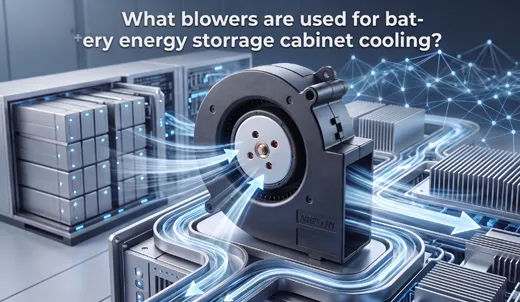
Many mechanical engineers confuse axial fans with centrifugal blowers. Understanding performance curves is crucial for selecting the right cooling hardware. Axial fans move air parallel to the motor shaft, making them ideal for low-resistance, open-ventilation setups where large free-air volumes are needed. However, their static pressure capability is poor, causing airflow to collapse under system resistance and risking aerodynamic stall. In contrast, centrifugal blowers draw air axially and expel it perpendicularly through a scroll housing, converting rotational energy into high static pressure that forces airflow through restrictive filters and narrow channels.
| Feature | Standard DC Axial Fan | Energy Storage Centrifugal Blower |
|---|---|---|
| Core Advantage | High free-air volume, low unit cost | Maintains high static pressure against filter/duct resistance |
| Dust/Filter Backpressure Response | Severe airflow drop, high stall risk | Sustains effective airflow as filter resistance rises |
| Typical Application | Unfiltered, open-cabinet ventilation | Battery cabinets, filtered enclosures, ducted cooling |
| Motor Control | PWM/FG feedback limited to premium models | TKFAN air blower units feature standard PWM speed control + FG feedback |
| Ingress Protection | Limited sealing options on heavy-duty units | TKFAN energy storage air blower offers customizable IP55, IP67, IP68 sealing |
Note: Blowers are not universally required; simple, low-resistance cabinets without fine filters can utilize axial fans efficiently, but high-resistance industrial systems demand centrifugal blowers.
Core Engineering Parameters for Blower Selection
When assessing TKFAN energy storage air blower options or alternative centrifugal blowers, engineers must look beyond free-air maximum metrics and evaluate critical operating indicators.
1. PQ Curve Matching System Impedance
Never rely solely on open-flow volume. Filter clogging, bends, and module blockages create the real operational resistance, which must be cross-referenced against the blower's pressure-flow curve. TKFAN provides static pressure profiles spanning 0.8kPa to 24kPa, accommodating diverse resistance profiles.
2. Operating Bus Voltage: Why 24V DC is Standard
Modern industrial storage battery cabinets typically operate on a native 24V DC bus. Selecting a 24V blower eliminates auxiliary DC-DC step-down converters, reducing electrical noise, eliminating failure points, boosting energy efficiency, and cutting BOM costs. TKFAN 24V blowers operate reliably within an 18V to 27.6V DC range, handling standard voltage sags. Explore specifications at TKFAN 24V Air Blower Collection.
3. Brushless DC Motors and Bearing Reliability
Production-grade TKFAN energy storage blowers utilize brushless DC (BLDC) motors to avoid brush wear and ensure long-term reliability. Dual ball bearing configurations deliver stable operation with reduced vibration and lower noise over thousands of running hours.
4. PWM Speed Control and FG Feedback
Smart thermal management avoids running blowers at full speed continuously. Under light loads, speeds drop to reduce noise and power consumption; under heavy discharge, the BMS ramps up airflow. TKFAN blowers support customizable PWM firmware and FG signals for closed-loop BMS integration.
5. Customized IP Protection Ratings
To withstand dusty industrial sites or humid coastal environments, TKFAN provides PCB conformal coating and full potting options to achieve IP55, IP67, and IP68 ratings, shielding electronics against moisture and corrosion.
6. Global Regulatory Compliance
All TKFAN blowers comply with RoHS, REACH, and CE regulations, with housings and impellers molded from UL94 V-0 flame-retardant polymers to satisfy insurance and OEM certification standards.
TKFAN Energy Storage Blower Product Portfolio
The TKFAN 24V DC brushless centrifugal blower lineup addresses diverse battery cabinet thermal architectures, from low-pressure indoor modules to ultra-high-pressure outdoor units operating behind multi-stage HEPA filters. Review detailed specs at TKFAN Official Product Page.
- BA16040HV24B-A: Large-format 24V blower delivering 117.1 CFM max airflow and 0.9 kPa peak static pressure. Ideal for large storage cabinets with low backpressure requiring bulk air circulation across expansive module arrays. Features dual ball bearings, PWM control, and FG feedback.
- BA12060HV24B-B: Balanced performance model providing 70.5 CFM airflow and 6.7 kPa max static pressure. This versatile TKFAN energy storage air blower is the top choice for medium commercial and industrial cabinets with heavy filter pressure drops.
- BA8060H24B-B / BA8060H24B-E-25KPA: Compact ultra-high static pressure blower generating 18 to 24 kPa pressure. Engineered for extreme resistance setups utilizing multi-stage HEPA filters, ensuring continuous cooling airflow even when filters clog.
- BA9733HV24B-B: Drop-in replacement profile delivering 8200 RPM, 65.3 CFM airflow, and 1.98 kPa static pressure. Enables OEMs to upgrade existing legacy cabinet designs without altering sheet metal or ductwork.
Beyond standard catalog items, TKFAN offers extensive OEM customization, including custom wiring harnesses, mounting flanges, IP sealing, and BMS-compatible firmware, with rapid prototyping and 3-to-4-week batch production lead times.
TKFAN Energy Storage Cooling Fan
Engineered for maximum reliability and structural durability, our high-performance energy storage cooling fans feature robust IP-sealed enclosures, precision ball bearings, and optimized impellers designed to withstand rigorous industrial thermal management requirements. (Click image to zoom)
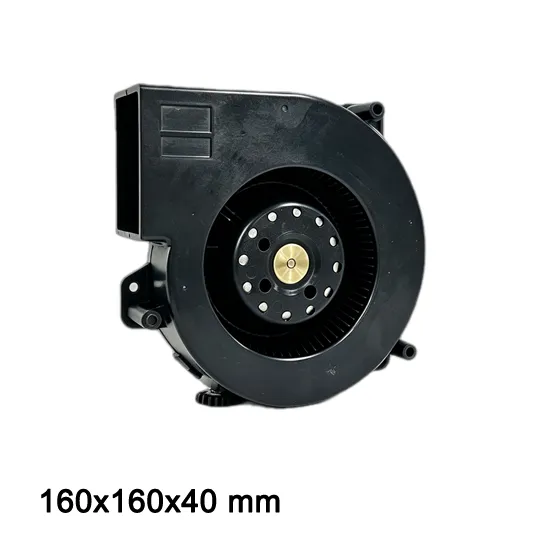
BA16040HV24B-A (160x40mm)
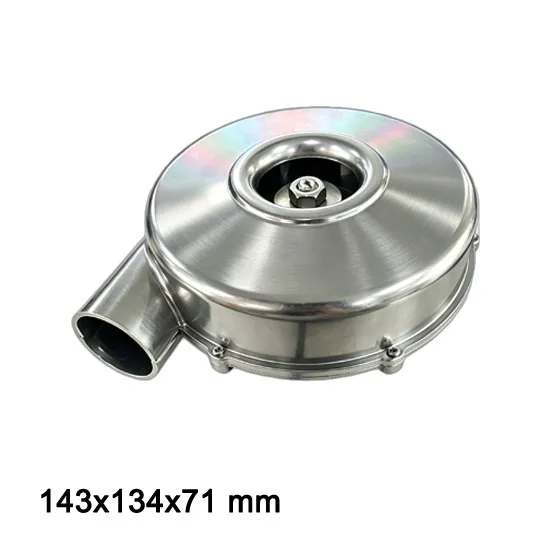
BA12060HV24B-B (143x71mm)
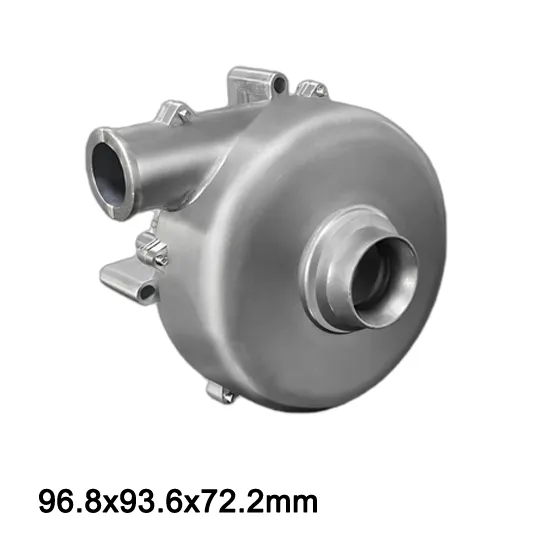
BA8060H24B-B (96.8mm)
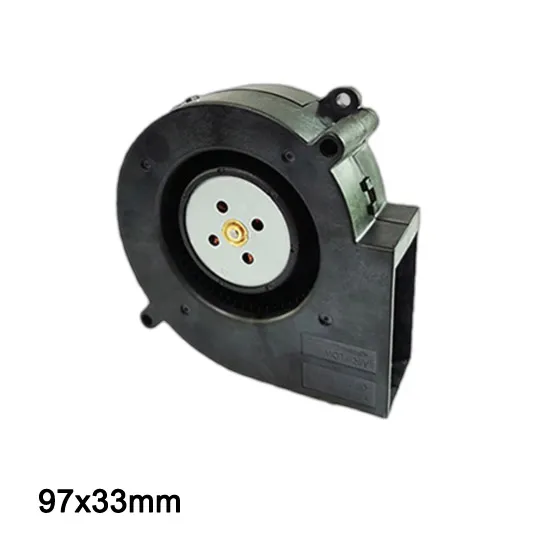
BA9733HV24B-B (97x33mm)
Engineering Best Practices for Blower Integration in BESS Cabinets
- Match Operating Points to System Resistance: Always calculate total cabinet pressure losses (filters, ducting, module resistance) to ensure operation within the stable region of the blower's PQ curve, avoiding aerodynamic surge and vibration.
- Deploy Multi-Point Temperature Sensors: Connect PWM inputs to the BMS and place sensors across multiple zones rather than a single hot spot to ensure comprehensive thermal regulation and health monitoring via FG feedback.
- Account for Filter Dust Accumulation: Size blowers based on fully loaded, aged filter resistance rather than clean-air laboratory benchmarks to prevent premature field failures.
- Mitigate Outdoor Condensation Risks: Pair high-protection blowers with proper cabinet sealing, pressure relief valves, and thermal zoning to prevent trapped internal moisture accumulation.
- Manage Acoustic Noise: Utilize PWM stepless control to run blowers quietly during normal loads, ramping up speed only during peak discharge cycles.
Frequently Asked Questions (FAQ)
Q1: Can I use a 12V blower instead of a 24V TKFAN blower in an energy storage cabinet?
Technically yes, but it introduces engineering drawbacks. Most storage cabinets utilize a native 24V DC bus, requiring 12V units to use a secondary DC-DC step-down converter, which increases BOM costs, adds failure points, and introduces electrical noise. The industry standard is a native 24V unit available at TKFAN 24V Air Blower Page.
Q2: What is the expected operating life of a TKFAN energy storage air blower?
Dual ball bearing versions achieve an L10 life of 50,000 to 70,000 hours at 40°C ambient temperatures. Utilizing PWM speed control to lower average RPM further extends longevity.
Q3: Are blowers always superior to axial fans in energy storage applications?
No. Cabinets lacking fine filters and featuring minimal internal resistance can use cost-effective axial fans. However, filtered commercial and grid systems require high-pressure centrifugal blowers.
Q4: Can TKFAN customize blowers for corrosive coastal salt-fog environments?
Yes. TKFAN provides PCB coatings and stator potting to achieve IP55, IP67, and IP68 ratings, protecting against dust, moisture, and salt spray.
Q5: What signals are available for BMS communication?
Standard units support PWM speed adjustment and FG pulse tachometer feedback for real-time rotational monitoring.
Q6: What is the lead time for custom OEM blower orders?
Prototyping has no strict minimum order restrictions, while mass production batch lead times typically run 3 to 4 weeks.
Q7: How do I handle high noise levels in indoor commercial storage cabinets?
Utilize PWM firmware to lower fan speeds during idle and nominal modes, raising speeds only during heavy power throughput.
Q8: Do TKFAN blowers meet international safety certifications?
Yes, products comply with CE, RoHS, and REACH guidelines, featuring UL94 V-0 flame-retardant housings.
Q9: Where can I download complete technical drawings and performance curves?
Detailed curves and specifications are published on the TKFAN Official Product Collection.
Q10: How does high static pressure prevent thermal runaway?
By overcoming filter resistance, high-static blowers ensure consistent airflow reaches every battery cell, preventing localized hot spots that spark thermal events.
GET A QUOTE