

Comprehensive Postoperative Respiratory Support Blower Solutions: 2026 Clinical and Engineering Guideline
1. Introduction: The Critical Role of Postoperative Respiratory Support Blower Solutions in Modern Surgical Recovery
Postoperative respiratory failure (PRF) and associated pulmonary complications represent some of the most prevalent, severe, and high-stakes adverse events encountered within modern surgical patient care. According to global perioperative clinical statistics, postoperative pulmonary complications (PPCs)—such as diffuse atelectasis, severe hypoxemia, acute hypercapnia, and postoperative pneumonia—account for more than 40% of all surgical adverse incidents. These physiological complications significantly extend patient hospitalization duration, escalate unplanned intensive care unit (ICU) admission rates, and markedly elevate overall surgical mortality risks. Consequently, deploying a rigorously optimized and scientifically validated postoperative respiratory support blower solution in operating rooms has become a cornerstone technological intervention for mitigating these hazards, preserving patient vital signs, and accelerating enhanced recovery after surgery (ERAS) protocols.
The administration of general anesthesia, long-duration surgical manipulation (particularly operations exceeding 4 hours), expansive upper abdominal procedures, thoracic surgeries, and a patient's pre-existing baseline respiratory comorbidities fundamentally impair respiratory drive and pulmonary biomechanics. Anesthetic agents profoundly suppress the central nervous system's respiratory drive, degrade lung compliance, decrease functional residual capacity (FRC), and cause widespread ventilation-perfusion mismatching. Simultaneously, surgical tissue trauma and severe acute postoperative pain restrict thoracic excursion and inhibit the effective cough reflexes necessary to clear airway secretions. Without a standardized, high-performance postoperative respiratory support blower management protocol, surgical patients are exceptionally susceptible to widespread alveolar collapse, gas exchange impairment, and critical carbon dioxide retention within the first 24 hours following extubation.
Figure 1: Alveolar volume recruitment and continuous pressure maintenance comparison curve utilizing an engineered medical-grade CPAP blower vs unassisted postoperative airway decay.
In 2026, the rapid iteration of global clinical medical standards alongside advanced intelligent medical device engineering has driven perioperative ventilation management toward highly precise and nuanced methodologies. Traditional, rigid, "one-size-fits-all" mechanical ventilator settings are wholly inadequate for meeting the sophisticated demands of precision perioperative care. A scientifically grounded, patient-centric, and standardized operating room postoperative respiratory support blower solution seamlessly integrates lung-protective ventilation (LPV) principles, real-time pulmonary mechanics monitoring, stratified ventilation mode selection, and highly advanced blower motor hardware matching. This creates a reliable workflow that spans from immediate operating room extubation and Post-Anesthesia Care Unit (PACU) observation to the general ward transition.
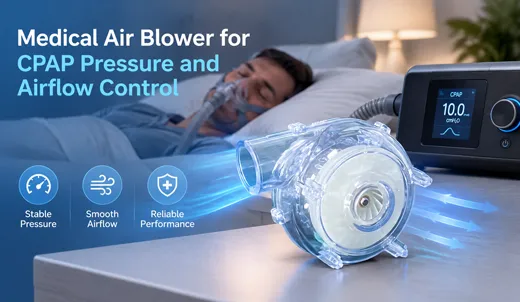
Within this clinical framework, the blower motor acts as the foundational muscle and core pneumatic mechanism of non-invasive Continuous Positive Airway Pressure (CPAP) and Bilevel Positive Airway Pressure (BiPAP) devices. Its absolute dynamic pressure stability, rapid transient response speed, micro-silent performance, and long-term anti-degradation engineering directly determine the true clinical efficacy of lung-protective ventilation strategies. High-quality, specialized medical-grade CPAP blowers systematically eliminate traumatic pressure fluctuations, erratic turbulence, and disturbing structural acoustic noise that can interfere with patient sleep patterns and neurological recovery. This makes them ideal for low-intensity, extended-duration postoperative respiratory support across all surgical demographics. For medical device design engineers, clinical directors, and hospital procurement teams seeking comprehensive technical specifications and operational matrix overviews of premium medical-grade blowers, please consult the authoritative manufacturer reference page: TKFAN Medical CPAP Air Blower Technical Matrices. This analysis unpacks the critical pathways, core parameters, mode algorithms, hazard-prevention techniques, and equipment compliance metrics required by anesthesiologists, respiratory therapists, and critical care specialists worldwide.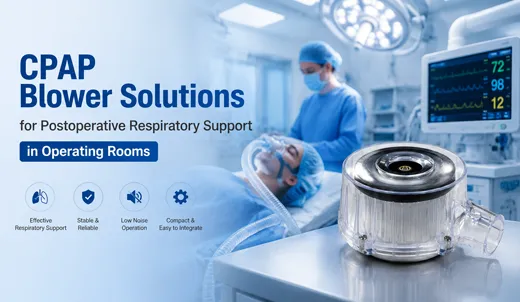
2. Deep-Dive Analysis of Clinical Indications for Postoperative Respiratory Support Blowers
Establishing an effective postoperative respiratory support blower solution begins with a precise, evidence-based understanding of patient stratification and clinical indications. The precise matching of blower-driven mechanical ventilation protocols ensures that at-risk patients avoid severe hypoxemia while protecting stable patients from the unnecessary lung injury and prolonged weaning times associated with over-ventilation.
2.1 Mandatory Indications for Postoperative Invasive Mechanical Ventilation
Patients who present with severe postoperative respiratory insufficiency, persistent gas exchange deficits, or hemodynamic instability require immediate, uninterrupted invasive mechanical ventilation support. High-risk profiles include individuals undergoing extensive thoracic reconstructions, complex cardiothoracic bypass surgeries, massive open abdominal tumor resections, or any procedures exceeding 4 to 5 hours. Immediate clinical triggers for invasive blower support include very weak spontaneous breathing effort, a low tidal volume (< 4 mL/kg), a persistent SpO2 below 92% despite high-flow oxygen administration, an arterial carbon dioxide partial pressure (PaCO2) exceeding 50 mmHg, or prolonged emergence delirium where the protective airway reflexes are compromised. In these urgent scenarios, the primary goal of the operating room postoperative respiratory support blower solution is to stabilize blood oxygenation, secure adequate alveolar ventilation, reverse severe respiratory acidosis, and maintain physiological stability while the residual effects of neuromuscular blockades and anesthetics wear off.
2.2 Preventive Non-Invasive Ventilation Indications for High-Risk Patients
A substantial segment of surgical patients who do not demonstrate immediate, overt respiratory failure still require preventive non-invasive positive pressure ventilation to combat the silent onset of postoperative pulmonary complications. This high-risk subpopulation includes geriatric patients aged 65 and older, patients with an elevated Body Mass Index (BMI ≥ 30 kg/m²) indicating severe obesity, individuals diagnosed with Chronic Obstructive Pulmonary Disease (COPD), reactive asthma, or interstitial lung diseases, long-term tobacco smokers, and patients experiencing prolonged preoperative bed rest. Robust multi-center clinical trials, including the landmark IMPROVE trial, have confirmed that administering preventive, lung-protective non-invasive ventilation immediately following extubation to moderate-to-high-risk patients reduces the incidence of postoperative atelectasis by over 50% and dramatically cuts re-intubation rates. For these populations, an optimized postoperative lung-protective ventilation strategy utilizes low-intensity, highly consistent positive airway pressure modes to keep alveoli recruited and optimize lung compliance without inducing volumetric trauma.
2.3 Standardized Weaning and Extubation Preparedness Criteria
Surgical success depends heavily on a structured weaning protocol, which forms the final phase of any comprehensive operating room postoperative respiratory support blower solution. Premature removal of airway support frequently induces acute respiratory muscle fatigue, whereas excessive ventilation prolongs diaphragmatic atrophy. Patients are deemed prepared for systematic weaning and transition to unassisted breathing when they fulfill the following clinical benchmarks:
- Hemodynamic Stability: Normal sinus rhythm or stable controlled rate, minimal or absent vasopressor requirements, and adequate peripheral perfusion.
- Neurological Readiness: Fully conscious, cooperative, and demonstrating complete reversal of all perioperative neuromuscular blocking agents.
- Ventilatory Capabilities: Spontaneous tidal volume ≥ 6 mL/kg of ideal body weight (IBW), with a stable respiratory rate bounded strictly between 12 and 20 breaths per minute.
- Gas Exchange Sufficiency: Maintaining a stable SpO2 ≥ 95% or a PaO2 ≥ 80 mmHg on a mild fractional inspired oxygen concentration (FiO2 ≤ 0.4) along with an acceptable respiratory frequency-to-tidal volume ratio (Rapid Shallow Breathing Index, RSBI < 105).
3. Structural Guidelines and Core Principles of Postoperative Lung-Protective Ventilation
The clinical execution of any postoperative mechanical ventilation strategy must adhere strictly to the tenets of Lung-Protective Ventilation (LPV). This framework consciously departs from outdated high-tidal-volume, high-pressure ventilation settings that inadvertently trigger ventilator-induced lung injury (VILI). Modern postoperative support is engineered to minimize mechanical stress on raw parenchymal tissue, protect residual lung volumes, and nurture the swift return of autonomous diaphragmatic function. This is achieved via four foundational principles:
The Four Pillar Rules of Modern Postoperative Blower Ventilation
1. Low Tidal Volume Control (6-8 mL/kg IBW): Eliminates volutrauma by matching physical gas delivery to true physiological anatomical capacity rather than total body weight.
2. Tailored Positive End-Expiratory Pressure (PEEP): Maintains terminal alveolar structural patency throughout the expiration cycle, eliminating cyclic collapse and re-expansion injury (atelectrauma).
3. Strict Driving Pressure Cap (≤ 15 cmH2O): Controls the cyclical strain placed on lung tissue, serving as a powerful independent predictor of positive clinical outcomes.
4. Stratified Mechanical Mode Customization: Dynamic matching of ventilator response algorithms to the specific phase of patient recovery, smoothly transitioning from mandatory to assistive pressure profiles.
3.1 Low Tidal Volume (VT) Delivery to Curb Volutrauma
Delivering large, uncalibrated tidal volumes causes localized over-distension of fragile functional alveoli. This shearing force damages delicate alveolar epithelial cells and vascular endothelial boundaries, triggering a cascade of inflammatory cytokines (biotrauma) that worsens postoperative pulmonary edema. Therefore, postoperative lung-protective ventilation protocols dictate that tidal volumes must be calculated strictly using the patient's Ideal Body Weight (IBW)—predicated on biological sex and height—rather than actual scale weight. The target window is set firmly between 6 and 8 mL/kg IBW. In patients with significantly compromised lung compliance, such as those recovering from extensive open thoracic interventions, this parameter may be reduced to 5 to 6 mL/kg IBW. Volumetric deliveries exceeding 10 mL/kg IBW are strictly contraindicated due to the risk of regional over-stretching.
3.2 Optimized PEEP Titration to Prevent Cyclical Atelectasis
Positive End-Expiratory Pressure (PEEP) is arguably the most dynamic parameter within a postoperative respiratory support blower solution. Maintaining an optimized residual pressure floor during expiration prevents functional alveoli from collapsing, increases the functional residual capacity, and enhances blood-gas diffusion surfaces. This reverses the progressive atelectasis caused by general anesthesia and upper abdominal physical compression. Standard clinical consensus mandates a baseline PEEP of 4 to 7 cmH2O for typical postoperative patients. However, for patients presenting with severe obesity, individuals post-laparoscopy (where residual pneumoperitoneum forces the diaphragm upward), and high-risk hypoxemic cases, PEEP must be dynamically titrated upward to 7 to 10 cmH2O. Blindly assigning high PEEP without monitoring is prohibited, as excessive airway pressure increases intrathoracic pressure, decreases venous return to the heart, and can induce hemodynamic instability or a drop in cardiac output.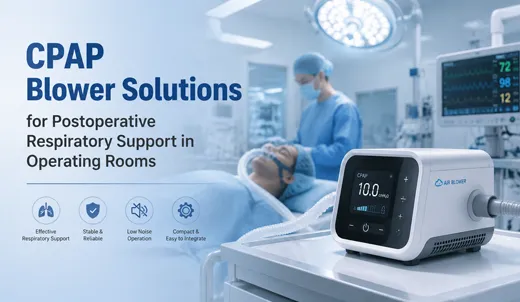
4. Advanced Parameter Specifications and Hardware Core Engineering
The successful execution of lung-protective ventilation relies heavily on the engineering capabilities of the underlying blower hardware. Translating complex clinical settings into precise physical airflow requires a high-performance blower unit capable of rapid adjustments. Standard commercial or industrial fan assemblies suffer from pressure drift, sluggish transient acceleration curves, high acoustic profiles, and excessive vibration, making them unsuited for medical applications. The core of any advanced postoperative respiratory support blower solution must feature a medical-grade, low-inertia, high-efficiency brushless DC (BLDC) motor assembly.
To demonstrate how specialized hardware fulfills these clinical requirements, the engineering parameters of the TKFAN medical-grade blower matrix are detailed below. These units feature dual-plane dynamic balancing, premium biocompatible construction, and low-noise profiles designed to support non-invasive respiratory therapies without disrupting patient rest.
4.1 Medical-Grade CPAP Blower Selection and Performance Matrix
The following technical table details seven specialized medical-grade CPAP blowers, providing mechanical design engineers and hospital clinical engineering teams with a clear roadmap for device integration based on surgical constraints and ventilation requirements:
| Blower Model | Dimensions (mm) | Rated Voltage | Max Speed (RPM) | Max Airflow (CFM) | Max Static Pressure (kPa) | Core Engineering Advantage | Primary Clinical Application Scene |
|---|---|---|---|---|---|---|---|
| BA4028H24B | 40 × 28 | 24V DC | 48,000 | 12.0 | 5.9 | Ultra-compact footprint, low rotor inertia, minimal energy consumption. | Micro-invasive outpatient surgery, transport-grade ambulatory CPAP. |
| BA5025H24B | 50 × 25 | 24V DC | 37,000 | 9.5 | 4.05 | Slimline chassis profile, low operating noise, highly consistent static delivery. | Standard post-extubation recovery, preventive lower-pressure ward CPAP. |
| BA5060H24B-A | 58.7 × 59 | 24V DC | 31,000 | 14.0 | 8.4 | High static pressure capability, handles circuit impedance, minimal pressure drift. | High-BMI bariatric surgery, high-PEEP alveolar recruitment protocols. |
| BA7060H24B-C | 77 × 67 × 57 | 24V DC | 32,000 | 18.8 | 4.8 | High volumetric airflow, excellent thermal dissipation, robust continuous operation. | High-flow non-invasive ventilation (HFNC), complex thoracic recovery. |
| BA6045H24B | 61.5 × 47.5 | 24V DC | 40,000 | 14.5 | 6.5 | Balanced pressure-to-flow ratio, rapid motor acceleration, responsive airway tracking. | BiLevel (BiPAP) support, responsive synchronous pressure tracking. |
| BA7040H24B-A | 70 × 40 | 24V DC | 36,000 | 15.2 | 6.2 | Low-vibration architecture, quiet operation, reliable continuous duty cycle. | Clinical-grade multi-mode bedside ventilators, quiet PACU wards. |
| BA7060H24B | 70 × 60 | 24V DC | 35,000 | 18.0 | 7.8 | High-capacity pneumatic output, broad dynamic range, covers varying patient demands. | Intensive Care multi-configuration ventilators, severe respiratory distress. |
5. Tailoring Blower Ventilation Protocols to Specific Surgical Contexts
Different surgical interventions alter respiratory compliance and anatomical spacing in distinct ways. A comprehensive operating room postoperative respiratory support blower solution must adjust its pneumatic delivery profiles to match these specific surgical conditions.
5.1 Upper Abdominal and Bariatric Surgery Postoperative Strategy
Open upper abdominal and complex bariatric procedures carry a high risk of postoperative atelectasis. Extended retraction, surgical pain, and abdominal dressings restrict diaphragmatic movement, causing rapid closure of basal lung segments. To counter this, the ventilation strategy relies on a moderate-to-high PEEP floor (6 to 9 cmH2O) paired with targeted low tidal volumes. Initiating non-invasive CPAP therapy via a high-pressure blower (such as the BA5060H24B-A) immediately upon extubation helps maintain alveolar recruitment and prevents progressive volume loss without disrupting abdominal wound closure lines.
5.2 Ambulatory and Minimally Invasive Day Surgeries
Patients undergoing shorter laparoscopic or arthroscopic outpatient procedures generally experience faster recovery of respiratory function. The postoperative respiratory support blower solution for this demographic focuses on short-term preventive care. Low-pressure CPAP (4 to 6 cmH2O) delivered through a compact blower unit like the BA4028H24B effectively manages transient micro-atelectasis during emergence from anesthesia, helping patients safely meet discharge criteria sooner.
6. Mitigation of Complications and Standardized Weaning Safety Frameworks
While positive pressure ventilation provides critical support, improper application can lead to complications such as barotrauma, volutrauma, ventilator-associated pneumonia (VAP), or circulatory depression. Managing an operating room postoperative respiratory support blower solution requires a structured approach to hazard prevention and systematic weaning.
6.1 Managing Hypoxemia and Hypercapnia Fluctuations
Sudden changes in blood gas levels during post-surgical recovery often stem from airway bronchospasms, pooled secretions, or shivering-induced oxygen consumption. If oxygen levels drop, the blower system can temporarily increase the oxygen concentration (FiO2) while clinicians perform airway clearing or therapeutic recruitment maneuvers. To prevent hypercapnia from hypoventilation, the system can adjust the pressure support or breathing frequency to maintain stable carbon dioxide clearance.
6.2 Structured Step-Down and Weaning Protocols
The transition from full mechanical support to independent breathing should follow a gradual, step-down protocol. This process begins by lowering the mandatory backup rate on the ventilator and switching the patient to supportive modes like Pressure Support Ventilation (PSV) or CPAP. This encourages the patient's natural respiratory muscles to take over the work of breathing. Daily Spontaneous Breathing Trials (SBT) are conducted to evaluate readiness for extubation, helping to minimize total ventilation time and reduce the risk of re-intubation.
Figure 2: Clinical step-down progression pathway utilizing precise blower speed adaptations to smoothly transition patients from mandatory ventilation to natural breathing.
Technical and Clinical Frequently Asked Questions (FAQ)
Q1: Why are standard industrial fans strictly forbidden in postoperative respiratory support equipment?
Standard industrial fans lack the low-inertia rotor configurations and specialized dynamic balancing required for medical applications. They cannot adjust their speed quickly enough to match a patient's breathing cycle, leading to pressure instability and potential lung trauma. Additionally, industrial fans do not meet medical standards for biocompatibility (such as ISO 10993) or low operating noise.
Q2: How does a 24V BLDC CPAP blower maintain constant pressure across changing airway resistance?
Medical-grade 24V Brushless DC (BLDC) blowers use high-speed microcontrollers that monitor airflow and pressure sensors within the circuit. Running at high operational speeds, the motor controller instantly adjusts torque and speed to compensate for changes in resistance caused by patient movement or circuit configuration, keeping delivery pressures steady.
Q3: What is the significance of dual-plane dynamic balancing in operating room blowers?
Dual-plane dynamic balancing reduces residual rotor unbalance to very low levels. This engineering process significantly minimizes mechanical vibration and acoustic noise during operation. Keeping vibrations low helps protect sensitive internal electronic components and ensures a quiet environment that supports patient recovery.
Q4: Can these specialized medical blowers handle the high flow resistance of heat and moisture exchangers (HMEs)?
Yes, high-pressure medical blowers, such as the BA5060H24B-A, generate sufficient static pressure (up to 8.4 kPa) to overcome resistance from bacterial filters, humidifiers, and inline HMEs, ensuring the correct therapeutic pressure reaches the patient.
Q5: Why is the target driving pressure capped at 15 cmH2O during postoperative ventilation?
Clinical studies indicate that maintaining driving pressures below 15 cmH2O reduces cyclic stress on functional lung tissue. Keeping driving pressure within this limit is associated with lower rates of acute respiratory complications and better patient outcomes.
Q6: How does the blower hardware support responsive synchronization in BiLevel/BiPAP modes?
Efficient blower motors feature lightweight, low-inertia rotors that allow for rapid acceleration and deceleration (often within milliseconds). This quick response enables the system to track the patient's spontaneous inhalation and exhalation, providing smooth pressure transitions.
Q7: What features prevent medical CPAP blowers from overheating during extended operation?
Medical-grade blowers utilize advanced thermal management, including aluminum motor housings and optimized internal channels that use the primary therapeutic airflow to cool the stator assembly, supporting reliable, long-term continuous operation.
Q8: Which blower model is best suited for portable or transportable postoperative CPAP devices?
The BA4028H24B is well-suited for portable devices due to its compact 40mm size, low power requirements, and lightweight design, making it easier to integrate into battery-powered transport systems.
Q9: How do medical blowers comply with biological safety standards?
The internal components within the gas pathway are manufactured using medical-grade, inert, and non-outgassing materials. This prevents the release of volatile organic compounds (VOCs) or particulate matter, ensuring compliance with strict medical biocompatibility guidelines.
Q10: What speed control methods are typically used to interface with these blowers?
These units support standard digital Pulse Width Modulation (PWM) or 0-5V analog voltage inputs, allowing device designers to integrate the blower into closed-loop ventilation control algorithms.
GET A QUOTE