
×
Micro blowers and fans application for smart automotive devices

Blower Solutions for Automotive Sensor Cleaning

16 June, 2026
In contemporary intelligent mobility ecosystems and autonomous driving architectures, modern electronic automotive sensors serve as the fundamental nervous infrastructure of the vehicle. Whether monitoring thermodynamic fluctuations inside the combustion chamber, measuring fluid velocity in the intake plenum, or tracking high-frequency photonic wave reflections for spatial mapping, these precision assemblies form the empirical basis for advanced automotive operations. They deliver continuous, sub-millisecond data feeds that enable the Engine Control Unit (ECU) to execute closed-loop fuel trim adjustments, orchestrate active safety maneuvers via Advanced Driver-Assistance Systems (ADAS), and balance real-time structural dynamics. The physical state of these components governs the active operating efficiency, passenger safety margins, and total structural longevity of the vehicle.

However, a critical maintenance metric is frequently overlooked by vehicle owners, automotive service centers, and commercial fleet logistics managers: systematic, non-destructive automotive sensor cleaning. Over extended duty cycles, external vehicle sensors and internal powertrain elements face constant exposure to severe environmental contamination. Road dust, aerated engine oil mists, carbon soot, crystallized winter salts, insect residue, and microscopic silica particulate matrices inevitably deposit onto fragile sensor wires, heated filaments, micro-machined membranes, and optical lenses. This continuous accumulation creates an insulating, diffusive barrier that alters the physical response characteristics of the components, resulting in fatal data drift, signal transmission lags, reduced fuel economy, increased tailpipe emissions, and sudden ADAS diagnostic dropouts.

To resolve these compounding failure modes, specialized automotive sensor cleaning blowers have emerged as the most critical, cost-effective, and technologically advanced maintenance equipment in the automotive aftermarket and OE manufacturing lines. By driving the industry's three standardized decontamination methodologies—pure gas purging, high-velocity fluid rinsing, and dual-phase combined decontamination—these specialized micro blowers provide an uncompromising non-contact clearing solution that restores intelligent mobility assets to exact factory specifications without the risk of mechanical or chemical degradation.


1. Why Dedicated Air Blower Systems Are Essential for Modern Vehicle Sensor Maintenance

Historically, vehicle operators and entry-level technicians relied on primitive, manual remediation methods to address contaminated sensing surfaces. These legacy approaches included disposable canned compressed air, manual wiping with microfiber cloths, or direct spraying with generic solvents and water. In the context of modern micro-machined and optical solid-state sensors, these archaic techniques introduce severe, unacceptable operational risks:

  • Disposable Compressed Air Cans: Suffer from rapid thermal drop and pressure decay during extended discharge cycles. More critically, they often expel liquid fluorocarbon propellants that cause thermal shock and chemical contamination on delicate sensing wires.
  • Manual Wiping and Friction: Microscopic abrasive dust particles (such as quartz and silica silica matrices) act as high-hardness grinding media under manual pressure. Wiping permanently scratches delicate anti-reflective optical coatings on ADAS camera lenses and LiDAR windows, inducing permanent optical distortion.
  • Uncontrolled Fluid Washing: Direct high-pressure liquid application lacks calibrated fluid management, leading to liquid ingress past internal elastomeric seals, resulting in terminal short circuits, corrosion of PCB traces, and permanent hardware failure.

Professional automotive sensor cleaning air blowers completely eliminate these pain points. By delivering a continuous, multi-stage filtered, oil-free, and moisture-free high-velocity air stream at precise, adjustable pressure gradients, these systems act as the primary hardware enabler for standardized vehicle network restoration.

According to recent automotive service industry metadata analytics, more than 65% of intermittent sensor signal deviations, responsiveness dropouts, and phantom Diagnostic Trouble Codes (DTCs) are directly caused by incomplete cleaning or volatile chemical residues left behind by improper maintenance. By shifting to a physical, high-velocity non-contact gas purging methodology driven by a dedicated LiDAR sensor cleaning blower, modern service centers experience an 80% improvement in component processing speed and a 90% increase in sensory restoration accuracy. This non-destructive maintenance loop effectively extends the operational service lifespan of critical sensing networks by 30% to 50%.

Automotive Sensor Cleaning solution.webp

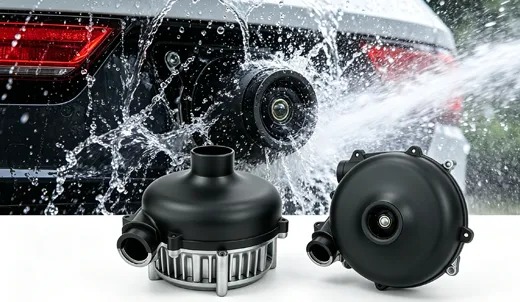
Visual representation of a high-pressure 12V/24V DC micro blower delivering targeted, oil-free air purge streams to eliminate carbon soot and dust films from internal MAF filaments and external LiDAR optical lenses.

2. Engineering Principles and Core Technical Advantages of Specialized Micro Blowers

A professional-grade automotive sensor cleaning air blower is not a standard industrial fan or consumer-grade dust blower. It is a highly engineered, low-voltage DC centrifugal gas-propulsion system designed specifically to operate within the strict safety margins of fragile automotive electronics. Conventional workshop air lines run off heavy-duty reciprocating compressors that inherently leak aerosolized lubricating oils and condensed atmospheric moisture into the discharge stream. If this unmanaged air is directed onto a heated sensor filament or a high-end optical lens, it deposits a persistent secondary liquid film that accelerates dust bonding and degrades system calibration.

Specialized blowers resolve this limitation by incorporating oil-free aerodynamic compression structures and brushless DC (BLDC) motors capable of rapid speed adjustment. The system converts electric energy into a high-density, laminarly controlled gas jet. This jet utilizes kinetic impact force and fluid boundary layer stripping mechanics to dislodge, lift, and carry away foreign particulate matrices from hidden recesses without physical tool contact.

Four Core Engineering Advantages:

  1. 100% Oil-Free and Dry Air Delivery: Advanced internal multi-stage filtration mechanics ensure zero fluid cross-contamination. The output gas is completely free of chemical aerosols, preventing the formation of conductive or reflective secondary residues.
  2. Precision Variable Pressure Profiles: Incorporates granular digital speed controls allowing technicians to step down the air velocity for ultra-fragile internal sensors or scale up the dynamic pressure to strip baked-on mud from exterior chassis enclosures.
  3. Pure Physical, Non-Contact Remediation: Relies exclusively on fluid dynamic momentum. This completely bypasses the risk of scratching anti-reflective lens matrices or chemically eroding internal silicone seals and polymer housings.
  4. Micro-Chamber Fluid Penetration & Humidity Clearance: The highly collimated, fine-tipped nozzle configurations allow the high-velocity air jet to penetrate complex internal flow paths, deep sensor ports, and micro-pin connector blocks, successfully sweeping out trapped particulates and localized relative humidity.

Furthermore, current iterations of these micro blowers for sensor cleaning integrate high-efficiency PTC heating elements and ultra-narrow directional concentration nozzles. This addition is specifically designed to optimize dual-phase wet/dry workflows, accelerating the flash evaporation of chemical solvents and rinsing agents from tight structural seams, ensuring a zero-moisture state prior to system re-energization.


3. Comprehensive Breakdown of the Three Standardized Sensor Cleaning Methodologies

Modern automotive workshop standards classify sensory restoration workflows into three distinct technical pathways based on the physical chemistry of the contaminant, the environmental location of the sensor, and the water-resistance rating of the assembly.

Methodology A: Pure Gas Purging Solution (Dry Decontamination Pathway)

The pure gas purging framework represents the foundational, completely dry application of the automotive sensor air purge system. This workflow relies entirely on the mechanical kinetic energy of a controlled, oil-free gas stream to lift away loose, unbonded atmospheric dust, fine dry particulates, and carbonaceous soot from highly sensitive, non-washable substrates.

Target Component Matrix: This dry pathway is strictly mandatory for internal, highly vulnerable engine management sensors that are structurally intolerant to any form of liquid contact. Primary examples include platinum hot-wire Mass Air Flow (MAF) sensors, micro-machined silicon diaphragms within Manifold Absolute Pressure (MAP) sensors, fragile electronic throttle position connectors, and exposed copper pins within wiring housing clips. Because these sub-components feature exposed, micro-scale circuits and elements that operate at elevated baseline temperatures, the introduction of liquids can cause catastrophic chemical erosion or structural fracturing via localized thermal shock.

Standard Operating Procedure (SOP): Technicians must configure the specialized micro blower to its low-to-medium dynamic pressure setting. The concentration nozzle must be positioned at a strict distance of 15 to 20 centimeters from the target substrate, maintaining a consistent 45-degree angle of incidence relative to the sensing plane. This specific angle maximizes the fluid stripping effect while preventing perpendicular impact forces from flexing or snapping internal platinum heating elements.

Methodology B: High-Velocity Fluid Rinsing Solution (Wet Decontamination & Blower-Assisted Flash Drying)

When exterior vehicle sensors are subjected to continuous atmospheric exposure, loose dust transforms into chemically bonded, complex solid films consisting of dried insect proteins, organic tree sap, crystalline road salts, and thick highway mud crusts. Simple air purging cannot break the molecular adhesion of these solidified films. Consequently, workshops implement the high-velocity fluid rinsing solution, which combines low-pressure atomized chemical washing with aggressive, blower-driven forced-air moisture clearance.

Target Component Matrix: This methodology is engineered specifically for high IP-rated (Ingress Protection) external peripheral sensing nodes. This includes ADAS camera cleaning air blower applications, exterior CMOS camera lenses, front-grille Millimeter-Wave Radar housings, Ultrasonic Parking Assist transducers integrated into bumper covers, and multi-channel LiDAR optical transmissive windows. These external elements are structurally sealed against water ingress but require active clearing to eliminate optical diffusion and wave-scattering anomalies.

Standard Operating Procedure (SOP): The workflow initiates with a brief, low-pressure gas purge using the blower to clear away any abrasive coarse sand particles, mitigating the risk of lens abrasion during the subsequent wet phase. Next, a zero-residue, lens-safe surfactant fluid or pure deionized water is applied via an atomized spray nozzle to dissolve the organic bonds of the crust. Immediately following the liquid rinse, the technician switches the micro blower system to its maximum airflow profile with active PTC heating. The thermal air stream is swept across the optics and mounting bezel seams, rapidly driving out trapped moisture and eliminating water-spotting minerals that could otherwise induce refractive glare or blind autonomous tracking algorithms.

Methodology C: Dual-Phase Combined Decontamination Solution (Three-Stage Deep Remediation Framework)

The dual-phase combined decontamination framework represents the highest standard of deep industrial cleaning for heavy, multi-layered chemical fouling. This sophisticated process completely integrates chemical solvent action, dynamic liquid rinsing, and multi-stage gas purging into a closed-loop, three-stage technical sequence driven from start to finish by the specialized blower system.

Target Component Matrix: This heavy-duty remediation scheme is optimized for robust components operating in extreme, high-temperature, or high-friction environments. Prime configurations include exhaust Gas Oxygen (O2 / Lambda) sensors coated in thick unburned carbon soot and zinc oil-additive glaze, turbocharger boost pressure monitors clogged with carbonized crankcase blow-by oil sludge, and heavy-duty magnetic ABS wheel speed sensors encrusted with highly conductive metallic brake dust and iron oxide flakes.

Standard Operating Procedure (SOP): The complete operational loop consists of four explicit phases:

  • Stage 1: Pre-Processing Purge: The micro blower delivers a high-velocity air blast to shed loose crusts and raw metallic grit, preventing abrasive material from embedding deeper into sensor apertures during wet processing.
  • Stage 2: Chemical Matrix Solubilization: Target parts are exposed to targeted industrial solvents or specialized carbon-cutters to chemically cleave the cross-linked polymer matrices of oil sludge and carbonized glazes.
  • Stage 3: High-Volume Air-Assisted Clearing: The micro blower is brought back into action at an aggressive pressure setting to physically force the liquified chemical sludge out of internal sensor cavities, sampling slots, and louvers.
  • Stage 4: Thermal Stabilization & De-humidification: The blower applies a continuous warm, dry air stream to ensure complete evaporation of volatile organic solvents and moisture from internal sensor headers, achieving a factory-fresh dry equilibrium.

    Automotive Sensor Cleaning solution2.webp


4. Industrial Sensor Contamination & Cleaning Solution Mapping Matrix

To streamline decision-making for procurement departments, maintenance managers, and production engineers, the table below maps out the precise relationships between vehicle sensor typologies, environmental stressors, failure symptoms, and their corresponding blower-driven remediation pathways.

Sensor TypologyPrimary LocationDominant ContaminantsSystem Failure SymptomsRecommended Blower Solution
Mass Air Flow (MAF)Intake air ducting, past air filter boxSilica dust, crankcase blow-by oil mist, salt filmsEngine hesitation, lean running codes, hard startingMethodology A (Pure Gas Purge Only)
Manifold Absolute Pressure (MAP)Integrated into the intake manifold plenumEGR carbon soot, carbonized oil sludge, fuel vaporsErratic turbo boost control, rich fuel mix, poor idleMethodology A (Gas Purge + Zero-Residue Solvent)
ADAS Cameras & LiDARFront grille, windshield header, bumpersRoad grime, bug splatter, salt crusts, ice filmsADAS diagnostic dropouts, phantom braking, tracking lossMethodology B (Fluid Rinse + High-Velocity Thermal Dry)
Exhaust Oxygen (O2 Lambda)Threaded upstream/downstream of catalytic converterHeavy carbon soot, zinc/phosphorus additives, silicatesSlow voltage switching, failed emissions, catalyst failureMethodology C (Three-Stage Dual-Phase Deep Clean)
ABS Wheel Speed SensorsWheel hub assemblies near magnetic tone ringsMetallic brake dust, pulverized road debris, rust flakesFalse ABS trigger at low speed, traction control lightsMethodology C (Pre-Purge + Wash + Aggressive Air Purge)

5. Hardware Selection Architecture: Matching Micro Blowers to Commercial and DIY Applications

Achieving flawless execution across the three primary cleaning methodologies requires an explicit alignment with hardware specifications. Utilizing a poorly matched blower system can introduce severe operating penalties, ranging from incomplete particle removal due to inadequate dynamic pressure, to physical sensor fragmentation caused by unregulated, excessive thrust.

Portable & Compact Micro Blowers (DIY & Fleet Maintenance Kits)

Engineered for field-level maintenance, mobile service units, and light vehicle operational checks. These compact units typically utilize low-voltage 12V or 24V DC configurations, making them completely self-contained and highly mobile.

Best Suited For:

  • Routine dry air purging of MAF and MAP sensors during standard oil changes.
  • Rapid surface clearing of external ADAS optics on commercial shipping yards.
  • On-the-go debris clearance for wheel hub velocity encoders.

Heavy-Duty Industrial Centrifugal Air Purge Workstations (Commercial Service Centers)

Designed for heavy-duty commercial workshops, large-scale fleet logistics hubs, and high-volume remanufacturing production lines. These comprehensive systems run on higher voltage profiles (24V, 48V, or 220V AC-rectified inputs) to sustain continuous duty cycles.

Best Suited For:

  • Deep dual-phase carbon removal operations for exhaust oxygen sensors.
  • High-velocity liquid clearing and thermal flash drying of multi-sensor ADAS housings.
  • Continuous production line calibration and clearing tasks.

When auditing hardware from B2B industrial suppliers like TKFAN, procurement managers should verify four non-negotiable procurement benchmarks: First, the presence of integrated oil-water separating filtration systems to ensure absolute stream purity; Second, granular multi-gear adjustable digital air pressure controls; Third, an expansive collection of interchangeable aerodynamic nozzles tailored for micro-cavity access; Fourth, integrated PTC thermal-assisted drying mechanisms to provide complete humidity clearance.
Automotive Sensor Cleaning solution1.webp


6. Step-by-Step Standardized SOP: Executing a Zero-Fault Sensor Cleaning Operation

To ensure maximum safety and repeatability across any automotive facility, technicians must execute sensor cleaning operations through a highly disciplined, standardized technical sequence. Bypassing specific steps can compromise the physical integrity of the component or lead to early sensor failure.

Standardized Technical Sequence:

Step 1

System Isolation and Static Discharge

Switch the vehicle’s ignition system to the complete off state and disconnect the negative terminal of the primary battery. The technician must wear an Electrostatic Discharge (ESD) wrist strap grounded to the vehicle chassis to prevent micro-current static spikes from penetrating internal complementary metal-oxide-semiconductor (CMOS) circuitry during disassembly.

Step 2

Pre-Processing Visual Diagnostics & Dry Air Purge

Inspect the structural housing for external physical fractures. Utilize the micro blower at its low-pressure configuration to perform an introductory pass across the component exterior, blowing away coarse dirt, loose sand, and ambient grit before executing internal component separation.

Step 3

Targeted Micro Blower Decontamination Sequence

Select the appropriate methodology (A, B, or C) matching the sensor typology. Apply specialized chemical surfactants if handling oil sludges, or maintain a pure dry air blast for delicate MAF hot-wires. Keep the blower tip oriented at a 45-degree angle of incidence to maximize fluid boundary-layer stripping action.

Step 4

Thermal Moisture Evaporation & Quality Verification

Activate the blower’s PTC thermal system to apply a controlled warm air stream across all electrical contact pins and internal chambers. This step completely eliminates residual micro-condensation and solvent moisture. Reconnect the hardware, restore electrical power, and run an OBD-II diagnostic scan to verify that all sensor parameters have stabilized back to factory-calibrated baseline bands.


Technical Q&A: Industrial Air Purge Blowers & Sensor Remediation

Q1: Why is a dedicated micro blower superior to automated liquid-only spray systems for ADAS lens cleaning?

A: Liquid-only sprays soften mud and insect splatter but frequently fail to displace thick, cohesive films. Liquid-only systems leave behind mineralized water droplets that cause optical wave diffraction and glare, blinding autonomous navigation systems. Integrating a dedicated high-pressure micro blower for sensor cleaning provides the necessary physical kinetic energy to shed liquid residues, ensuring a dry, zero-streak optical clear state instantly.

Q2: Can standard shop compressed air lines running at 90+ PSI be substituted for a specialized sensor air purge blower?

A: Absolutely not. Conventional shop air lines run off massive industrial piston compressors that introduce trace amounts of vaporized lubricating oil and condensed atmospheric moisture directly into the discharge gas stream. Directing this unmanaged air onto sensitive platinum filaments or precision lenses creates a sticky chemical layer that accelerates dust binding. Standard shop air lacks precision pressure regulation, and excessive pressure can fracture micro-machined MEMS diaphragms inside MAP sensors.

Q3: What engineering controls are necessary to safely execute gas purging on fragile Mass Air Flow (MAF) hot-wires?

A: MAF sensors require strict compliance with Methodology A (Pure Gas Purge). The blower system must be set to a low-to-medium velocity tier, providing a completely oil-free and dry output. The technician must position the concentrator nozzle at a 45-degree angle of incidence, keeping a distance of 15 to 20 centimeters. This setup maximizes boundary layer fluid stripping while eliminating perpendicular impact stresses that could snap the micro-scale platinum heating wires.

Q4: How does a dual-phase combined decontamination solution resolve signal lag on heavily carbon-fouled exhaust oxygen sensors?

A: Heavily fouled oxygen sensors develop a thick, glassy glaze composed of carbon soot and engine oil additives that blocks exhaust gases from reaching the internal zirconia sensing ceramic element. Methodology C addresses this by first applying a dynamic carbon-cutting chemical solvent to break down the hardened glaze. The specialized blower then fires an aggressive air blast to physically purge the dissolved slurry out of the sensory protective louvers, restoring the exhaust flow path and resolving diagnostic response delays.

Q5: Why do ABS wheel speed sensors require high-velocity air purging instead of generic manual brushing?

A: ABS wheel speed sensors utilize highly magnetic pickups positioned close to a spinning tone ring. These magnets attract metallic brake dust and fine iron oxide flakes, which build up in the narrow gap between the sensor and the ring. Manual wire brushing can force these conductive particles deeper into the housing seams or scratch the magnetic casing. A high-velocity air blast from a specialized blower delivers targeted kinetic force, completely lifting away magnetic dust matrices without physical tooling contact.

Q6: What specific parameters should procurement managers analyze when sourcing micro blowers for integration into autonomous LiDAR cleaning systems?

A: Procurement departments must focus on four key industrial specifications: First, electrical input matching, favoring automotive-standard 12V DC or 24V DC configurations; Second, continuous-duty operating lifetime, prioritizing high-reliability brushless DC (BLDC) motor bearings; Third, compact physical dimensions and aerodynamic concentration nozzle options; Fourth, robust Ingress Protection (IP) ratings to ensure the blower can handle harsh on-road weather conditions.

Q7: What are the primary diagnostic indicators that a fleet vehicle needs an urgent sensor air purge treatment?

A: Early indicators include sudden, unexplained drops in real-world fuel economy, persistent rough idling, delayed throttle response, and unexpected active safety system shutdowns accompanied by ADAS "Sensor Blinded" dashboard warnings. If an OBD-II diagnostic scan returns codes indicating slow oxygen sensor switching times or lean fuel trims, technicians should execute a standardized air blower cleaning workflow before replacing expensive sensor hardware.

Q8: How does atmospheric humidity impact water-wash cycles on exterior ADAS arrays, and how does a blower mitigate this risk?

A: In high-humidity environments, water from cleaning cycles cannot evaporate naturally from tight mounting bezels and internal lens seams. This trapped moisture creates micro-condensation behind exterior elements, fogging the lens and blinding CMOS cameras or LiDAR arrays. Incorporating a dedicated micro blower equipped with integrated PTC thermal drying ensures that all residual moisture is actively cleared out, ensuring clean, predictable sensor performance regardless of regional weather conditions.


7. Technical Conclusion & B2B Sourcing Outlook

Professional-grade automotive sensor cleaning blowers serve as the foundational technical pillar for executing modern, zero-fault vehicle sensor maintenance. Whether applying dry gas purging for fragile powertrain modules, targeted water rinsing for exterior ADAS arrays, or comprehensive dual-phase deep cleaning for high-temperature exhaust nodes, selecting and applying the correct micro blower system directly dictates the baseline safety and efficiency of modern smart vehicles.

By integrating advanced brushless DC motor systems, continuous multi-stage filtration mechanisms, and multi-gear adjustable output profiles, industrial air propulsion innovators like TKFAN deliver high-performance micro blowers engineered to meet the stringent demands of automotive service networks and Tier-1 autonomous driving system integrators. Adopting these standardized, non-contact blower solutions allows enterprise fleet logistics operators and commercial automotive repair networks to successfully eliminate diagnostic data drift, maximize active safety metrics, and unlock the peak performance potential of their intelligent mobility assets.

GET A QUOTE

Table of Contents

Write to Us Today for Your Perfect-Fit DC Fan Solutions!

Please accept the data protection information

I have read and understood the  data protection   information.