

Standard vs. Custom Industrial Blowers: When Does Your Application Require Custom Engineering?
An expert engineering guide on evaluating aerodynamic boundaries, severe operating environments, and total lifecycle costs to choose between standard and custom industrial blowers.
1. Introduction: The Critical Choice in Industrial Air Handling
In industrial air handling and fluid machinery, heavy-duty industrial blowers serve as the foundational mechanical core of countless processes. From high-pressure pneumatic conveying and municipal wastewater aeration to industrial dust collection and high-temperature metallurgy ventilation, these systems drive operational throughput. Choosing between a mass-produced standard industrial blower and a bespoke custom industrial blower directly impacts a facility's long-term energy efficiency, operational reliability, mechanical uptime, and total cost of ownership (TCO).
While universal, off-the-shelf standard blowers excel in conventional environments, they possess rigid mechanical limits. In high-demand, severe, or highly precise engineering scenarios, choosing a custom-designed blower is no longer just a premium upgrade—it becomes an absolute engineering necessity to safeguard plant systems from catastrophic failure and unscheduled downtime.
"Selecting the correct blower configuration involves balancing initial asset procurement budgets against the harsh realities of real-world chemical, thermal, and mechanical strains."
2. Understanding Standard Industrial Blowers: Cost-Effective Solutions
Standard industrial blowers, often classified as catalog or stock units, are manufactured via high-volume assembly lines based on fixed structural designs and standardized performance envelopes. Blower manufacturers optimize these configurations to accommodate the statistical majority of commercial and light industrial projects, focusing on lower initial capital expenditure (CAPEX) and immediate off-the-shelf availability.
2.1 Core Engineering Profiles of Standard Units:
- Fixed Aerodynamic Parameters: Volumetric airflow rates and static pressures are locked into predetermined performance curves. The internal impeller design, wheel diameter, housing width, and paired motor horsepower cannot be altered.
- Baseline Material Metallurgy: Standard blower housings, scrolls, and fan blades are typically constructed using carbon steel or structural aluminum alloys. These material sets are perfectly adequate for handling clean, dry, non-corrosive air streams across ambient temperatures ranging from -20°C to 80°C.
- Standardized Footprints: Mounting base dimensions, shaft centerlines, and inlet/outlet flange specs conform to strict industrial standards. This allows for simple drop-in replacement but leaves no room for geometric alterations when retrofitting tight spaces.
- Rapid Supply Chains: Because components are stocked globally, lead times are measured in days or a few weeks, making them ideal for emergency replacements or standard HVAC installations.
2.2 Typical Applications for Standard Off-The-Shelf Blowers:
Standard blowers perform reliably in predictable, non-aggressive air routing processes, such as:
- Commercial building Heating, Ventilation, and Air Conditioning (HVAC) supply and return networks.
- Light-duty woodshop or CNC routing dust collectors processing non-abrasive particulates.
- Pneumatic transport systems conveying low-density, dry materials like plastic pellets or agricultural grains.
- Small-scale municipal wastewater treatment facilities requiring basic aeration tanks.
- General warehouse, factory floor, or clean room ambient air exhaust systems.
3. Custom Industrial Blowers: Precision Engineering for Severe Processes
Conversely, a custom industrial blower is an engineered-to-order machine designed from scratch or significantly modified from a base architecture to align with ultra-specific process requirements. The scope of customization stretches from specialized internal fluid dynamics and surface treatments up to the bespoke structural fabrication of heavy-gauge alloy assemblies with complex auxiliary sensor integration.
3.1 Core Characteristics of Custom Engineered Solutions:
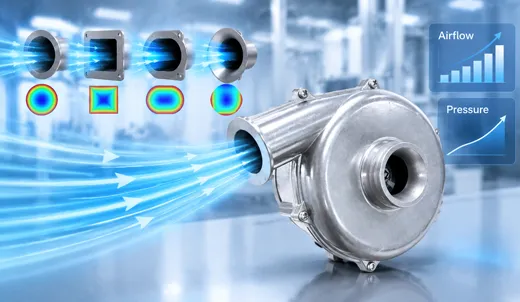
- Aerodynamic Optimization: Custom blowers are tailored to hit exact operating duty points, eliminating the energy penalties of over-sizing or the system failures caused by under-sizing. Impeller blade profiles are digitally simulated via Computational Fluid Dynamics (CFD) to maximize efficiency.
- Exotic Metallurgy & Heavy-Duty Linings: To endure corrosive, high-temperature, or ultra-abrasive airstreams, these custom units leverage high-tier alloys like 316L Stainless Steel, Hastelloy, Titanium, Inconel, or rely on internal wear-resistant coatings (such as chromium carbide overlays or tungsten carbide spray).
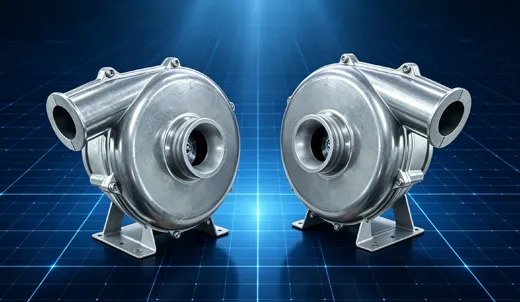
- Geometric and Mechanical Flexibility: When physical factory floor real estate is restricted, mechanical engineers can reposition the orientation of the housing, adjust the inlet/outlet angles, utilize space-saving direct-drive or belt-drive arrangements, and redesign custom structural bases to fit tight footprints.
Process Controls & Safety Integration: Custom configurations effortlessly accommodate explosion-proof motors (ATEX/IECEx compliant), advanced shaft seals (gas-purged, carbon ring, or labyrinth seals), variable frequency drives (VFDs), vibration monitoring probes, and online Clean-In-Place (CIP) spray nozzles.
3.2 Primary Target Industries for Custom Solutions:
- Chemical, Petrochemical, Oil & Gas: Moving volatile, acidic, toxic, or explosive gases where leakage must be zero and explosion proofing is non-negotiable.
- Metallurgical & Steel Processing: Handling extreme furnace flue gas exhaust, requiring structural reinforcements to handle temperatures soaring up to 450°C to 500°C.
- Pharmaceutical & Sanitary Food Production: Providing pure, oil-free airstreams with continuous washdown-ready stainless steel surfaces that prevent bacterial harbor points.
- Power Generation & Flue Gas Desulfurization (FGD): Operating in massive high-pressure, high-volume environments processing abrasive fly ash.
4. When Do You Need a Custom Industrial Blower? 7 Technical Scenarios
While standard catalog blowers are sufficient for mundane air movement, deploying them in complex environments leads to premature mechanical breakdown, low operational efficiency, or regulatory non-compliance. Here are the seven specific engineering scenarios where custom blower design becomes an absolute necessity:
4.1 Aerodynamic Operating Points Fall Outside Standard Catalog Envelopes
When a system loop features extreme static pressures (e.g., exceeding 10,000 Pa due to ultra-long pipe networks) combined with massive volumetric flow requirements (e.g., hundreds of thousands of m³/h), catalog curves fail. Forcing a standard blower into these duties results in two bad outcomes: over-sizing by 20% to 40% (wasting tremendous electricity) or under-sizing (stalling the process line). Custom engineered impellers ensure the target operating point hits the peak efficiency island of the fan curve.
4.2 Extreme Thermal, Chemical, or Mechanical Airstream Stresses
Standard carbon steel rusts, deforms, and wears out rapidly under severe process airstreams. Custom-built units prevent this through tailored metallurgical pairings:
- Acidic or Corrosive Environments: For air containing marine salt spray, chlorine, or chemical vapors, custom units utilize specialized corrosion-proof coatings or alloys.
- Thermal Extremes: For continuous gas streams above 100°C up to 500°C, custom blowers integrate high-alloy steels, heat dissipation discs, and water-cooled bearing housings.
- High Dust Loads and Abrasive Mediums: For transporting iron filings, cement dust, or rock powder, custom units feature heavily reinforced casings, replaceable wear liners, and backward-inclined flat radial blades designed to reject dirt build-up.
4.3 Highly Restricted Structural and Footprint Dimensions
Modernizing existing brownfield plants or squeezing components into compact skids often leaves irregular, cramped geometric spaces. Standard blower dimensions simply will not fit. Custom engineering allows for creative space optimization—such as creating an offset inlet/outlet scroll, integrating a unique vertical arrangement, or adapting a specialized motor bracket—saving thousands of dollars in structural plant modifications.
4.4 Stringent Safety, ATEX/Explosion-Proof, and Regulatory Compliances
High-risk zones demand specialized equipment certified by regulatory bodies. Custom blowers ensure adherence to absolute safety requirements:
- Combustible Gas or Dust Zones (ATEX/NFPA): Utilizing non-sparking rub rings, aluminum-to-iron relative paths, anti-static belts, and explosion-proof terminal boxes.
- Food and Pharma Sanitary Standards (FDA/3A/EHEDG): Utilizing completely continuous, crevice-free 316L stainless steel welds with a polished surface roughness ($R_a \le 0.8\,\mu\text{m}$) to eliminate microbiological colonization points.
- Acoustic and Noise Pollution Caps: Integrating customized heavy acoustic attenuation jackets, silencers, and isolation mounts to meet stringent OSHA or municipal noise boundaries.
4.5 Demand for High-Tier Energy Efficiency and Smart IoT Automation
With skyrocketing energy costs and carbon reduction mandates, standard induction motor-driven fans are falling behind. Custom industrial blowers can be configured directly with ultra-efficient IE4 or IE5 permanent magnet motors combined with tailored aerodynamic wheels. Furthermore, they support integrated predictive maintenance kits featuring PLC interfaces, bearing temperature thermistors, and accelerometer sensors to detect imbalances before catastrophic failure occurs.
4.6 Integrated OEM System Skids Requiring Monolithic Architecture
When manufacturing specialized industrial machinery—such as massive industrial dryers, complex desulfurization scrubbers, or thermal oxidizers—the blower must act as a fully integrated, seamless module. Custom customization enables shared shafts, shared structural baseplates, unified lubrication setups, and unified control loops with the host system, streamlining field commissioning and optimization.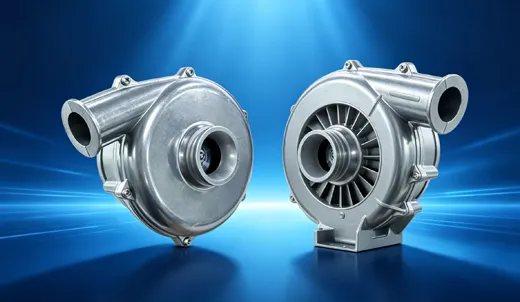
4.7 Minimizing Lifecycle TCO for Continuous 24/7/365 Processing Plants
While standard blowers boast lower upfront asset purchasing prices, deploying them in aggressive, round-the-clock settings triggers a loop of frequent field repairs, parts changes, and expensive unexpected downtime. A custom-engineered blower represents a higher initial CAPEX investment but drastically slashes operational expenses (OPEX). Over a 10 to 15-year lifecycle, the savings in reduced maintenance hours, uninterrupted uptime, and minimized electrical demand easily cover the initial engineering premium.
5. Analytical Comparison Matrix: Standard vs. Custom Blowers
| Feature / Evaluation Metric | Standard Industrial Blower | Custom Engineered Blower |
|---|---|---|
| Aerodynamic Duty Points | Fixed, standard catalog curves. | Precisely simulated via CFD to target points. |
| Material Selections | Carbon Steel / Commercial Aluminum. | 316L SS, Hastelloy, Titanium, Wear Overlays. |
| Thermal Boundaries | Typically bounded from -20°C to 80°C. | Capable of continuously exceeding 450°C to 500°C. |
| Geometric Flexibility | Rigid dimensions; standardized configurations. | Completely adaptable casing, angles, and footprints. |
| Initial Cost (CAPEX) | Low budget; economical upfront. | Higher initial engineering investment. |
| Lifecycle TCO (OPEX) | Higher due to maintenance in harsh conditions. | Significantly lower due to reliability. |
Technical Frequently Asked Questions (FAQ)
Q1: Why do standard industrial blowers fail prematurely in high-temperature environments?
A1: Standard catalog blowers use basic carbon steel and generic lubricants rated only for ambient temperatures (typically up to 80°C). When exposed to higher temperatures, standard metals experience thermal expansion and structural softening, leading to rotor unbalance or casing rubbing. Additionally, standard bearings lack thermal isolation or heat dissipation discs, causing internal grease to liquefy and fail rapidly. Custom blowers utilize creep-resistant alloys, thermal break linkages, heat sinks, and high-temperature bearings to counteract these issues.
Q2: How do custom blowers achieve compliance with explosion-proof standard frameworks?
A2: Custom heavy-duty blowers are engineered to prevent mechanical and electrical sparks in hazardous areas (like ATEX or NFPA classifications). Engineers build the air-stream components with non-ferrous, non-sparking metal pairings (such as aluminum wheel inlets matched against stainless steel housing paths). Furthermore, custom designs feature ground straps to prevent static electricity build-up, flame-retardant shaft seals, and specialized explosion-proof electric motors designed to contain internal electrical arcs safely.
Q3: Can a standard blower be retrofitted with a VFD to act like a custom blower?
A3: A Variable Frequency Drive (VFD) allows you to adjust the operational speed of a standard blower to modify its airflow or pressure output. However, a VFD cannot alter the fundamental structural limitations of the machine. It will not make basic carbon steel resistant to corrosive acids, it will not protect standard fan blades from being eroded by abrasive dust, and it cannot change the physical sizing of the casing. While a VFD adds performance flexibility, it cannot transform a standard blower into a rugged, severe-duty custom solution.
Q4: What specific structural enhancements prevent wear in abrasive particulate conveying blowers?
A4: Custom blowers handling abrasive dust use heavy-gauge plate steel housings lined with replaceable wear plates made from high-hardness alloys (like Hardox or Chromium Carbide overlays). The fan blades are typically shaped with a flat radial or backward-inclined design to prevent materials from sticking to them, and they are treated with tungsten carbide hard-surfacing. These heavy-duty structural reinforcements help distribute the mechanical impact of the dust, preventing premature housing wear and blade failure.