

Complete Guide to Blower Performance Testing: Airflow, Pressure, Noise, and Temperature Rise
Accurate performance testing of air blowers—including industrial, commercial, and HVAC centrifugal blowers—is a critical process for quality control, engineering verification, and operational safety. According to market research data published by Grand View Research on Industrial Blowers, the global industrial blower market size surpassed USD 10.8 billion, underlining the critical need for standardized testing to guarantee precise, repeatable results that comply with international regulatory frameworks. This comprehensive technical guide outlines the step-by-step procedures for evaluating a blower's four core aerodynamic and thermal metrics based on global standards such as ISO 5801, AMCA 210, and GB/T 1236.
1. Overview of Blower Performance Metrics
Industrial blowers rely on dynamic mechanical principles to increase gas pressure and move air through a system. To evaluate their true efficiency and integrity, engineers analyze four foundational metrics:
- Airflow Rate (Volumetric Flow): The total volume of air displaced by the blower per unit of time, measured in Cubic Meters per Hour (m³/h) or Cubic Feet per Minute (CFM).
- Blower Pressure (Static & Total): The pressure differential generated by the impeller to overcome system resistance, measured in Pascals (Pa), Kilopascals (kPa), or Millimeters of Water (mmH₂O).
- Acoustic Noise Level: The sound pressure level radiated by the unit during operation, quantified using A-weighted decibels [dB(A)].
- Thermal Temperature Rise: The temperature increase of critical internal components (like motor windings and bearings) relative to the ambient room temperature, measured in Kelvin (K) or Degrees Celsius (°C).
International Testing Frameworks
To ensure cross-border compatibility of engineering data, testing protocols must align with premier regulatory standards governed by organizations like the Air Movement and Control Association (AMCA) and the International Organization for Standardization (ISO):
| Standard Code | Core Focus Areas |
|---|---|
| AMCA 210 / ASHRAE 51 | Laboratory Methods of Testing Fans for Aerodynamic Performance Rating |
| ISO 5801 | Industrial Fans — Performance Testing Using Standardized Airways |
| GB/T 1236-2017 | Industrial Fans - Standardization Airways Performance Testing (Equivalent to ISO 5801) |
| ISO 3744 / GB/T 2888 | Acoustics — Determination of Sound Power Levels of Noise Sources using Sound Pressure |
| GB 755 / JB/T 6444 | Rotating Electrical Machines — Rating and Performance / Industrial Fan Bearings Temperature Rise Limit |
2. Airflow Rate Testing Methodology
Airflow calculation dictates the ventilation capability of a system. Under standard regulations, airflow is calculated by routing air through a structured duct system using either a calibrated nozzle array or Pitot tubes to capture dynamic pressure variations.
Fundamental Formula: Q = V × A
Where: Q = Volumetric Airflow Rate, V = Mean Fluid Velocity, and A = Cross-Sectional Area of the Airway Duct.
Step-by-Step Airflow Test Execution:
- Ductwork Rigging: Connect the blower housing to an aerodynamic test chamber. Ensure the inlet straight airway length equals at least 5 times the duct diameter (5D), and the outlet duct spans at least 10 times the diameter (10D) to achieve stable laminar flow conditions.
- Thermal Preheating: Power up the device at its rated input voltage and operational frequency. Let it run for 30 consecutive minutes to attain absolute system thermal stability. Simultaneously log the room temperature, barometric pressure, and relative humidity.
- Multi-Point Logging: Manipulate the exit control damper to change system resistance. Document differential pressure measurements across 5 to 7 specific operating points ranging from a fully sealed condition to maximum open airflow.
- Density Correction: Raw values must be mathematically normalized to standard air density conditions (Temperature: 20°C, Air Pressure: 101,325 Pa, Density: 1.204 kg/m³) as mandated by testing specifications.
Tolerance Threshold: In accordance with ISO 5801 guidelines, the real-world operational airflow must stay within ±5% of the manufacturer’s stated catalog specification.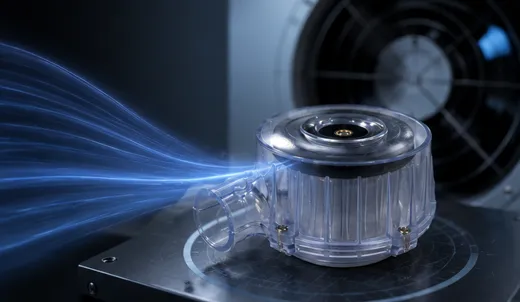
3. Blower Pressure Assessment (Static, Dynamic, Total)
A blower's ability to push air through tight spaces or dense filters depends directly on its pressure output. Total pressure rise (ΔP) is the difference between the total energy state at the discharge outlet versus the intake inlet.
Pressure Recording Steps:
- Tapping the Airway: Drill four piezometric static pressure taps uniformly around the circumference of both the inlet and outlet ducts, located 2 to 3 duct diameters away from the connecting flanges. Connect these taps using flexible, leak-proof pressure tubes to a high-precision digital differential manometer.
- Plotting Performance Curves: Keep the motor spinning at a fixed RPM while adjusting the airflow using a control throttle. Record the static and total pressure levels at each milestone.
- Calculating Parameters: Calculate Static Pressure Rise (Ps = Output Static Pressure - Input Static Pressure) and Total Pressure Rise (Pt = Output Total Pressure - Input Total Pressure) to build the blower's operational PQ (Pressure-Volume) performance curve tested under AMCA 210 testing guidelines.
Acceptable Deviation: The rated static pressure variation must not deviate beyond ±5% under nominal operational loads.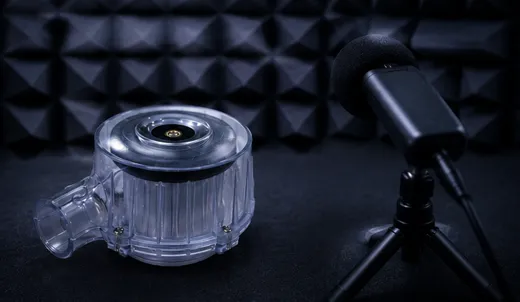
4. Acoustic Noise Level Measurement
Blower noise evaluations protect operators from hearing hazards and ensure compliance with environmental noise laws. Testing uses a precision sound level meter to measure sound pressure across different angles.
Acoustic Test Framework:
Environment Isolation: Conduct the test inside a certified semi-anechoic acoustic chamber with a background ambient noise ceiling below 20 dB(A). For open-air tests, clear a 5-meter radius of any reflective walls or metallic barriers.
Microphone Array Positioning: Mount a calibrated Class 1 sound level microphone 1.0 meter away from the physical envelope of the blower body in compliance with ISO 3744 standards. Position sensors at four horizontal cardinal positions (0°, 90°, 180°, 270°) and one overhead angle (45°), keeping sensors clear of direct high-velocity discharge air streams.
Acoustic Calculation: Run the blower under full load for 15 minutes, then record data for 10 seconds at each point. Calculate the logarithmic mean of these readings to find the overall sound pressure value.
Industrial Threshold Limits: Heavy industrial application blowers generally require noise levels ≤ 85 dB(A) at a 1-meter distance. Specialized commercial and medical HVAC units (such as CPAP medical blowers) usually require a quieter envelope below 75 dB(A) (or ultra-quiet specifications under 30 dB(A) for close-proximity usage).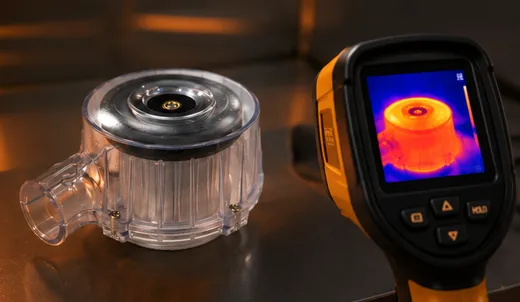
5. Component Thermal Temperature Rise Test
Thermal verification checks the efficiency of the cooling system and protects the internal components from overheating, which can degrade insulation and cause mechanical failures.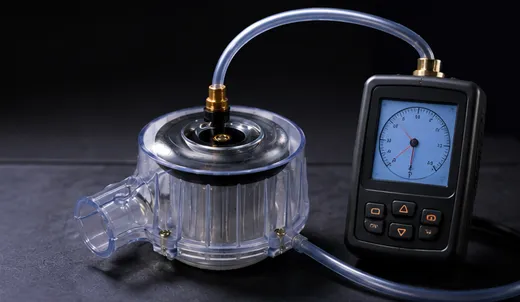
Thermal Profiling Steps:
- Sensor Installation: Attach K-type thermocouple sensors using thermal paste directly onto critical hot spots: the internal motor stator winding, front and rear rotor bearings, and the outer drive housing. Place an extra reference sensor 1.5 meters away to track ambient room temperature.
- Endurance Testing: Run the blower continuously under 100% full capacity for 8 hours. Log temperature changes automatically every 15 minutes during the initial 2 hours, and then every 30 minutes thereafter.
- Equilibrium Verification: Thermal equilibrium is reached when the temperature changes by less than 1°C over an hour. Calculate the final value using the formula: ΔT = Measured Component Temperature - Ambient Base Temperature.
Max temperature rise ≤ 40°C; total absolute bearing temperature must not cross 80°C (per JB/T 6444 standards).
Class B Insulation Motor: Max Rise ≤ 65K
Class F Insulation Motor: Max Rise ≤ 80K (per GB 755 / IEC standards).
Technical Frequently Asked Questions
Q1: Why must blower airflow calculations be corrected for air density?
Air density changes with ambient temperature, altitude, and relative humidity. Because a blower displaces a fixed volume of air but generates mass flow based on density, uncorrected data cannot be accurately compared against standard ratings or used to evaluate actual system efficiency per ISO 5801 testing protocols.
Q2: What is the primary difference between blower static pressure and total pressure?
Static pressure represents the potential energy exerted against duct walls to overcome friction and system resistance. Total pressure is the sum of static pressure and velocity pressure (kinetic energy). Total pressure measures the total energy added to the air stream by the impeller.
Q3: How can I tell if a blower is stalling during a performance test?
Aerodynamic stall or surge typically shows up as rapid, unstable pressure gauge fluctuations, a sudden increase in low-frequency structural vibration, and a distinct pulsing noise from the air intake, indicating that the airflow is separating from the impeller blades.
Q4: What causes a blower's temperature rise to exceed its rated limits?
Excessive temperature rise is usually caused by electrical overloads, high system resistance that forces the motor to operate past its peak efficiency point, restricted cooling airflow around the motor housing, or insufficient bearing lubrication.